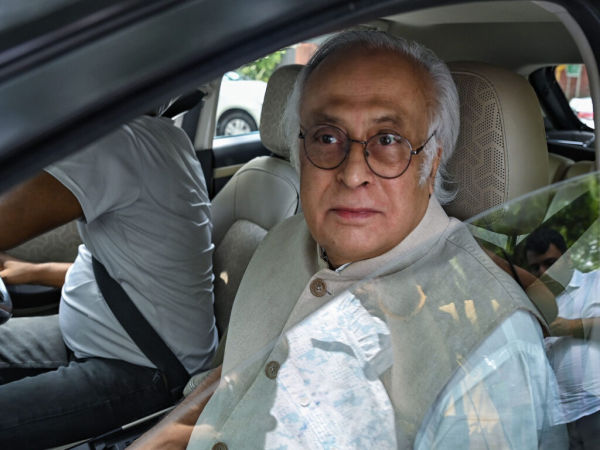
Congress has challenged the government’s assertion that India’s economy expanded by 7.8% in the April to June 2026 quarter, expressing concerns over revisions to prior years’ GDP data, inflation estimates, and indicators such as manufacturing and private consumption.
In a statement, Congress General Secretary (communications) Jairam Ramesh contended that a detailed analysis of the figures casts doubt on the methodology underpinning the calculations. He noted that lowering the base year figure against which current growth is compared can inflate the growth rate, even if there is no real increase in economic activity.
Citing former Finance Secretary Subhash Chandra Garg, Ramesh stated that had the base-year figure not been revised downward, nominal growth in the quarter would have been approximately 2.6%, as opposed to the 10.3% reported by the government. He added that when adjusted for inflation, real growth would be close to zero.
Ramesh also questioned the downward revisions to GDP estimates for the four fiscal years since 2022-23, explaining that the “new series” reduced nominal GDP figures by between ₹8 lakh crore and ₹12 lakh crore annually, resulting in a total decrease of ₹43 lakh crore across the period.
He described this revision as a significant “correction” and sought clarity on how such a substantial reduction in the economy’s estimated size could arise solely from methodological changes.
Addressing inflation measurements used for real GDP calculations, Ramesh pointed out that the government’s implied deflator of 2.5% contrasts sharply with reported wholesale inflation of 9.4% and retail inflation of 3.9% during the same timeframe.
The statement additionally alleged a 5.2% contraction in manufacturing gross value added and a 5.4% decline in private consumption. It referenced the HSBC Purchasing Managers’ Index, noting that manufacturing PMI for August recorded a five-year low, accompanied by decreases in new orders, output growth, and employment.
Ramesh recalled previous doubts about India’s GDP data, citing former Chief Economic Adviser Arvind Subramanian’s view that growth was underestimated during 2005–2011 but had been overestimated since changes to methodology and base year in 2011–12. He also mentioned an International Monetary Fund assessment from late 2025 which assigned India’s national accounts a “C” grade, the second-lowest rating.
In conclusion, Ramesh urged the Modi government to clarify the reasons behind the marked downward GDP revisions, the ₹43 lakh crore reduction in estimated economy size, the methodological basis for these adjustments, and the rationale for the deflator computer utilized in real GDP calculation.
Official statistics from the Ministry of Statistics and Program Implementation confirmed India’s real GDP growth of 7.8% in the first quarter of fiscal year 2026-27.
Earlier this week, Union Commerce Minister Piyush Goyal criticized former Finance Secretary Subhash Chandra Garg and former Reserve Bank of India Governor Raghuram Rajan, who had expressed skepticism about the government’s latest GDP data, branding them as “jobless” individuals aiming to mislead the public.
Garg, who previously served as secretary in the Department of Economic Affairs and later as Finance Secretary under the Modi administration, asserted that GDP growth in Q1 2026-27 at current prices is 2.6%, with real growth near zero.
-
Ajax vs PSV: Live stream, TV channel, team news and kick-off details for Eredivisie heavyweight clash

-
Mourinho blocked Endrick move to AC Milan: Rossoneri set to make another attempt in January with a clear plan

-
Did Kevin Keegan shape the Premier League’s finest away day? How Newcastle turned into football’s ultimate city-break

-
Ganeshotsav 2026: Make Caramel Coconut Ladoo in 10 Minutes for Bappa's Offering, Spice Up the Sweetness of the Festival

-
school friendship and love signs