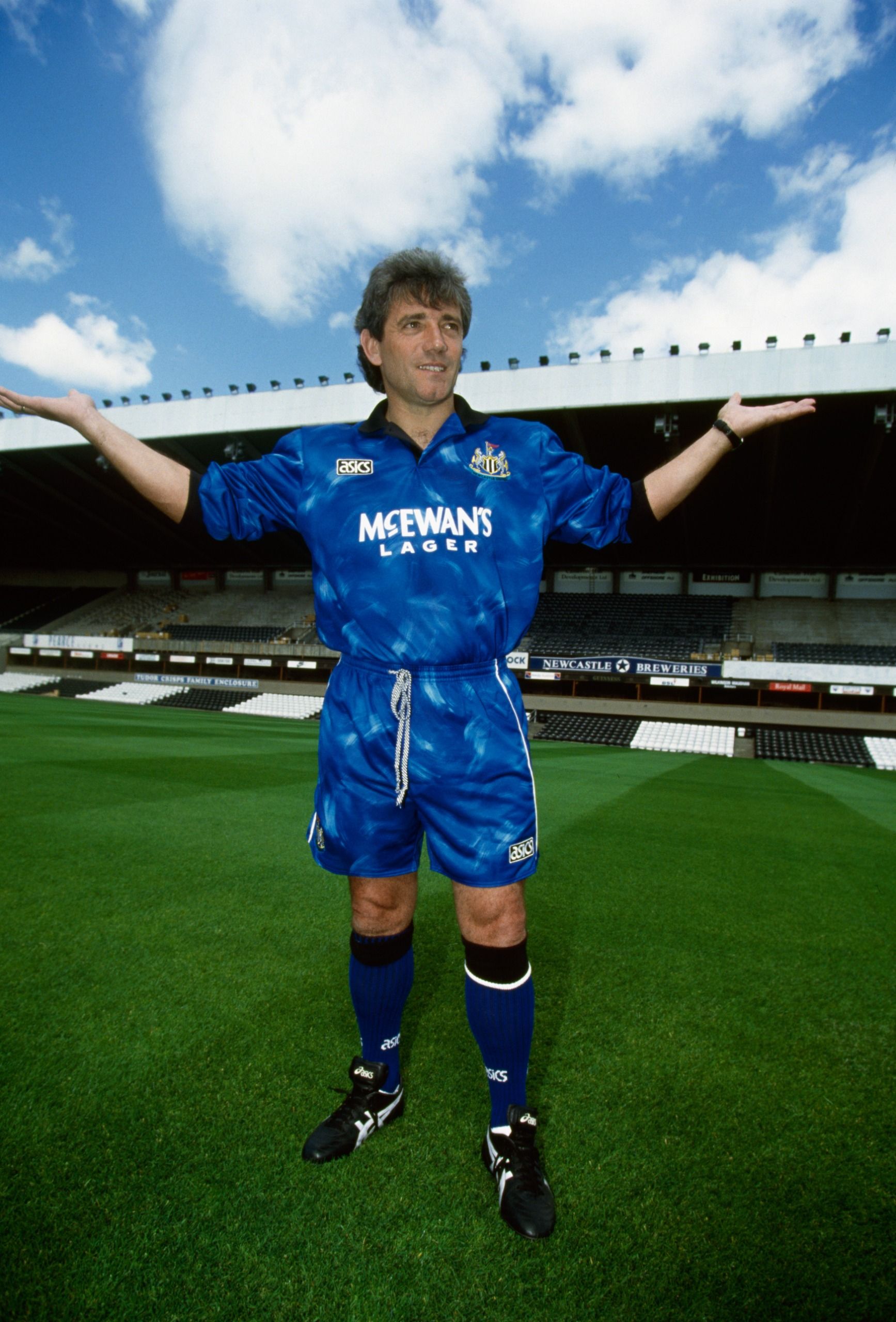
Win, lose or draw, a trip to Newcastle has left countless supporters with happy memories, and much of the credit may well go to the late Kevin Keegan.
Newcastle United fans have plenty of reasons to be grateful to Kevin Keegan: steering the club away from relegation to the third tier in 1992 and then taking them up to the Premier League; Andy Cole; Albert’s chip; Faustino Asprilla; Champions League football; a 12-point lead over Manchester United; and that defiant broadside against the dark arts of Alex Ferguson.
But fans of rival clubs may also owe him something. That brilliant away weekend you once enjoyed in Newcastle — the train pulling into Central Station, St James’ Park rising above the city like an acropolis, a few pints before kick-off, a few more after full-time, then waking up confused and groggy in a budget hotel somewhere near the Bigg Market? Indirectly, Kevin Keegan may deserve thanks for that too.
Something remarkable happened to Newcastle in the 1990s. At almost the exact same time that Keegan remade Newcastle United from a fading Second Division side into the most glamorous team in English football, the city of Newcastle was going through a strikingly similar transformation.
When Keegan came back to St James’ Park in February 1992, Newcastle was still dealing with the psychological hangover of the 1980s. The industries that had made Tyneside famous — shipbuilding, coal and heavy engineering — were vanishing, and the football club appeared to be heading the same way. United were battling to avoid relegation to the Third Division, while St James’ Park was shabby, half-empty and unloved. Then Keegan arrived, and it was as if someone had turned the lights on.
Within 18 months, Newcastle were in the Premier League. Within two years, they were playing in Europe. By 1996, they were pushing for the title with a side that played football with such gloriously reckless flair that they became known simply as the Entertainers.
Keegan’s philosophy was beautifully simple. In his own words, going to a match “was like people down south going to the theatre.” People had worked hard all week and, on Saturday, they deserved a show. Newcastle attacked because attacking was exciting. If the opposition scored three, Newcastle would try to score four.
It was not so much a tactical blueprint as a civic philosophy, and beyond St James’ Park, Newcastle was following much the same path.
Driven by property tycoons such as Sir John Hall — who, after making millions as the developer of Europe’s biggest shopping mall on top of an old slag heap in Gateshead, became Newcastle United chairman — the old city was rapidly reinventing itself around a leisure economy built on shopping, culture and nightlife. The Quayside filled up with new bars and restaurants. The Riverside became one of Britain’s great music venues. Thousands more students arrived.
The Toon’s drinking circuits took on an almost mythical reputation and then, in 1995, an American travel company reportedly ranked Newcastle alongside places such as Rio and Las Vegas among the world’s great party cities. By 1997, Times Higher Education was reporting that Newcastle’s new reputation as “the party city” was actually helping its universities attract students.
That was not entirely Keegan’s achievement, of course. But football captured the spirit of the age and became an extraordinarily powerful advertisement for the city’s reinvention.
Every Sunday morning, Premier League highlights beamed a new image of Newcastle across Britain: 36,000 people roaring inside a rebuilt stadium; Newcastle Brown Ale on those famous black-and-white shirts; Keegan springing around the touchline; Ginola surging down the wing; young men in replica shirts going wild. Newcastle suddenly looked like exactly the sort of place you wanted to be.
And Keegan instinctively understood that football was about more than just winning. It was spectacle, pleasure and escape. That matched the emerging city perfectly — and, in truth, tapped into Newcastle’s much older Rabelaisian traditions as “the drunkest town in England”. The old Newcastle had produced guns, ships and coal; the new Newcastle was increasingly selling an experience.
So, too, was Newcastle United.
There was another crucial factor: geography. In most English cities, the football ground sits some distance from the centre. St James’ Park does not. It bursts out of Newcastle itself. You can arrive by train, have a drink in the city centre, walk to the match and be back in a pub within minutes of the final whistle — a ready-made urban fan zone decades before the concept even existed. Suddenly, the away supporter was not simply travelling to a football match. He was stepping into an ecosystem remarkably efficient at relieving him of his disposable income.
Newcastle upon Tyne had, by accident, invented the football city-break, and Keegan’s Entertainers provided the mythology. Even defeat in Newcastle could still be enjoyable. You might see Beardsley thread a pass no one else had spotted, Ginola humiliate your right-back, or Asprilla samba-shimmy past your centre-half. Keegan’s Newcastle offered visiting fans the same unspoken promise as the city’s nightlife: something might happen.
That matters because cities, like football clubs, build their reputations through stories. People returned home talking about Newcastle. About the atmosphere. About the stadium in the middle of the city. About the people they had met. About what happened after the game — often with major gaps in the timeline.
Thirty years on, Newcastle remains one of English football’s great away trips. The Quayside has changed. The Bigg Market is no longer quite the grisly Bacchanal of legend. The football club has passed through several historical cycles of hope and despair.
But the central proposition remains intact: come to Newcastle and make a weekend of it.
Keegan did not create Newcastle nightlife, naturally. Nor did he build the bars or bring in the students. But between 1992 and 1997, he helped change the story Britain told itself about Newcastle. The football club and the city suddenly projected the same qualities: exuberant, slightly excessive, hospitable, ambitious, emotional and determined to enjoy themselves.
For a few extraordinary years, Newcastle was not merely the home of the Entertainers. Newcastle itself was the entertainment.
So the next time an Arsenal, Chelsea or Spurs supporter wakes up on a Sunday morning in a Newcastle hotel room with a traffic cone, half a kebab down his shirt and absolutely no memory of how he got back there, perhaps he should pause for a moment of gratitude.
King Kev made it possible.
-
WATCH: ‘Besharam Hai Kya?’ Pakistan Captain’s Viral Send-Off To India Star Gets Trolled
-
WATCH: Arshdeep Singh & Actor-Model Samreen Kaur's ‘Special’ Romantic Gesture Goes Viral
-
Isha Rekhi breaks silence on separation rumours and Bigg Boss 20 speculation
-
5 Zodiac Signs Have Great Horoscopes On Sunday, September 6, 2026

-
Horoscope for September 6: Libra people will have to be cautious, Aries and Sagittarius will get financial benefits.