Bajaj has updated the Chetak electric scooter range with new features aimed at daily usability. The main additions are integrated Google Maps navigation, multiple ride modes and a higher top speed on select variants. The update also gives Bajaj a more competitive product in the Rs. 1 lakh to Rs. 1.5 lakh electric scooter space, where TVS, Ather and Ola already offer connected features and mode-based performance settings.
The Chetak range now has five variants, starting with the C2501 and going up to the top-spec 3501. Prices start at Rs. 91,399 ex-showroom for the C2501 and go up to about Rs. 1.34 lakh ex-showroom for the 3501. Battery capacity varies by variant. The base model gets a 2.5 kWh battery, while the higher variants get up to a 3.5 kWh battery pack. Claimed range starts at around 113 km and goes up to 153 km under IDC test conditions.
Top speed depends on the variant. Lower versions are rated at 63 kmph, while select higher variants can reach 73 kmph. That is useful because the Chetak has so far been seen more as a sturdy city scooter than a quick one. The higher speed does not make it a performance scooter, but it should make it easier to use on wider city roads, flyovers and short open stretches.

The most visible change is Google Maps integration. It is available on the 3501 variant through the 5.5-inch touchscreen display. Riders can now get turn-by-turn navigation directly on the instrument cluster, instead of relying on a phone mount or a basic connected display.
This is a practical update, especially for riders who use navigation often. It can help during office commutes, delivery runs, college travel or trips through unfamiliar areas. The screen also supports document storage, music control and call alerts. These features are already common on several electric scooters, so Bajaj is not creating a new benchmark here. It is catching up with what buyers in this price band have started to expect.
The TecPac add-on unlocks more connected features on some variants. It is priced from around Rs. 4,000, depending on the model. On the C25 series, the pack adds Sports mode, which improves throttle response and raises top speed over the default Eco setting. For riders who mostly use the scooter in slow traffic, this may not be essential. For those who regularly ride on faster roads, it can make the scooter feel less restricted.

The updated Chetak range gets a clearer ride mode setup. Eco mode is focused on range, while Sports mode gives quicker response and better speed. The mode selector uses a toggle marked D.
On the lower variants, Eco mode is standard and Sports mode is linked to the TecPac. On the higher variants, both modes are available from the factory. The upper versions use a motor rated at 4.2 kW peak output. In Sports mode, these variants can reach 73 kmph.
Electric scooters behave very differently across modes. Eco mode can help stretch range on daily commutes, while Sports mode is more useful when merging into moving traffic, climbing flyovers or making quick overtakes. In a city scooter, that difference matters more than outright top speed.
The update also includes hill hold assist on select variants. This prevents the scooter from rolling back on slopes, which can help on flyovers, basement parking ramps and hilly city roads. Keyless access, anti-theft alerts through the Chetak app and over-speed notifications are also part of the safety and convenience package on higher versions.
Charging remains home-friendly. The larger 3.5 kWh battery takes around 3 to 3.5 hours to charge from near empty, depending on the variant and charger. Charging is done through a portable charger using a standard 15-amp household socket. That keeps the scooter suitable for normal home or office charging, without needing a public charging stop for daily use.
The claimed range figures should be read with the usual caution. IDC range is tested under controlled conditions. In real city use, range will depend on speed, rider weight, traffic, tyre pressure, use of Sports mode and load. Even so, the larger-battery Chetak variants should cover most daily commutes without range anxiety.
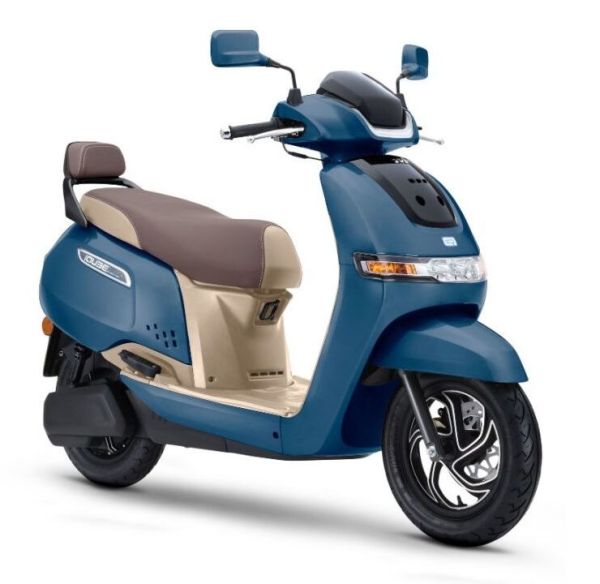
The update comes at a time when the electric scooter market has become much tougher. The TVS iQube now has multiple variants and battery options. Ather has the Rizta, which is aimed at family buyers and focuses on comfort, storage and software. Ola’s S1 range continues to offer aggressive claimed range and performance figures.
The Chetak does not lead on speed. It does not offer the longest claimed range. Its rear brake setup also remains simple, with drum brakes at the rear across the range. Some rivals offer stronger braking hardware on their higher variants.
What the Chetak continues to offer is an all-metal body, a familiar Bajaj name and a more conventional scooter feel. That has helped it appeal to buyers who want an electric scooter that feels closer to a traditional family scooter than a tech-heavy gadget.
The latest update does not change the Chetak’s character. It simply removes some gaps. Navigation is now more useful. Ride modes are more relevant. The top speed is better on select variants. Hill hold and app-based alerts add convenience.
For buyers looking at an electric scooter in the Rs. 1 lakh to Rs. 1.5 lakh band, the Chetak is now easier to consider than before. It is still not the most aggressive or feature-loaded option in the segment, but it is now better equipped for everyday city use.