

A woman sold her family home to cover her mother's £47,000 care costs, even though she qualified for NHS funding. Marie Agnew, 56, said her mother had to be "a bag of bones" and "literally dead in bed" before the NHS finally funded her nursing home.
The issue dates back to 2014 when Agnews's mother, Eileen Fossard, was in a nursing home in Liverpool with Alzheimer's. At the time, her care had been partly paid for by the Knowsley Council. But when Fossard's husband died, the family faced a new expense nobody expected.
In England, the upper savings limit for council-funded social care is £23,250, and this has remained unchanged since 2010, despite increases in inflation. Anyone with assets above this amount is usually required to pay for their own care. For councils to review a person's assets, the value of their home may or may not be included, depending on their circumstances. For example, if the person moving into a care home has a partner who continues to live in the property, the home is not counted as part of their assets. However, if the person lives alone and owns their home, its value is typically included in the financial assessment, which may affect their eligibility for council support.
Upon her husband's death, the then 72-year-old Fossard, who lived in the Stonedale Lodge nursing home, then under Bupa, suddenly had more assets in her name and was no longer eligible for council funding. To afford their mother's nursing home, Agnew and her sister were left with no other choice than selling their parents' family home in Liverpool, handing over more than £47,000 to the council.
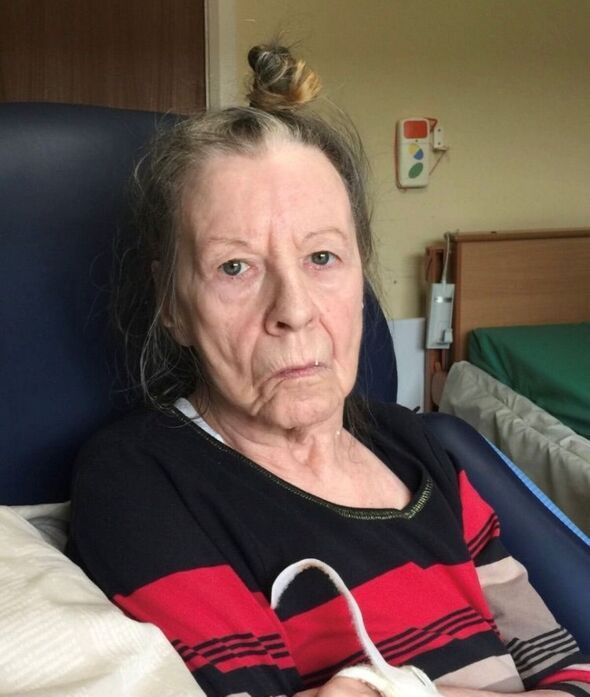

Little did they know that they were never supposed to be paying in the first place. This is because Fossard qualified for the NHS Continuing Healthcare (CHC), a package which provides full funding for people with high-level health needs, regardless of their financial situation. The family had never heard of the scheme - Agnew said they only discovered it through "a random conversation with a member of staff at the nursing home".
At the time, Fossard had severe dementia causing challenging behaviours, including physical aggression and resistance to care. Despite needing full assistance with all daily activities, the NHS integrated care board initially refused the application for funding. According to the assessors, Fossard could still talk, express her needs and stand unaided.
But Agnew told the Express that was far from reality.
She said: "We were told mum wasn't eligible and it's only now that we realise she was.
"We went to see her every week. She had multiple falls, was covered in bruises because she couldn't stand. She had to be helped to do everything.
"And she literally had to be dead in the bed for them to qualify her for this CHC."
Upon trying again, they missed the appeal deadline, which is under a strict six-month time limit, and had to wait until after Fossard passed to make a retrospective claim.
Agnew described the whole process as "very long-winded".
She said: "Obviously that takes time getting information like that back from the NHS, back from the councils, back from the social work teams. So there were all these delays to these things, which just exacerbated the whole situation.
"I was very frustrated, very angry, very ignored, very disrespected."
The family hired a solicitor to help navigate the complex system.
Lisa Morgan, partner and head of the nursing care department at Hugh James Solicitors, said that the biggest problem is that families aren't informed about the scheme.
She told the Express: "We have wives that may contact us who've suddenly been told that their husband needs to go into care and their first reaction is that they're going to lose their home because they need to pay for their husband's care.
"They immediately want to put their home on the market. Being able to reassure them that it's not a step they need to make, and that financial assessments exist, is crucial."
She added that "it's the needs, not the diagnosis, that matter" to be eligible for CHC funding.
"If someone's needs are high, they should be the responsibility of the NHS," she said.
Yet still, the number of people receiving funding has declined by about 20% in the last decade.
"Some are never assessed when they should be, or they're assessed too restrictively, and are wrongly denied funding," Morgan explained.
With the rules around NHS continuing healthcare funding set out in a lengthy 187-page National Framework, it can be difficult to follow and apply by healthcare professionals.
Morgan said: "Even the most articulate people find it extremely complex to navigate the scheme."
She explained the process requires a detailed analysis of an individual's needs across multiple domains. In practice, however, assessors can "understate the severity or unpredictability of needs", whereas a degree of subjectivity when scoring the care domains can lead to inconsistency in decision-making.
She added: "The evidential burden is significant, and without a clear understanding of the 'primary health need' test, families may struggle to present the level of detail required to demonstrate eligibility. As a result, applications can be refused where the evidence is incomplete, poorly framed, or not aligned with the National Framework criteria, rather than because the individual's needs do not in fact meet the threshold."
That is why patients and families are encouraged to challenge decisions and advocate for themselves.
Morgan said her team has recovered more than £250 million for families with similar cases, while the highest award they had for one family is about £600,000.
"That's money that should never have been paid in the first place," she said. "It's not compensation - it's restitution."
After a seven-year-long legal battle, Agnew's family also received reimbursement for the care fees.
But feelings of injustice still linger.
Agnew said: "My mum and dad had worked all their lives and never claimed a single benefit.
"They always paid for themselves.
"Mum paid her full National Insurance. She paid everything to the Government... and then she had to pay for her own care.
"It seems like the system is failing honest families while wasting taxpayer money."
Despite the struggle, Agnew offered advice to others in similar situations.
She said: "You've got to look into everything.
"Don't take anything for granted that they tell you, or you won't be eligible. You will get different opinions. Fight for what your relative is entitled to."
A spokesperson for NHS Cheshire and Merseyside said: "We fully recognise how difficult and distressing this process has been for the family.
"While it would not be appropriate to comment further on individual cases, we can confirm that we apply the National Framework for NHS Continuing Healthcare and NHS-funded Nursing Care when assessing eligibility and managing appeals.
"Across Cheshire and Merseyside, we provide regular NHS Continuing Healthcare training for staff involved in referrals and assessments and all local NHS providers and Local Authorities are familiar with the referral process."
A Knowsley Council spokesperson said: "Ms Fossard was placed at Stonelodge Nursing Home in December 2013. At the time of her placement, and in accordance with our charging policy, a financial assessment was carried out to determine the amount Ms Fossard would be able to contribute to the cost of her care. At that time, the family home was not taken into consideration given a family member resided there.
"Subsequently, the family home was sold and there was a delay in the Council being notified of a change in Ms Fossard's financial circumstances. When notified and in line with the charging policy, a further assessment was carried out which determined that Ms Fossard had been underpaying the Council for the care she was receiving.
"An NHS Continuing Health Care (CHC) assessment undertaken by health professionals in March 2017 confirmed that Ms Fossard was CHC eligible. As a result, the Council closed her case, and her care was transferred to Liverpool CCG (now ICB) as Ms Fossard was registered with a Liverpool GP."
-
Healthy Rotis: Eat rotis made of this flour during summer, you will remain fit and healthy! Know the benefits

-
Right selection of grains: What to eat according to the season?

-
JEE Main 2026 session-2 over, answer key and result date declared, NTA issued important notice

-
Explosion: India’s lottery played amid Iran-America war! From oil to Chabahar, one condition of Iran opened ‘Kuber’s treasures’

-
Singapore restaurant chain Eighteen Chefs backtracks on clinic photo rule for sick leave