Salah, Messi and Ronaldo: why has the player become more important than the club badge?
Have fans become more attached to star footballers than to the clubs themselves?
Football supporters no longer connect with their clubs in quite the same way as before. A fresh trend has emerged, with many fans identifying more strongly with players and superstars than with the badges on their shirts.
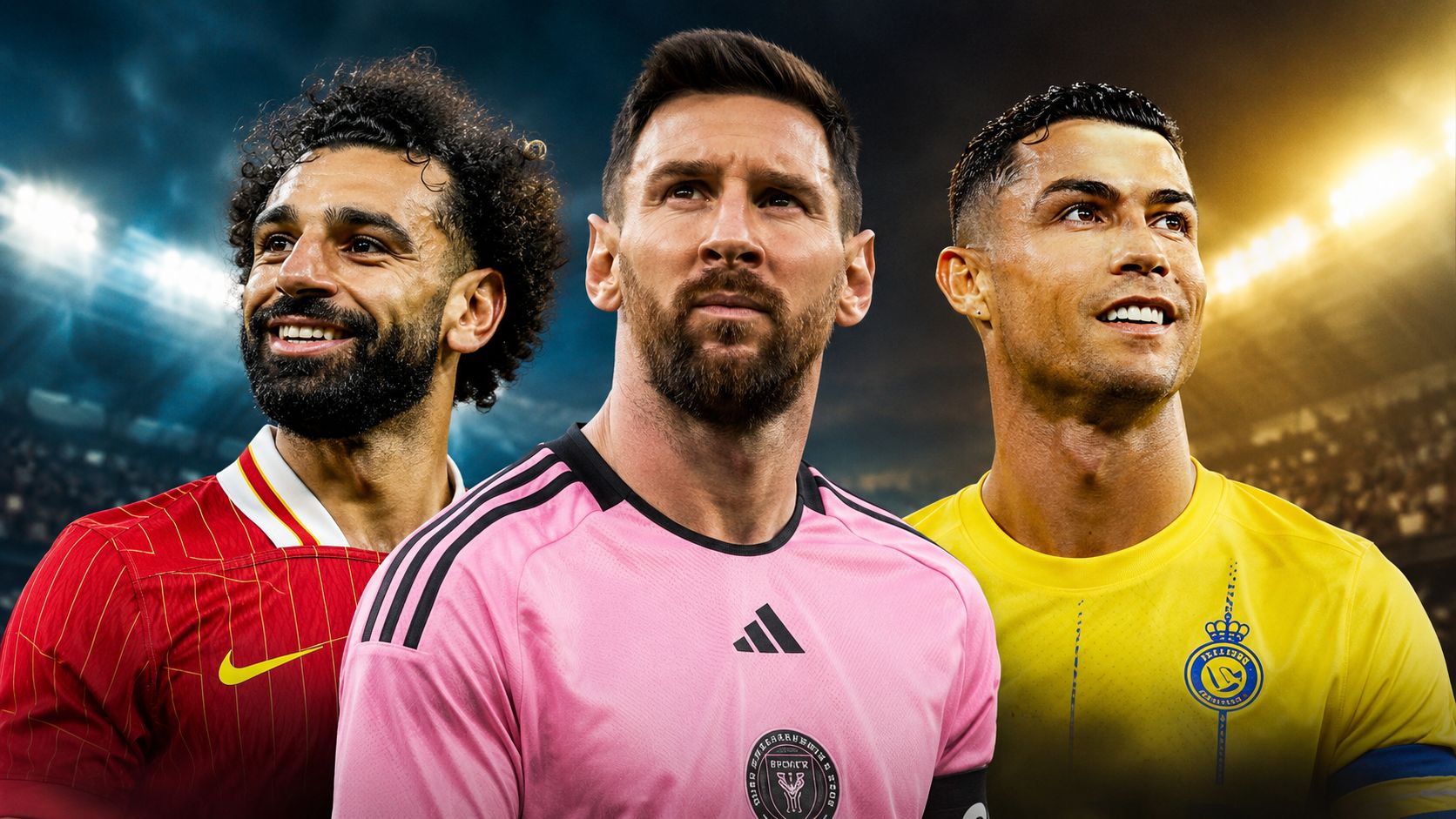
Lionel Messi's transfer to Inter Miami may be the most obvious example of this shift. The move was a huge success from a marketing point of view. The club's social media following surged, shirts sold out and ticket prices for matches rose steeply.
The remarkable part is that many of those new supporters were not attracted by Inter Miami as a club, nor by any tie to the city itself. They came because of Messi.
Messi and Ronaldo: star power goes beyond clubs
James Kirkham, a specialist in sports brand strategy, says Inter Miami's pink shirts have now become a common sight on the streets of towns and cities in Britain and across Europe, even though many people wearing them have no connection to Miami and have never even been there.
Kirkham believes the player is the main reason behind that spread. According to BBC Sport, fans want to express their bond with stars who, to them, stand as sporting and cultural icons.
One comparison sums it up clearly: Messi versus Cristiano Ronaldo, Barcelona versus Real Madrid, Major League Soccer versus the Saudi league. The player himself has now become a brand powerful enough to go beyond the limits of club, league and country.
Following players is not something restricted to Messi and Ronaldo. It started years ago with other stars such as Zlatan Ibrahimovic, before growing further with the major rise of video games and social media platforms.
Video games change the meaning of belonging
Kirkham argues that video games have transformed the way fans engage with football, especially younger supporters.
That generation feels less tied to the old-fashioned idea of lifelong loyalty to one club. At the same time, they know players and teams from many different leagues in great detail, thanks to games such as "EA Sports FC" and "Football Manager", along with YouTube, tradable player cards and more.
A fan today may follow a club in another country or another league simply because a favourite player wears that team's shirt. The badge and the club's history may hardly matter at all.
Supporters use these stars in video games, choose them for their virtual teams, and then buy the shirts of the clubs they represent in real life. As Kirkham notes, the boundary between the virtual world and reality has never been less clear.
The rise of the "second club" phenomenon
Supporting a football club has always been closely linked to family and place. Many fans inherit support for a particular club and keep that loyalty for life.
A study called "The rise of the second-club fan" highlights a clear change in that pattern. Around 80% of football fans worldwide now support a second team alongside their main club.
That does not mean they stop supporting their original side. Instead, they add another club, and sometimes more than one, to follow and engage with.
In countries and regions where domestic leagues are weaker, the trend becomes even stronger. In those places, geography plays a smaller role in deciding which team a person supports.
The players move into the driving seat
A supporter may choose a second club because of its story, its culture, its values or even because they like the design of the shirt. But the most important factor remains the players.
The study shows that when a player moves from one club to another, some of his fans move with him. It is a clear sign that the meaning of sporting loyalty has changed.
For these supporters, the club is no longer the only focus. The player himself has become the centre of the connection, and they now follow individuals rather than institutions.
From Griezmann to Haaland: the player writes his own story
The rules of football have changed quickly in recent years, giving players much greater control over their public image and personal narrative.
Antoine Griezmann was one of the first major stars to embrace that idea. In 2018, he announced "the decision" on his future through a documentary, before surprising everyone by revealing that he would remain at Atlético Madrid.
Griezmann received plenty of criticism at the time. But over the next few years, the idea spread, with players increasingly turning themselves into independent media channels delivering content directly to supporters.
Erling Haaland, Cristiano Ronaldo and Jude Bellingham, along with Ella Toone, are all clear examples of players who control their own platforms and reach fans well beyond their clubs' official channels.
Players can now present themselves exactly as they want, build their own audience and communicate directly with supporters. That has given them far greater power over how the public sees them.
Star status is no longer tied only to performances on the pitch
A player's popularity is now worth more than just what he produces in matches. His personality, his views and the causes he supports have become a vital part of his image.
Kirkham points to a major change: players now carry much stronger cultural meaning than before, and they understand the importance of leaving an impression on fans that goes beyond trophies and results.
Marcus Rashford is a strong example. During the coronavirus pandemic, he played an influential role in social causes and built a different kind of relationship with a wide section of supporters.
Young fans form a deeper connection with players when they know their views, causes and principles, especially when they discover something that matches their own identity and interests.
The World Cup: a golden stage for creating stars
Major tournaments give players a special opportunity to strengthen their personal brands, and no stage does that better than the World Cup.
Many players stood out at this summer's tournament and saw their social media followings rise dramatically, from established stars to unexpected breakout names.
Cape Verde goalkeeper Vozinha was among the most striking examples. He became a fan favourite after his performance against Spain, and his Instagram following jumped from around 50,000 to almost 30 million.
Lamine Yamal and Bellingham also used the tournament to boost their popularity. Cristiano Ronaldo, already the athlete with the biggest Instagram following in the world, added even more followers to his total.
Erling Haaland, meanwhile, was among the biggest winners of all. His social media accounts experienced a huge rise in followers.
Haaland: a model of the player who goes beyond his club
Haaland's popularity comes from several factors. Fans relate to his personality, his natural public image and his active presence on social media.
Viral video clips, a constant flow of memes, his relationships with former team-mates and his distinctive look have all helped lift his profile.
Matthew Kyle, head of insights and writer of the report from "Engage" and "MTM", says Haaland has gained more than 51 million new followers across his social media accounts since 1 July. That compares with only 11 million in the first six months of the year.
Kyle says Haaland's performances in the tournament played a role in that success, but his personality, his interaction with supporters and the sheer volume of content around him were equally important.
The clearest sign of the strength of his personal brand is this: his Instagram following is around 20 million higher than that of his club, Manchester City. He also has his own YouTube channel.
Clubs face a new challenge
This shift creates a difficult balance for clubs. They benefit enormously from the popularity of their players, especially through shirt sales and stronger fan engagement, but they do not fully control their stars.
A player can appear on a television show and discuss the music he likes. He can start a podcast. He can produce his own content, all without the club being directly involved.
Kirkham believes clubs understand this reality, but there is little they can do apart from building their own media operations and content systems.
For supporters, however, this change is an opportunity. They now have many more ways to follow players and receive a steady stream of content about their lives and careers, both on and off the pitch.
What happens when the star leaves?
The biggest challenge for clubs is keeping the fans that a particular player brought in once he departs. This is where the idea of the "national hero" becomes important: a star from one country can open the door to a whole new overseas audience for a foreign club.
Son Heung-min is a perfect example. His presence at Tottenham made the club so popular among South Korean supporters that the London side overtook Manchester United as the most popular foreign team in the country.
Even if Son were to leave Tottenham, the club would not suddenly lose its millions of Korean followers. At the same time, his new club would likely see its own following grow.
Trabzonspor offer a similar example. They made major gains in fan base and marketing after signing Egyptian star Mohamed Salah following his spell with Liverpool.
Content may become more powerful than affiliation
Kyle believes clubs need to maximise the value of their stars while accepting that every player eventually moves on, either to another club or into retirement.
That means content beyond the 90 minutes could be the key to retaining supporters.
Clips showing players' lives behind the scenes attract huge interest, even from people who do not support the clubs involved. Strong content draws viewers in simply because it is entertaining and different.
"Welcome to Wrexham" is a clear example of how figures linked to a club can attract audiences who do not necessarily follow football. Ryan Reynolds and Rob McElhenney brought new attention to Wrexham.
Are we seeing a new era in football?
All of these developments point in one direction: football is moving into a period in which the player becomes more than just one part of a team.
Stars are now independent brands. They own their audience, their platforms and their content, and they can carry a large part of that following with them wherever they go.
Clubs, in turn, can no longer rely only on their history and badge to keep an audience. They must create stories, personalities and content that keep supporters engaged even after their biggest stars have moved on.
A new era may be beginning, one in which the fan is no longer satisfied with following only the club. They follow the player, the coach, the owner and every figure who shapes the story of the team.
As Kyle puts it, football is like a long-running drama series. Seasons pass, stories change, characters arrive and others leave, but the story itself never ends.
-
Makhana is a powerhouse of calcium and protein: Include these 4 tasty recipes in your diet, bones will become strong.

-
Mumbai became a 'classroom' for students on Independence Day! A unique initiative by Cityflo and Salaam Bombay Foundation
-
Oppo customer pocket scissors! K14 and A6 series to pay more money, know the new smartphone prices
-
FIH Hockey World Cup 2026: Indian Women Hold China to 2-2 Draw Opener; Navneet, Deepika On Scoring Sheet

-
IND vs SL Live: Team India dominates in Goal Test! Padikkal scored 167 runs, Jurel's fifty too; India built a mountain of 460 runs