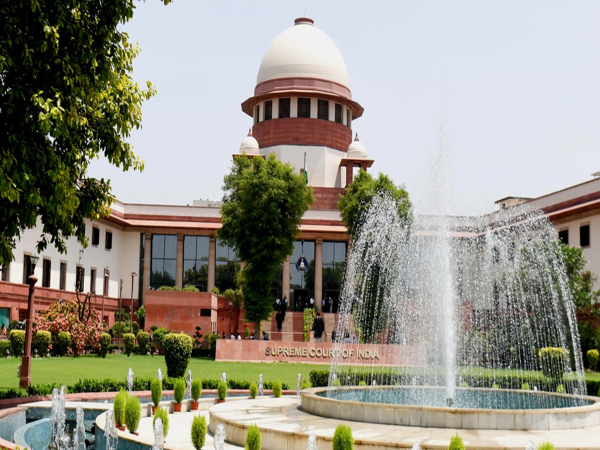
Supreme Court on APAAR ID: The Supreme Court stated on Monday that it would direct the Central Board of Secondary Education (CBSE) to implement the Odisha High Court's ruling nationwide. That ruling mandated that the model consent form for the Automated Permanent Academic Account Registry (APAAR) ID must provide parents with options to grant consent, refuse consent, or opt out of the scheme.
What is APAAR ID?
The APAAR scheme was launched by the Ministry of Education under the National Education Policy (NEP) 2020. Under this initiative, a unique 12-digit permanent ID is generated for students. This ID serves to digitally secure all academic records—such as marksheets, degrees, and co-curricular achievements—of the students.
APAAR - Automated Permanent Academic Account Registry
12-digit permanent student ID
Scheme launched under NEP 2020
System for securely maintaining digital academic records
What did the Supreme Court say?
A bench comprising Chief Justice Surya Kant, Justice Joymalya Bagchi, and Justice V. Mohan was hearing a petition filed by the parents of four students challenging the validity of the APAAR scheme. The petition alleged that the scheme compels students to obtain an Aadhaar ID.
During the hearing, the Supreme Court noted that the Central Government had not challenged the Odisha High Court's decision from December 2025. Therefore, it would direct the CBSE to implement that decision across the country.
The bench stated, "We will direct the CBSE to implement this decision nationwide, as the High Court's order has been accepted. We are also directing the CBSE to examine these issues."
The Court mentioned that a formal order regarding this matter would be uploaded later. The Supreme Court also indicated that it would direct the CBSE to consider the issues raised by the petitioners concerning consent and data security. CBSE will be directed to implement the High Court's decision nationwide.
A formal order will be issued later.
CBSE must also consider aspects of consent and data protection.
What arguments did the petitioners present?
APAAR is being made mandatory in practice.
Linking it with Aadhaar is claimed to be unconstitutional.
Questions raised regarding compliance with the DPDP Act.
No 'opt-out' option in the consent form.
Demand for the 'Right to be Forgotten'.
Senior Advocate Indira Jaising, representing the petitioners, stated that while the government describes the APAAR scheme as voluntary, children are effectively being forced to participate in it, even though the scheme was not established under any specific legislation. She noted that since APAAR is linked to Aadhaar, obtaining an Aadhaar number becomes practically essential to acquire an APAAR ID.
Citing the 2019 K.S. Puttaswamy (Aadhaar) judgment, Jaising argued that children cannot be compelled to obtain Aadhaar. She contended that making APAAR mandatory for appearing in examinations would violate that ruling.
She stated, "The right to education is a constitutional right. Requiring a child to obtain Aadhaar and APAAR in order to sit for an examination is unconstitutional."
She further argued that the implementation of the scheme fails to fully comply with the provisions of the Digital Personal Data Protection (DPDP) Act, 2023. Serious concerns remain regarding informed consent from parents, the right to withdraw consent, and the security of students' personal data.
Jaising described the current consent form as akin to a standard contract, leaving parents with no real option to refuse consent or opt out of the scheme from the outset.
She requested the court to direct CBSE and schools to obtain parental consent in accordance with Section 6 of the DPDP Act.
She also expressed concern regarding the long-term storage of children's academic records. Therefore, students should also be granted the "Right to be Forgotten" and the right to withdraw consent in the future.
What did the Chief Justice observe?
The scheme aims to improve the education system.
Do not view every initiative with suspicion.
It will assist with record-keeping and monitoring the teacher-student ratio.
CBSE circulars cannot override the law.
However, the Chief Justice expressed some reservations regarding a wholesale challenge to the scheme. He noted that the scheme aims to create a unique academic identity for every student and improve the education system. He remarked, "Not everything in the country should be viewed with suspicion. This is a welcome step."
The Chief Justice stated that this unique ID would assist education officials in maintaining accurate student records, implementing the curriculum, and monitoring parameters such as the teacher-student ratio.
In response, Indira Jaising argued that even if the scheme's objective is valid, it must still meet constitutional standards regarding legality, necessity, and proportionality. The Supreme Court further observed that CBSE circulars would be subject to the Digital Personal Data Protection (DPDP) Act and could not supersede the prevailing law.
Disclaimer: This content has been sourced and edited from Amar Ujala. While we have made modifications for clarity and presentation, the original content belongs to its respective authors and website. We do not claim ownership of the content.
-
Bournemouth Star Alex Scott Rejects New Contract as Manchester United and Arsenal Step Up Interest

-
Tottenham explore goalkeeper exchange with Napoli as Italian club target Guglielmo Vicario

-
Vaishno Devi Yatra Package: Visit Mata Rani in low budget, in this package of IRCTC you will get complete arrangements from travel to stay.

-
Medical Success Story: 20-year-old woman undergoes successful minimally invasive mitral valve replacement surgery at Wockhardt
-
Skoda Slavia Monte Carlo Edition Update: Check New Exclusive Paint Options And Prices