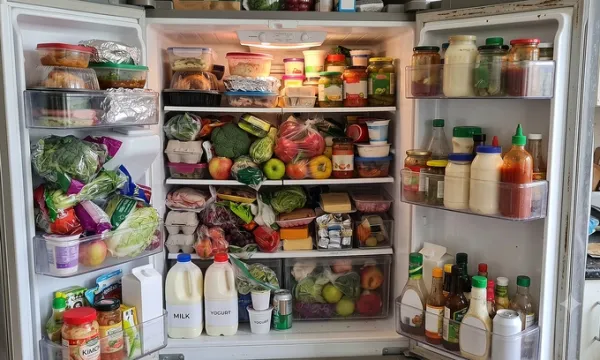
The refrigerator is essential in most kitchens, yet many people overfill it or fail to clean it regularly. Poor storage practices can allow bacteria to multiply, cause food to spoil faster and directly threaten family health.
Overloading the freezer
Assoc. Prof. Dr. Nguyen Duy Thinh from the Institute of Biotechnology and Food at Hanoi University of Science and Technology said freezing can help preserve the nutritional value, quality and flavor of many foods.
However, safe storage time depends on several factors, including temperature, whether the food is raw or processed, and whether meat is stored whole or minced.
Frozen food should ideally be kept at a stable temperature below minus 18 degrees Celsius. If stored for too long, it may deteriorate and produce harmful substances, increasing the risk of digestive problems, infection and food poisoning.
An overfilled refrigerator or freezer also prevents cold air from circulating evenly. This can cause food to spoil more quickly and increase the risk of cross-contamination.
|
Overloading the freezer can encourage bacterial growth inside the refrigerator. Photo by AI |
Keeping moldy food
Many people simply cut away the moldy part of bread, vegetables or rice and eat the rest.
However, mold may spread deeper into food than is visible on the surface. Refrigeration does not eliminate all types of mold, and foods with a high moisture content are especially vulnerable.
Eating mold-contaminated food may irritate the digestive system and expose consumers to harmful toxins. Food that shows signs of mold, discoloration, decay or an unusual smell should be discarded immediately.
Improperly storing overnight leftovers
Cooked food left at room temperature for too long can quickly become a breeding ground for bacteria.
Leafy vegetables and soups stored improperly overnight may also contain increased levels of nitrite. After entering the body, nitrite may contribute to the formation of nitrosamines, compounds associated with an increased risk of stomach cancer after prolonged exposure.
Cooked food should be refrigerated promptly and preferably consumed within 24 hours.
To store food safely, wash and dry ingredients before dividing them into portions suitable for one meal. This helps avoid repeatedly thawing and refreezing food.
Meat should be packed neatly in dedicated food storage bags or sealed containers. Raw and cooked food should always be kept separate, while fresh meat should not be placed directly beside frozen meat. Wet or leaking meat packages should also not be put into the freezer.
Refrigerators should be cleaned regularly, and food should be checked frequently so expired or spoiled items can be removed. Fresh seafood should either be cooked immediately or frozen under suitable conditions.
Consumers should also check the expiration dates and condition of spices and condiments. Buying only enough food for several days, storing it properly and consuming it within a safe period can help reduce waste and protect health.
-
Kids Weight Training: Is weight training safe for children? Know the correct age, benefits and important precautions

-
Benefits and right time of applying oil to hair

-
UP’s daughters struggle: Government is giving free scooty to go to college

-
Danger of cyber fraud increased from SMS to UPI, SMS scams increased by 146% in India, big revelation in the report

-
Big announcement of huge increase in dearness allowance! fun of government employees