The FIFA World Cup remains the most sought-after prize in the world’s most beloved sport. Yet, even some of football’s most iconic names have ended their careers without ever holding it aloft.
One such legend is Cristiano Ronaldo, who played his final World Cup match after Portugal’s elimination by Spain in the Round of 16 on Monday. The former Manchester United and Real Madrid forward has claimed nearly every other honour imaginable — from the Premier League and UEFA Champions League to the European Championship and multiple Ballon d’Or titles.
However, the 41-year-old will never add the World Cup to his glittering trophy cabinet after six unsuccessful campaigns. He is not alone in that disappointment, as several other football greats have experienced the same fate.
Johan Cruyff, one of the most influential figures in football history, has both a playing style and stadiums named in his honour. Despite winning numerous trophies throughout his illustrious career, the Dutch maestro never captured the World Cup. Cruyff and the Netherlands came agonisingly close in 1974, reaching the final in West Germany before losing 2-1 after taking an early lead. They made it to the final again four years later, but this time without their talisman, who had retired from international football in 1977 following a kidnapping attempt on his family in Barcelona.
After hanging up his boots, Cruyff enjoyed remarkable success as a manager, guiding Barcelona to their first-ever Champions League crown. However, he never managed the Dutch national team, possibly because of internal disputes, before passing away in 2016 at the age of 68.
Another name on the list is Alfredo Di Stefano, who, despite representing three nations in his career, never played in a World Cup. The Real Madrid icon, who lifted five European Cups with Los Blancos, earned six caps for Argentina but was banned by FIFA after playing four matches for an unsanctioned Colombia XI — as Colombia was suspended from international football at the time.
When Di Stefano gained Spanish citizenship in 1956, FIFA lifted the ban, allowing him to represent Spain. At 31, he helped the team qualify for the 1962 World Cup in Chile, but an untimely injury prevented him from featuring in the tournament.
Paolo Maldini, often regarded as the ultimate example of a flawless defender, dedicated his entire club career to AC Milan, with whom he won the Champions League five times. The Italian star played a pivotal role for the Azzurri during their semi-final run on home soil in 1990 and their journey to the 1994 World Cup final, where they suffered a heartbreaking penalty shootout defeat to Brazil after a goalless draw.
Italy exited via penalties again in 1998 and were eliminated in the Round of 16 in 2002 — Maldini’s final World Cup appearance before retiring from international duty.
Ferenc Puskas, another all-time great, came closest to glory with Hungary in the 1954 World Cup. Known as the Mighty Magyars, Hungary were considered the dominant force in international football at the time. They reached the final against West Germany in Switzerland, a thrilling encounter that saw four goals in just 18 minutes. However, a late strike from German forward Helmut Rahn sealed a 3-2 victory for West Germany.
That final marked the end of an era for Hungary’s golden generation, as many players fled the country after the failed Hungarian Revolution. Puskas refused to return home and eventually settled in Spain, joining Real Madrid. There, he won three European Cups and became a naturalised Spanish citizen, representing Spain four times — three of those appearances coming at the 1962 World Cup.
No player has attempted to win the World Cup more times than Cristiano Ronaldo, who shares the record for most tournament appearances (6) with Lionel Messi and Guillermo Ochoa. Portugal’s best showing during the Ronaldo era came in 2006, when they reached the semi-finals before losing to France. Since then, they have exited the competition in the Round of 16 three times, reached the quarter-finals once, and suffered a group stage exit once.
Ronaldo’s farewell at this year’s tournament marks the end of an extraordinary World Cup journey, but his name remains among the finest to ever grace the game — even without football’s most prestigious prize.
-
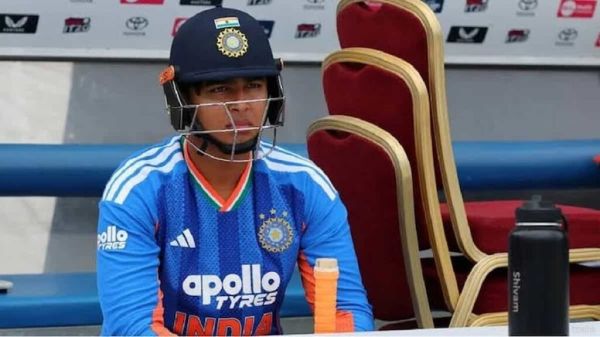
Flopped in two consecutive matches! Will Vaibhav Suryavanshi be dropped from Team India? Big update came out
-
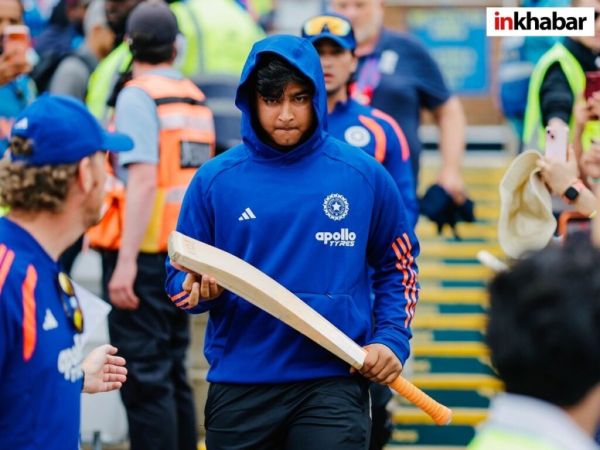
Vaibhav Sooryavanshi: Will Vaibhav Sooryavanshi be out of Team India? Proved to be failed in two consecutive matches, now there will be a big change
-
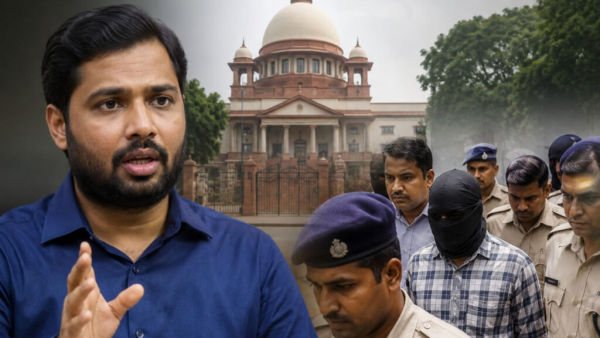
Will Khan sir get relief in Patna coaching controversy or will problems increase? Hearing on anticipatory bail completed, decision to come on July 10
-
Big meeting of Railways in Bareilly: MP Ruchi Veera put forward these 11 demands including changing the timing of Ramnagar train.
-
Maharashtra unveils new bike taxi policy with Domicile and police verification rules