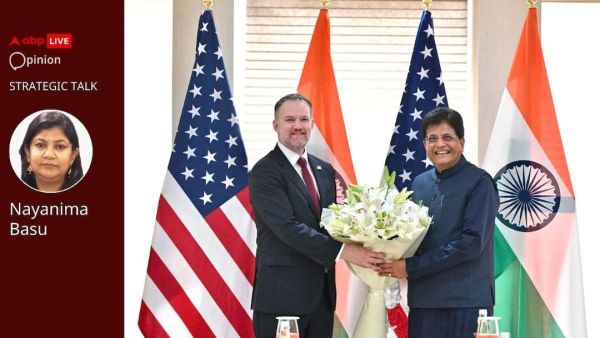
The inaugural visit of US Trade Representative (USTR) Jamieson Greer to India was highly anticipated as a potential turning point in the bilateral trade relationship between New Delhi and Washington. This visit came at a crucial time, with the United States seeking significant access to the expansive Indian market to help alleviate one of President Donald Trump's most pressing concerns-the growing trade deficit with India. Despite high hopes for the visit, which spanned from June 22 to June 24, the outcome was disappointing, as the entrenched differences between the two nations remained insurmountable.
During his visit, Greer led a high-level US delegation aimed at fostering trade relations. Speculation was rife that this trip would lead to meaningful discussions and possibly the establishment of an initial trade framework. Such a framework is seen as a critical precursor to developing a more comprehensive Bilateral Trade Agreement (BTA). However, the meetings primarily took place in Vanijya Bhavan, India's Ministry of Commerce and Industry, and ultimately did not result in significant progress.
The backdrop to Greer's visit included several recent developments that sought to smoothen the roughness in the relationship since last year. Over the past year, both countries had experienced escalating tensions over various issues, including contentious tariffs imposed by India, as well as discussions regarding India’s purchase of Russian crude oil amidst international sanctions. Additionally, the US role in the India-Pakistan conflict, particularly during the military operation known as "Operation Sindoor" that occurred in May 2025, had further complicated diplomatic interactions.
The tension in the ties seemed to have somewhat smoothed out when US Secretary of State Marco Rubio visited India this May, marking his first visit since taking charge. During the visit, Rubio made it clear in no uncertain terms that India remains an important partner for India, albeit with certain riders, in the Indo-Pacific region. But, nevertheless, Rubio did try to smoothen frayed nerves on both sides. Thereafter, Prime Minister Narendra Modi met President Trump, on the margins of the G7 Summit in Evian, France, on 17 June, which was followed by Greer’s visit.
All these developments led many pundits to believe that an initial agreement will be finalised after the one signed in February 2026 remained in doldrums. In fact, said a readout issued by the PMO after the meeting with Trump said, “The leaders noted with particular satisfaction the significant progress made in negotiations towards an interim Bilateral Trade Agreement and instructed their officials to work towards a balanced, mutually beneficial, and commercially meaningful agreement at the earliest.”
The first India-US interim trade agreement framework signed on February 6, 2026, is currently stuck in limbo and being renegotiated. Both countries have confirmed that the core of the deal is finalised, but its implementation is on hold due to sudden legal changes in Washington.
While imposition of tariffs by the US on Indian imports continues to remain a challenge, what missed the eyes was Washington launching Section 301 Investigations against India. A report issued by the USTR issued on June 2 stated, “USTR found that India has failed to impose and effectively enforce a forced labour import prohibition. In section IV, we found that the failure to impose and effectively enforce a forced labour import prohibition is unreasonable… We found that the failure to impose and effectively enforce a forced labour import prohibition burdens or restricts US commerce. For the foregoing reasons, the results of this investigation indicate that the acts, policies and practices of India related to the failure to impose and effectively enforce a forced labour import prohibition are unreasonable and burden or restrict US commerce.”
OPINION | USPACOM To USINDOPACOM To USPACOM-What’s In A Name?
The USTR also recommended an additional 12.5 percent tariff on Indian imports. In the broader annual Special 301 Report, the USTR placed India on the Priority Watch List, in other words, India remains a country of concern for the US in terms of trade.
In early February, Washington agreed to lower its steep reciprocal tariffs on Indian goods from 50 percent down to 18 percent. In exchange, India committed to increasing market access and making $500 billion in purchases of US goods (energy, aircraft, technology) over five years. On February 20, 2026, the US Supreme Court struck down the administration's sweeping reciprocal tariff policy, ruling that the legal mechanism used to set those tariffs was unauthorized. This effectively dissolved the 18 percent tariff rate India had just negotiated. To replace the struck-down framework, the U.S. implemented a blanket, temporary 10% tariff on almost all nations under Section 122 of the Trade Act.
Because the baseline US tariff for everyone dropped to 10%, India’s hard-won 18% preferential rate lost its economic logic. Competitors like Vietnam, Pakistan, and Bangladesh suddenly had the same or better access to the US market without making any concessions. Negotiators are racing to finalize these structural revisions before July 24, 2026, which is when the temporary US.10 percent tariff regime officially expires.
India has now told the US that for New Delhi to sign a renegotiated trade pact would require dropping of Special 301 Investigations. While US remains India’s largest economic partner, New Delhi’s bilateral trade with Washington remains cushioned with a considerable trade surplus. However, in the last fiscal year, India’s annual trade surplus with the US narrowed by $6.48 billion. According to June 2026 data released by India's Ministry of Commerce and Industry, India's goods trade surplus with the US fell to $34.41 billion in FY 2025-26, down from $40.88 billion in FY 2024–25.
For India to agree to a trade deal with the United States at this juncture would be equivalent to acknowledging the findings of the Special 301 investigations conducted by the US government. Essentially, this means that India would be indirectly accepting the US's assertion that New Delhi does not take adequate legal measures to prevent and disrupt the inflow of third-party goods produced through forced labour into its own supply chains. As a result, the path forward for India in maintaining seamless and productive bilateral trade relations with the United States looks particularly challenging.
This situation is made more complex by the significant economic activities unfolding on both sides. Indian investors have poured billions of dollars into various sectors in the United States, indicating a strong interdependence in areas such as technology, manufacturing, and services. Concurrently, India has been increasingly purchasing advanced military equipment and weaponry from the US, further entrenching their partnership in defence and security matters.
Given these dynamics, one must ponder the leverage that India possesses in its dealings with the US regarding trade matters. While the economic ties are deepening, the question of how India can assert its interests or negotiate terms favourable to its domestic laws and ethical standards remains an intricate dilemma.
OPINION | India's Position On 'Free Tibet' Remains Ambiguous
Nayanima Basu is a senior independent journalist.
[Disclaimer: The opinions, beliefs, and views expressed by the various authors and forum participants on this website are personal and do not reflect the opinions, beliefs, and views of ABP News Network Pvt Ltd.]
-
‘Promise of marriage and rape for 8 years…’, the soul-stirring story of the helpless woman in Thakurdwara!

-
8th Pay Commission: What is the difference between the minimum and maximum salary of central employees? Know the complete history from 1st to 7th Pay Commission
-
Passport Is Not A Citizenship Proof, Says Govt
-
Saudi Arabia: 4 expatriates arrested on prostitution charges in Tabuk, case handed over to public prosecution

-
Restoration of Non-Domestic LPG Supplies Explained