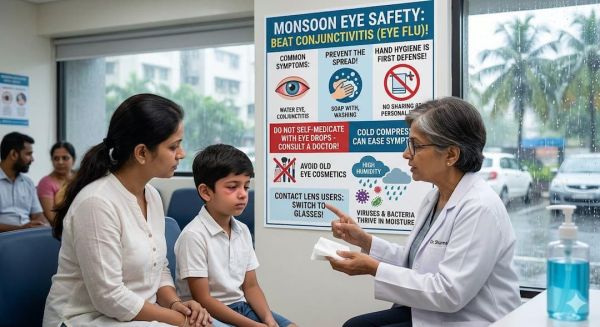
While the rainy season brings relief from the heat, it also increases the risk of several infections, including conjunctivitis, commonly known as eye flu. Hospitals and clinics often report a rise in patients complaining of red eyes, excessive tearing, itching, and irritation during the monsoon months.
According to health experts, increased humidity, viral and bacterial infections, contaminated water, and close contact among people are some of the main reasons behind the rapid spread of eye flu during this season. The infection can easily spread in homes, schools, offices, and public places, making timely precautions essential.
What Is Conjunctivitis?
Conjunctivitis is an inflammation of the thin membrane that covers the white part of the eye and the inner surface of the eyelids. It can be caused by viruses, bacteria, or allergies. The condition often leads to redness, watery eyes, irritation, and, in some cases, sticky discharge from the eyes.
Children are particularly vulnerable to the infection as they tend to touch or rub their eyes frequently, increasing the chances of transmission.
Common Symptoms of Eye Flu
Experts say individuals should watch out for the following symptoms:
* Redness in the eyes
* Excessive watering
* Itching and burning sensation
* Feeling of irritation or a foreign object in the eye
* Swollen eyelids
* Sticky discharge
* Sensitivity to light
If these symptoms appear, medical advice should be sought instead of ignoring the condition.
Why Does Eye Flu Spread More During Monsoon?
The rainy season creates a favorable environment for viruses and bacteria due to increased moisture in the air. Exposure to rainwater, dust, and pollution can also irritate the eyes and increase the risk of infection.
Additionally, crowded places and close contact among people make viral conjunctivitis highly contagious, leading to faster transmission.
Hand Hygiene Is the First Line of Defense
Doctors emphasize that maintaining proper hand hygiene is one of the most effective ways to prevent eye infections. Since people unknowingly touch their face and eyes multiple times a day, germs present on the hands can easily reach the eyes.
Regular handwashing with soap and water and avoiding unnecessary touching or rubbing of the eyes can significantly reduce the risk of infection.
Cold Compress Can Help Ease Symptoms
People suffering from eye flu may experience swelling, redness, and discomfort. Applying a clean cloth soaked in cold water over closed eyelids can provide relief and help reduce inflammation.
However, experts advise ensuring that towels and cloths used around the eyes are washed regularly and not shared with others.
Avoid Using Old Eye Cosmetics
Eye-related cosmetic products such as mascara, eyeliner, and eyeshadow can harbor bacteria. Using old or contaminated products during or after an eye infection may increase the risk of reinfection.
Experts recommend replacing eye makeup products after recovering from conjunctivitis.
Do Not Self-Medicate With Eye Drops
Many people begin using antibiotic eye drops as soon as their eyes turn red. However, not all cases of conjunctivitis are caused by bacteria. Viral conjunctivitis often resolves on its own, while bacterial infections may require specific medications.
Doctors warn against using any eye drops without professional medical advice.
Contact Lens Users Should Be Extra Careful
Individuals who develop eye flu should immediately stop wearing contact lenses. Continuing to use lenses during an infection can worsen irritation and prolong recovery.
Experts advise switching to glasses until the infection has completely cleared.
Prevent the Spread of Infection
Since eye flu is highly contagious, infected individuals should avoid close contact with others whenever possible. Maintaining personal hygiene, not sharing towels or personal items, and following medical guidance can help prevent the infection from spreading within households, schools, and workplaces.
Health experts stress that awareness, hygiene, and timely care remain the most effective ways to keep eye infections under control during the monsoon season.
-
Former Chelsea and Newcastle forward Demba Ba appointed Sporting Director at Ligue 1 club Le Havre

-
England face Marcus Rashford fitness concerns before Ghana World Cup clash

-
Ayyoub Bouaddi: Why Arsenal Are Pursuing the World Cup Sensation Tipped to Rival Kylian Mbappe

-
Ukraine Returns Polish Honours As Diplomatic Row Escalates

-
‘Start believing!’ – Zlatan Ibrahimovic says USMNT have what it takes to win the 2026 World Cup