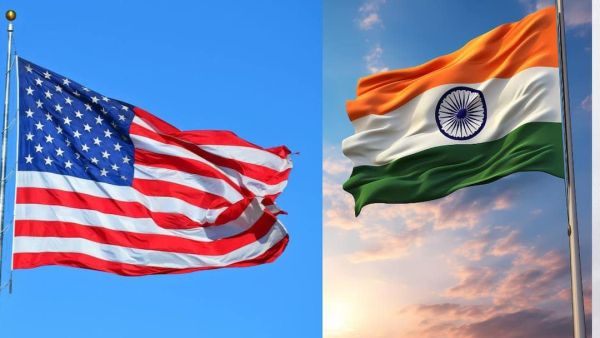
As the Trump administration moves ahead with a fresh set of proposed tariffs targeting imports from 60 economies, including India, New Delhi has sought to reassure businesses that discussions with Washington remain on track and that negotiations on a broader trade framework are continuing in parallel.
The development comes at a sensitive moment in India-US economic relations, with senior officials from both countries currently engaged in talks aimed at finalising an interim trade arrangement that could pave the way for a wider bilateral trade pact.
Why The US Has Proposed New Tariffs
The latest proposal stems from investigations conducted by the United States Trade Representative (USTR) under Section 301 of the US Trade Act of 1974.
The investigations examined measures adopted by 60 economies, including India, to prevent the import of goods allegedly linked to forced labour practices.
Following the review, the USTR proposed imposing additional tariffs on imports from the affected economies. However, the measures are not yet final and remain subject to public consultation and review.
The proposal forms part of a broader trade policy push by the Trump administration as it seeks to reshape trade relationships and address what it views as unfair practices affecting American businesses and workers.
India Says Engagement With Washington Continues
Responding to the development on Wednesday, the Commerce Ministry said India remains actively engaged with the United States on the Section 301 proceedings, reported IANS.
At the same time, discussions are continuing on a separate track focused on strengthening bilateral trade ties.
According to the ministry, India is also working with the US to finalise a framework agreement that was first announced earlier this year as part of efforts to deepen economic cooperation.
The framework emerged from the February 7 India-US joint statement, which outlined a roadmap for a reciprocal trade arrangement and broader Bilateral Trade Agreement (BTA) negotiations.
While the tariff proposal has generated fresh uncertainty for exporters, officials stressed that trade discussions between the two countries remain ongoing.
Not All Products Will Be Affected
One important aspect of the USTR proposal is that it does not apply uniformly across all product categories.
According to the Commerce Ministry, products already covered under Section 232 tariffs, along with certain other categories, have been excluded from the proposed measures.
In addition, Washington has proposed a special mechanism for textile and apparel products that could allow a specified volume of imports from selected economies to enter the US market at lower tariff rates.
The move suggests that negotiations and exemptions could still play a significant role before any final measures are implemented.
Stakeholders Still Have Time To Respond
The proposed tariffs are currently at the consultation stage, giving governments, businesses and industry groups an opportunity to present their views.
Stakeholders can submit requests to participate in public hearings until June 22, 2026, while written comments will be accepted until July 6.
Public hearings are scheduled for July 7, after which the USTR will review the feedback before deciding whether to proceed with the proposed measures.
This means the tariff framework could still undergo changes before a final decision is announced.
Trade Negotiations Gather Momentum
The tariff proposal has emerged alongside intensified trade engagement between New Delhi and Washington.
Senior officials from both countries are currently participating in a three-day round of discussions in New Delhi aimed at finalising an interim bilateral trade agreement.
The negotiations are expected to focus on tariff reductions, market access issues and mechanisms to facilitate trade flows between the world's largest and fifth-largest economies.
The discussions build on commitments outlined earlier this year to pursue a mutually beneficial trade arrangement while laying the groundwork for a more comprehensive Bilateral Trade Agreement.
Despite periodic disagreements over tariffs, market access and regulatory barriers, both India and the United States have repeatedly emphasised the importance of strengthening economic ties.
US Ambassador to India Sergio Gor recently said Washington was looking forward to completing the details of a new bilateral trade agreement that would expand market access, lower barriers and create greater certainty for businesses operating in both countries.
For India, the outcome of the ongoing negotiations could influence export competitiveness in key sectors ranging from textiles and engineering goods to pharmaceuticals and manufacturing.
For the United States, the discussions form part of a wider effort to recalibrate trade relationships while securing greater access for American businesses.
-
Madura United Assistant Coach Predicts Netherlands Will Face Tough Challenge at 2026 World Cup

-
Top Five Contenders for the 2026 FIFA World Cup

-
David Beckham and Gary Neville swing the axe as Salford City dismiss manager despite record-breaking season

-
Manchester United Finalise Deal for Ederson as Summer Squad Overhaul Begins

-
In this state of India, 90 percent of deliveries are by cesarean, know from experts why cases are increasing.