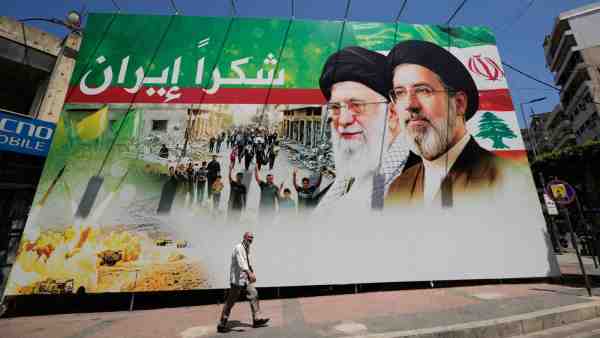
Iran is set to pocket sweeping financial gains under a near-final agreement with the United States, including the right to sell oil from the moment it is signed, access to a USD 300 billion development fund and, eventually, the release of its frozen assets abroad.
The memorandum of understanding (MoU), a copy of which was seen by Bloomberg News, offers the most complete picture yet of the economic package Washington has put together to end its war with Tehran. The deal is expected to be formally signed on June 19 in Switzerland, after which both sides will have 60 days to negotiate a permanent end to hostilities and agree on strict new limits on Iran’s nuclear programme.
One person familiar with the matter told Bloomberg that some technical details were still being finalised, meaning precise language could still change.

Oil, blockade and Strait of Hormuz
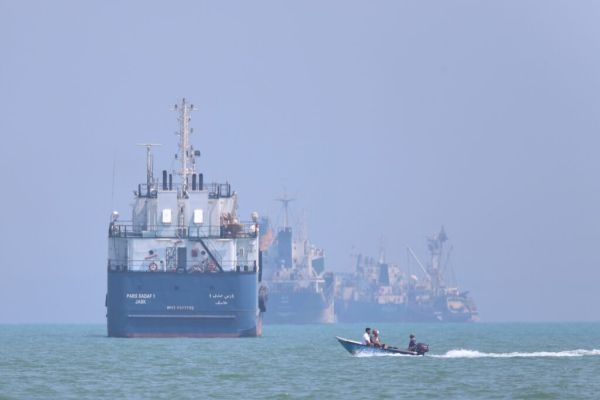
The draft commits the US Treasury to issuing “waivers for exports of Iranian crude oil, petrochemical products and their derivatives” immediately upon signing. The US would also lift its naval blockade of Iran, with both sides working to restore shipping through the Strait of Hormuz to pre-war levels within 30 days.
The strait, through which roughly a fifth of the world’s oil passed before the war began, had been functioning normally until February 28, when the US and Israel launched their military campaign against Iran. A person familiar with the matter told Bloomberg that Washington’s understanding was that the oil provision covered only Iranian crude already loaded onto vessels and did not amount to blanket permission for Iran to restart oil exports at will.
USD 300 billion fund, frozen assets
The US and its regional partners would draw up a plan for Iran’s economic rehabilitation, with financing of at least USD 300 billion, the draft says. On the politically charged question of Iran’s frozen overseas assets, the document says the US undertakes that the funds “will be released and made fully available,” although without specifying a timeline.
Trump had earlier flatly denied that the US would pay Iran USD 300 billion. The draft is careful to say only that the US and its partners would ensure financing of that amount reaches Tehran.
Full sanctions relief would come only as part of the final agreement to be negotiated over the next two months. American military forces would withdraw from the surrounding areas within 30 days of that final deal being signed.
Nuclear commitments and the gaps
In return, Iran would reaffirm its commitment never to seek a nuclear weapon. Tehran has long maintained it has no desire to build one and made the same pledge under the Obama-era Joint Comprehensive Plan of Action (JCPOA), which Trump abandoned in 2018.
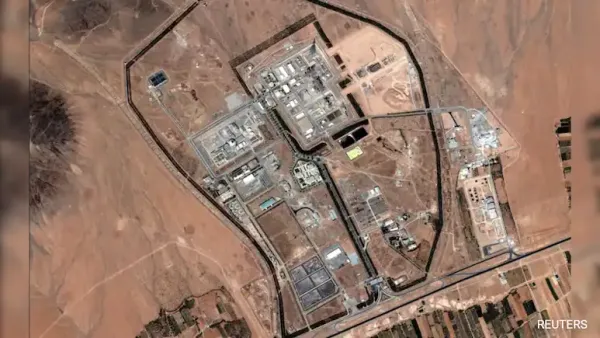
According to Bloomberg, the draft does not directly address Iran’s existing stockpile of enriched uranium, saying only that its fate “will be adequately addressed in a final agreement.” That silence has drawn attention. Iran currently holds 440.9 kg of uranium enriched to 60 per cent purity, just a short technical step from the weapons-grade threshold of 90 per cent, according to the International Atomic Energy Agency.
A closely guarded secret
Despite the impending signing, the MoU remains a closely guarded document, unknown even to most of Trump’s Republican allies in Congress and to Israeli officials. That opacity has fed confusion and scepticism on multiple fronts.
The Associated Press, which obtained White House talking points on the deal, reported that the document made several claims that did not match the situation on the ground. The talking points said American families would “feel relief at the pump and at the grocery store,” though energy and consumer prices had spiked precisely because the war the US launched in February disrupted oil flows through the Strait of Hormuz.
“You don’t know what’s true and what’s not true — is it in there?” Senator Shelley Moore Capito told AP. “My speculation is that it’s probably still being written and fine-tuned, and the administration is not ready to release it until it’s all done.”
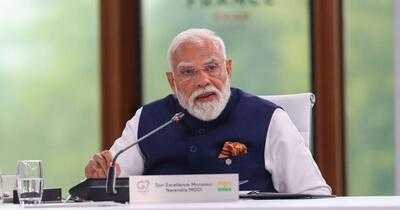
Trump, speaking at the G7 summit in France on Tuesday, June 16, said he would release the text after the formal signing. “I’ll not only release it,” he told reporters. “I’ll probably have a press conference and read it to you word by word, so that the press covers it accurately.”
Under a law enacted after the 2015 Iran nuclear deal, any nuclear agreement with Iran must go to Congress for review. Some congressional aides have argued that even the MoU to be signed this week would be subject to that requirement.
Lebanon clause rattles Israel
Among the more contentious elements of the draft is a clause requiring an end to the war “on all fronts, including in Lebanon,” which would draw Israeli Prime Minister Benjamin Netanyahu’s conflict with Hezbollah into the agreement. Netanyahu has so far refused to halt operations in Lebanon, and Hezbollah, which Iran backs, has rejected any agreements reached in talks it was not a party to.
Israeli officials have said they will not be bound by the terms of the US-Iran deal, the details of which they say they have not seen. “We’re less encouraged about the fact that it seems that Lebanon has been included in the agreement with Iran,” Israeli Ambassador to the US Yechiel Leiter told NPR. “And we think that that’s unnecessary and unhelpful.”
A senior US official told AP that Israel’s withdrawal from Lebanon was not a condition of the MoU.
-
ITV reveals full line-up of commentators, pundits and presenters for Argentina vs Algeria World Cup 2026 opener

-
Kylian Mbappe says joining Real Madrid has helped him embrace fame and live more freely as a global star

-
Real Madrid confirm Antonio Rudiger’s contract extension until 2027
-
FIFA explains technical issue behind disputed VAR decision in Switzerland vs Qatar World Cup clash
-
At G7 summit, Modi calls for safe maritime routes, protection for seafarers