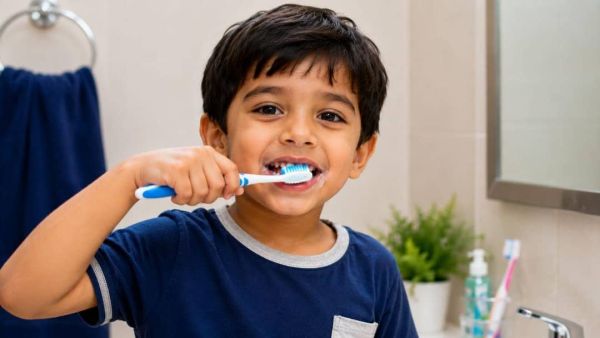
Brushing your teeth is one of the first things most people do every morning. It is an essential part of daily hygiene and plays a key role in maintaining oral health. While people once relied on neem or babool twigs to clean their teeth, toothbrushes have now become a household staple. Yet, despite using them every day, many people rarely stop to consider one important question: when should a toothbrush actually be replaced?
For many, a toothbrush remains in use until the bristles are visibly worn out. However, experts warn that delaying a replacement for too long can increase the risk of dental problems and even infections. Understanding when a toothbrush loses its effectiveness can help protect both your teeth and overall oral health.
How Often Should You Change Your Toothbrush?
According to health experts, a toothbrush should ideally be replaced every 12 to 16 weeks, which is roughly every three to four months. Regardless of how expensive or high-quality a toothbrush may be, its bristles gradually lose their ability to clean effectively over time.
If the bristles begin to spread, bend, or fray before the three-month mark, it is advisable to replace the brush immediately rather than waiting for the recommended timeframe to pass.
Why An Old Toothbrush Can Be A Problem
The human mouth naturally contains millions of bacteria and microorganisms. Brushing helps remove these germs along with food particles, keeping teeth and gums clean. However, as a toothbrush ages, its bristles become weaker and less effective at reaching and cleaning between teeth.
As a result, plaque and debris can accumulate in hard-to-reach areas, creating an environment where bacteria can multiply more rapidly. This may increase the likelihood of oral infections and other dental concerns.
Replace Your Brush After An Illness
If you have recently recovered from a viral infection, flu, sore throat, or any bacterial illness, health experts recommend replacing your toothbrush. Doing so may help reduce the chances of reintroducing harmful germs.
Similarly, if a family member has been dealing with an infection, others in the household should also take extra precautions. Children require even greater attention, and their toothbrushes may need replacing more frequently than every three months.
Replacing a toothbrush on time is only part of maintaining good oral hygiene. Proper care can also help keep it clean and effective.
After each use, rinse the toothbrush thoroughly with water and store it in a dry, open space. Cleaning it with warm water once a week can help maintain hygiene. It is equally important to wash the toothbrush holder regularly and avoid storing multiple wet toothbrushes together inside a closed cover, as this can encourage the growth of bacteria.
By replacing your toothbrush at the right time and following simple care practices, you can ensure better oral hygiene and reduce the risk of dental problems in the long run.
-
13 June Rashifal: Who should not use others’ car, who will get surprise, this zodiac sign will get relief in legal matters

-
Achari Paratha Recipe: Make delicious Achari Paratha with pickle spices, learn the easy recipe and how to make it

-
“Next-Level Pahadon Wali Maggi”: Internet Reacts To First-Ever Floating Maggi Point On Kashmir’s Dal Lake

-
Kangana Ranaut’s Patan Patola saree: Price, history and specialty of royal Gujarati handloom

-
Silent Call Scam: Phone gets disconnected as soon as you say ‘Hello’? Attention Your number may be included in the list of scammers