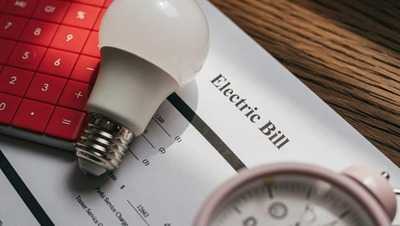
Your power bills in India might go up soon
17 May 2026
The Central Electricity Authority (CEA) has proposed a hike in fixed monthly electricity charges, which could lead to an increase in household power bills in India.
The move is aimed at helping power distribution companies (discoms) recover costs as more consumers turn to rooftop solar systems and industries increasingly rely on captive power generation.
If implemented, this proposal would mean a larger portion of electricity bills would come as mandatory fixed charges.
Discoms' revenue vulnerability during low consumption periods
Regulatory presentation
The proposal, which will be presented before the Forum of Regulators, notes that discoms currently recover most of their fixed costs through per-unit electricity tariffs instead of assured monthly payments.
This makes their revenues vulnerable during periods of low power consumption.
The CEA also highlighted that expenses such as transmission infrastructure, employee salaries, network maintenance, and payments to electricity generators account for a significant portion (38-56%) of a utility's total costs.
Impact on discoms' earnings
Revenue impact
Despite the high costs, fixed monthly charges only account for about 9-20% of total revenue.
The CEA also pointed out that industries and high-income households adopting rooftop solar, open-access systems, and captive power plants still rely on the grid for backup supply while buying less electricity from discoms.
This has a negative impact on their earnings.
Proposed phased approach to increase fixed-cost recovery
Recovery strategy
To address these issues, the CEA has proposed a "calibrated and phased approach" to gradually increase the fixed-cost recovery.
The proposal suggests that fixed charges for domestic and agricultural consumers could rise to 25%, while industrial, commercial, and institutional users may eventually pay up to 100% of fixed costs by 2030.
It also recommends separate tariff structures for rooftop solar users and consumers operating under net-metering systems.
-
Lee Andrews' mum breaks silence on Katie Price 'backlash' after he goes missing

-
San Diego shooting LIVE: Police swarm Islamic Center as 'avoid the area' warning issued

-
KFC unveils menu changes as chain revives old classic - full list
-
DVLA Monday alert over 'expensive' tax mistake

-
Active Shooter Incident at Islamic Center in San Diego Leaves One Dead