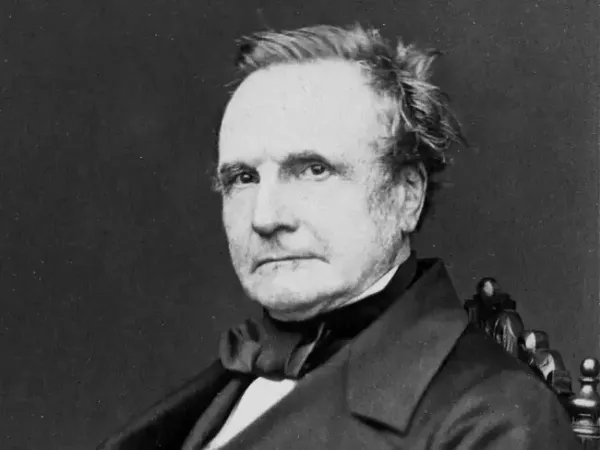
Charles Babbage is often remembered as one of the earliest thinkers who laid the foundation for modern computing. A mathematician and inventor from 19th-century England, he spent much of his life exploring how machines and logic could work together to solve complex problems. His ideas were far ahead of the technology available in his time, but they continue to shape how we understand computers today.
The quote of the day goes: “Occupation of the mind is such a source of pleasure that it can relieve even the pain of a headache.”
This quote is attributed to Charles Babbage, the English mathematician and inventor widely regarded as the “father of the computer”. Through this line, he highlights how deeply engaging the mind in thought or work can shift attention away from physical discomfort, even something as ordinary as a headache.
The idea also reflects how mental engagement can act like a natural form of relief. People often find that when they are deeply involved in meaningful work or thinking, they temporarily forget small aches or fatigue. Babbage seems to be observing this connection between mental focus and physical perception.
On another level, the quote of the day suggests that the human mind has its own way of managing discomfort. Instead of resisting pain directly, it can sometimes “move past it” by staying occupied. This makes intellectual activity not just useful for learning or productivity, but also for emotional and physical distraction in everyday life.
He studied at Trinity College, Cambridge, and later became a Fellow of the Royal Society. During his academic years, he worked with other mathematicians to improve the understanding of calculus in England. His intellectual curiosity extended beyond mathematics into engineering, economics, and scientific systems.
Babbage’s most important contribution came from his idea that machines could perform mathematical calculations automatically. This led to his development of the Difference Engine, a mechanical device designed to produce accurate mathematical tables. These tables were important for navigation and engineering, but human calculation often led to errors. His machine aimed to reduce those mistakes.
Although the full Difference Engine was never completed during his lifetime due to technical and financial limitations, the concept itself was groundbreaking. It introduced the idea that calculations could be automated using mechanical systems.
In many ways, it resembled the structure of modern computers. It had the idea of memory, processing, and programmable instructions, all in mechanical form. Although it was never fully built, it is now seen as a direct precursor to today’s digital computing systems.
A key moment in this journey was when mathematician Ada Lovelace studied Babbage’s work and described how the machine could follow a sequence of instructions. This is often considered one of the earliest ideas of computer programming.
He also wrote about industrial systems and efficiency, showing interest in how machines and labour could be organised more effectively. His ideas often connected science with real-world systems in ways that were unusual for his time.
Even though many of Babbage’s machines were not completed during his lifetime, his ideas became highly influential later. With the rise of modern computing in the 20th century, his designs were re-examined and recognised as early blueprints of computer systems.
Today, Charles Babbage is remembered not only for his inventions but also for the way he thought. His belief in structured logic, mechanical calculation, and intellectual engagement continues to be relevant in technology and science.
The quote of the day goes: “Occupation of the mind is such a source of pleasure that it can relieve even the pain of a headache.”
This quote is attributed to Charles Babbage, the English mathematician and inventor widely regarded as the “father of the computer”. Through this line, he highlights how deeply engaging the mind in thought or work can shift attention away from physical discomfort, even something as ordinary as a headache.
Meaning of the Quote in Simple Terms
At a basic level, Babbage is pointing to something many people experience in daily life. When the mind is fully occupied, whether through studying, solving problems, or working on something interesting, it tends to focus less on physical pain. The discomfort does not necessarily vanish, but it becomes less noticeable because attention is directed elsewhere.The idea also reflects how mental engagement can act like a natural form of relief. People often find that when they are deeply involved in meaningful work or thinking, they temporarily forget small aches or fatigue. Babbage seems to be observing this connection between mental focus and physical perception.
On another level, the quote of the day suggests that the human mind has its own way of managing discomfort. Instead of resisting pain directly, it can sometimes “move past it” by staying occupied. This makes intellectual activity not just useful for learning or productivity, but also for emotional and physical distraction in everyday life.
Charles Babbage: The Mind Behind Early Computing Ideas
Charles Babbage was born in London in 1791 and showed an early interest in mathematics and mechanical systems. Even as a young student, he was known for teaching himself advanced mathematical concepts because he felt formal education at the time was not enough for his curiosity.He studied at Trinity College, Cambridge, and later became a Fellow of the Royal Society. During his academic years, he worked with other mathematicians to improve the understanding of calculus in England. His intellectual curiosity extended beyond mathematics into engineering, economics, and scientific systems.
Babbage’s most important contribution came from his idea that machines could perform mathematical calculations automatically. This led to his development of the Difference Engine, a mechanical device designed to produce accurate mathematical tables. These tables were important for navigation and engineering, but human calculation often led to errors. His machine aimed to reduce those mistakes.
Although the full Difference Engine was never completed during his lifetime due to technical and financial limitations, the concept itself was groundbreaking. It introduced the idea that calculations could be automated using mechanical systems.
The Analytical Engine and a Step Toward Modern Computers
In the 1830s, Babbage began designing an even more advanced machine called the Analytical Engine. This concept went far beyond simple calculations. It was designed to follow instructions, store data, and perform a variety of operations using a system of punched cards.In many ways, it resembled the structure of modern computers. It had the idea of memory, processing, and programmable instructions, all in mechanical form. Although it was never fully built, it is now seen as a direct precursor to today’s digital computing systems.
A key moment in this journey was when mathematician Ada Lovelace studied Babbage’s work and described how the machine could follow a sequence of instructions. This is often considered one of the earliest ideas of computer programming.
Contributions Beyond Computing
Babbage’s work was not limited to machines and mathematics. He also contributed to several practical areas in society. He helped improve the British postal system, worked on actuarial tables used in insurance, and even designed mechanical tools like a speedometer and a device to help trains clear obstacles.He also wrote about industrial systems and efficiency, showing interest in how machines and labour could be organised more effectively. His ideas often connected science with real-world systems in ways that were unusual for his time.
Even though many of Babbage’s machines were not completed during his lifetime, his ideas became highly influential later. With the rise of modern computing in the 20th century, his designs were re-examined and recognised as early blueprints of computer systems.
Today, Charles Babbage is remembered not only for his inventions but also for the way he thought. His belief in structured logic, mechanical calculation, and intellectual engagement continues to be relevant in technology and science.