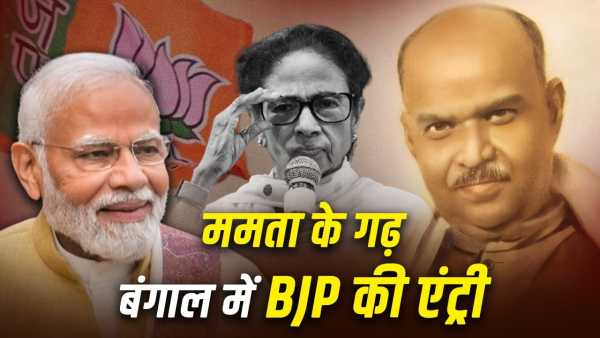
Even after BJP's landslide victory in West Bengal, Chief Minister Mamata Banerjee has refused to submit her resignation to the Governor.
On the occasion of the party's first victory in West Bengal, BJP is respectfully remembering the sacrifice of its founder Dr. Syama Prasad Mukherjee. Prime Minister Narendra Modi, in his speech at the party headquarters, said that Dr. Mukherjee struggled to maintain the unity of the nation and the seed sown by establishing the Jan Sangh in 1951, BJP's victory in Bengal today is a symbol of its expansion. Other leaders and workers of the party, filled with joy, are remembering the beginning of Akhil Bharatiya Jan Sangh (now BJP) under the leadership of Pandit Nehru and Dr. Mukherjee during the period of dominance of Congress and the difficult journey in which despite many ups and downs, the party moved forward by remaining firm on its resolutions.
The party moved from darkness to light with the “lamp” of hopes amid the pain and displacement of the partition of the country and today its “lotus” is blooming in the rays of the sun from Gangotri to Gangasagar. Of course, now BJP is the largest political organization in the world, but this journey that started with the first national conference of Jan Sangh held under the chairmanship of Dr. Shyama Prasad Mukherjee at Arya Kanya Higher Secondary School, Delhi on 21 October 1951, had to cross a long and difficult path to reach the destination. Read under what circumstances Bharatiya Jana Sangh was formed and how Dr. Syama Prasad Mukherjee accepted its leadership.
Mukherjee angry over Nehru-Liaquat Pact resigns
The country was going through a very difficult period amid the pain of partition. Even after acquiring Pakistan in the name of religion, Jinnah and his associates were creating problems for India. India was not struggling only on the Kashmir front. There was continuous displacement of Hindu-Sikh population from that side towards India. Amidst the flood of Hindu refugees coming from East Pakistan, Sardar Patel even said on one occasion that if Pakistan did not stop it, it would have to give land to settle this population.
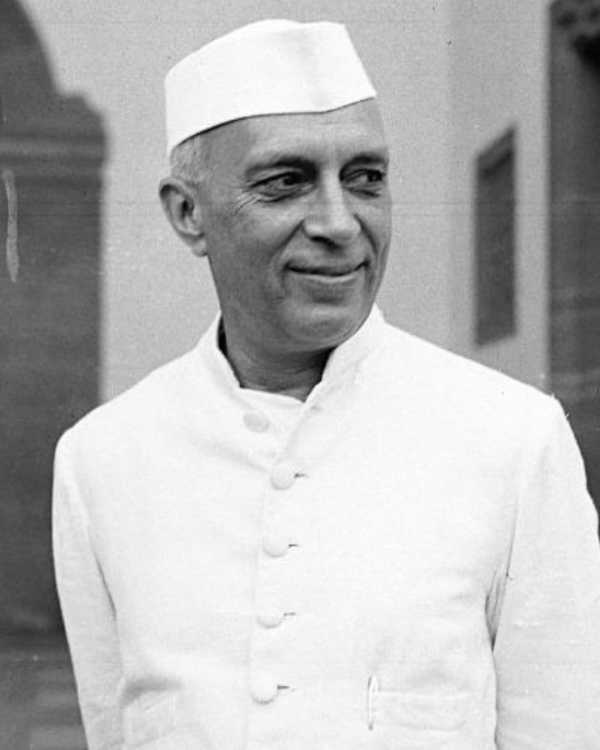
Pandit Nehru.
The continuous attacks on Hindu interests had worried the Rashtriya Swayamsevak Sangh. On 8 April 1950, an agreement was signed between Pandit Nehru and Pakistan Prime Minister Liaquat Ali Khan in Delhi. An assurance was given from Pakistan to stop the atrocities on Hindus there and their migration. Nehru cabinet member Dr. Shyama Prasad Mukherjee resigned from the post of minister, calling the agreement a betrayal of the Hindus of Bengal. However, Sardar Patel wanted Mukherjee to oppose Nehru while remaining in the cabinet instead of resigning.
Sangh contacted Mukherjee
Rashtriya Swayamsevak Sangh and people of nationalist ideology took Dr. Mukherjee's resignation very seriously. After his resignation, on April 18, 1950, Dr. Mukherjee made a statement in the Parliament that if the Nehru government did not change its policy, there would be no Hindus left in Pakistan and once again the same problems would arise which had led to the partition of the country.
Those people of the Sangh who, after the ban on Gandhi assassination, felt the need of such a political party, which could raise its voice in Parliament and outside in support of the thinking of the Sangh, started contacting Mukherjee. Mukherjee was not able to maintain coordination with Hindu Mahasabha in those days. He had called the assassination of Mahatma Gandhi wrong and harmful for Hindu interests. After leaving the cabinet, Mukherjee felt the need to soon form a new political party.
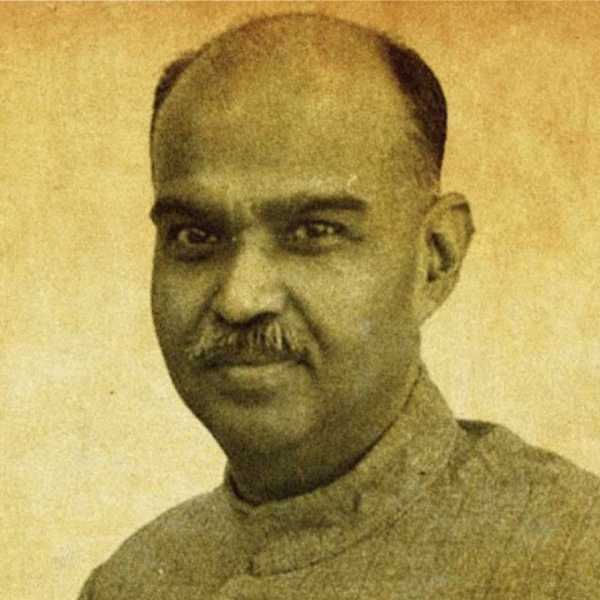
Shyama Prasad Mukherjee.
Even after the ban is lifted, the Sangh is on target of Congress and Communists.
The Sangh was banned by the government on 4 February 1948 after the Gandhi assassination. This ban was lifted on 11 July 1949. But even after this the organization was on the target of the government. Congress and Communists were constant attackers on him. There was no party that spoke in its support on political platforms. At such a time, the need for a like-minded political party started being felt among the top officials of the Sangh.
In those days, the then Saha Sarkaryavah Bala Saheb Deoras wrote in Yugdharma (Nagpur), "Till now the Sangh has been limited to the field of manifestation of the qualities of discipline and sacrifice generated by daily programs. But the community outside the Sangh has been ignorant of these sentiments. This situation will now end. The Sangh will try to solve its problems by taking the society along."
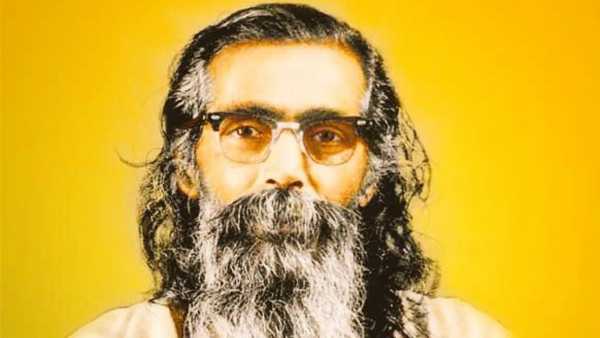
M.S. Golvarkar.
After initial hesitation, Guru ji agreed with conditions.
On the one hand, a large part of the Sangh considered it necessary to form an allied political party. But Sarsanghchalak M.S. Golwalkar was initially hesitant? According to Dattopant Thengadi, "Guruji felt that if Hindu interests are associated with one party, they will become narrow. Their pressure power will reduce. If the spokespersons of Hindu interests are in all the parties, then the pressure power will be more.
Formation of a political party for power at the all India level can divert us from Hindu interests. He wanted the Hindu organization to play the role of a pressure group in politics. In the role of controlling the elephant instead of becoming the elephant.” But soon they agreed. But he had some expectations from the party that wanted the support of the Sangh, which he had made clear in his articles in “Panchjanya” and “Organizer” in those days.
Guruji wrote, "If the support of any volunteer of the Sangh is needed, it will be available only when it is seen that the party has a separate political image based on idealism. I drew his attention to the statement given by Dr. Shyama Prasad Mukherjee in a press conference in which he had described the Hindu Mahasabha as communal because of its loyalty to the Hindu nation. I told him that the Sangh believes equally, if not more, that India is a Hindu nation. So would he want to distance himself from the Sangh?
Our agreement was reached only after his acknowledgment that the comment was made inadvertently. “I chose my loyal and seasoned colleagues who were selfless and determined and who could shoulder the burden of the new party.”
first conference of jansangh
On 21 October 1951, All India Jana Sangh was established under the chairmanship of Dr. Shyama Prasad Mukherjee in the national conference held at Arya Kanya Higher Secondary School, Delhi. Bhai Mahavir was made the General Secretary. On this occasion, Mukherjee had said, "We are committed to the renaissance and reconstruction of India. Forget the differences of our class, caste and religion and get engaged in the service of Mother India. However dark the present may be, the future is bright. The symbol of our party is the lamp. It is spreading the light of hope, unity, commitment and courage."
Lala Hansraj Gupta (Delhi Province Sanghchalak), Basantrao Oak (Delhi Province Pracharak), Dharamveer (Punjab Province Karyavah), Balraj Madhok and Bhai Mahavir played prominent roles in the establishment of the new party. Those who were given this responsibility in different states were Deendayal Upadhyay and Nanaji Deshmukh in Uttar Pradesh, Manohar Rao Moghe in Central India, Sundar Singh Bhandari in Rajasthan, Thakur Prasad in Bihar etc.
Dwarika Prasad Mishra wanted to become the first president
Dwarika Prasad Mishra (later Chief Minister of Madhya Pradesh), who was close to Sardar Patel, was also among the invitees to the first conference of Jan Sangh. Balraj Madhok, who was one of the founders and was the national president of Jan Sangh, has written in his autobiography “Zindagi Ka Safar” that it had already been decided before the foundation conference that Dr. Shyama Prasad Mukherjee would be the president of the party and among the two general ministers he would nominate, one name would be suggested by the Sangh.
Madhok wrote, "But before the start of the conference, a strange situation arose. Dwarka Prasad Mishra wanted him to be elected president. Some delegates were also in his favor. When Dr. Mukherjee came to know about this, he asked to step aside in favor of Mishra. But the Sangh officials and most of the delegates wanted to elect Dr. Mukherjee as the first president. In fact, Jan Sangh was a product of his mind and he was its originator. Therefore, there was no question of electing anyone else as president except him. Was.
First election in just two and a half months of coming into existence
There was a gap of only two and a half months between the formation of Jan Sangh and the first general elections. During this short period, the party had fielded about eight hundred candidates for eighty seats in the Lok Sabha and eighty seats in the Legislative Assemblies of various states. In this election immediately after independence, the dominance of Congress and the aura of Pandit Nehru was at its peak. Jana Sangh lacked funds, resources and organization.
The volunteers of the Sangh were its capital. Madhok wrote that Dr. Mukherjee reached Shimla to hold a meeting in support of the party's candidate Chiranjit Rai. At that time he did not have much practice in speaking Hindi. He asked me to bring an English-Hindi dictionary. I told him not to get involved in this. Where Hindi words are not understood, use Bengali words. It contains mostly Sanskrit words. They will go with Hindi.
He was a very good speaker of English and Bengali. His Hindi speeches had fluency right from the beginning. In this election, the party got three Lok Sabha seats, including Mukherjee and two from Bengal. The number of assembly seats was also minor. But the major success of Jan Sangh was that the sum of votes received by its candidates in the very first election gave it the status of a national party.

-
The Benefits of Creatine: More Than Just Muscle Growth

-
Mysuru's historic Devaraja Market Lansdowne Building should be protected : SC
-
Podcast: Shrimp in banana cake, saravle, macroli and Bombay Duck everywhere – Mumbai's world of food

-
Fire breaks out from transformer spark in Shirva, houses narrowly escape damage

-
Symbolic Developments offers Jetour T2 with every Zen Residences home in May