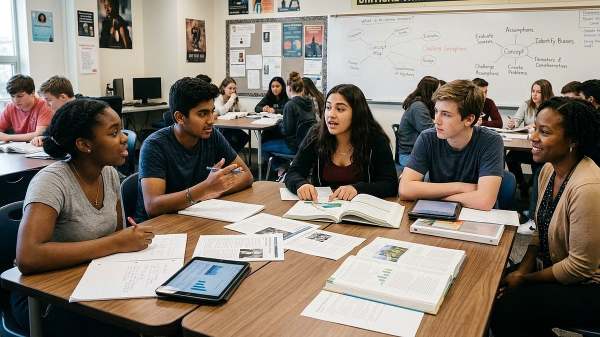
Critical thinking enables students to move beyond memorisation by analysing information, questioning assumptions and evaluating perspectives. Educators highlight its role in improving problem-solving, decision-making and creativity. It also strengthens academic performance and confidence.
Backdrop:
Critical thinking is a skill that is often mentioned in corporate parlance as the ability to solve complex problems by thinking and analysing the data; in absence of adequate data, it can be through out of the box approach as well through “intuitive thinking”. Possession of this skill is extremely important for students getting ready for corporate and real world particularly in these uncertain and volatile times where complexities are changing by the day. The process of critical thinking goes beyond memorization and requires students to engage at a deeper level. Instead of accepting information at face value, critical thinkers question assumptions, identify biases, and consider alternative perspectives.
Importance of Critical Thinking:
In the context of education, critical thinking is invaluable. It is not just about learning facts or figures; it is about understanding the "why" and "how" behind those facts. This deeper understanding allows students to apply their knowledge in various contexts, enhancing their learning experience.
-
Nurse who refused sex kicked in genitals, murdered in Hassan district; accused arrested

-
Election results: Vijay-led TVK surges ahead in Tamil Nadu, DMK trails

-
Nine injured in bus-lorry collision near Siddapur; one critical

-
Record SSLC results drive surge in PU admissions demand

-
Rahul Roy Says 'I Am Alive, I Am Not Abandoned', Slams Fake Videos And Rumours In Strong Note