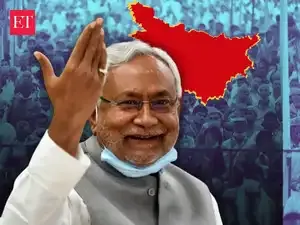
Drawing the curtain on a decades-long political innings, Bihar’s longest-serving Chief Minister Nitish Kumar on Tuesday stepped down, handing over his resignation to Governor Syed Ata Hasnain and marking the end of an era in the state’s politics.
With his resignation, Bihar is set to have a new Chief Minister, fuelling expectations that the state could see its first BJP leader in the top post.
"We had decided that I would now leave the post of Chief Minister, and therefore, after today's cabinet meeting, I met the Governor and submitted my resignation to him. Now the new government will look after the work here. The new government will have my full cooperation and guidance. Even ahead, a lot of very good work will be done, and Bihar will advance a great deal..." said Nitish Kumar.
Read more: Samrat Choudhary emerges frontrunner in race to succeed Nitish Kumar as Bihar Chief Minister
Kumar, the state’s longest-serving CM, took all by surprise last month when he announced that he was seeking election to the Rajya Sabha. The JD(U) supremo, who turned 75 recently, had led the NDA to a resounding victory in the assembly polls held in November last year.
Speculations are rife that Kumar could be succeeded by his deputy Samrat Choudhary, son of his former close aide Shakuni Choudhary, who joined the BJP in 2017 after spending nearly two decades in the RJD, the saffron party’s principal rival in Bihar.
Party leaders have been tight-lipped on the issue but Samrat Choudhary, who represents the Tarapur assembly seat, has been hogging much limelight, with top leaders and officials making a beeline to his residence, adjacent to the CM House.
Nitish Kumar's rise and fall
For much of the 1990s, Nitish Kumar occupied the margins of Bihar’s political stage — an engineer-turned-politician watching his former mentor Lalu Prasad Yadav command the spotlight. Lalu emerged as the state’s first backward-caste leader to wield uninterrupted power, a dominance that endured even after corruption charges forced him to step aside, with Rabri Devi stepping in to carry forward his rule.
Through these years, Nitish played a patient, calculated game. Early observers often cast him as Lalu’s “younger brother,” both having risen under the influence of socialist stalwart Karpoori Thakur. But while Lalu consolidated a powerful Yadav base, Nitish was quietly assembling his own coalition — drawing in OBC Kurmis and the extremely backward castes (EBCs), groups that felt sidelined by the shifting social order.
His ascent was anything but inevitable. Born in 1951 in Nalanda’s Kalyan Bigha to a father shaped by the freedom movement, Nitish grew up steeped in socialist thought and Lohiaite ideas of caste justice. Yet his early political career was marked by disappointment. Riding the post-Emergency wave in 1977, he entered electoral politics only to suffer two successive defeats from Harnaut, both to independent candidates — setbacks that nearly pushed him out of public life.
The turning point came in 1985, when better organisation and resources helped him secure a victory from Harnaut on a Lok Dal ticket. From there, his trajectory steadied: a Lok Sabha win from Barh in 1989, a junior ministerial berth in the V. P. Singh government, and a retained parliamentary presence in 1991. Nitish had arrived nationally, but his larger ambition remained anchored in Bihar.
The decisive break came in 1994. Unable to reconcile with Lalu’s growing dominance, Nitish struck out on his own, forming the Samata Party alongside George Fernandes. It was a moment of assertion that would eventually redraw Bihar’s caste arithmetic.
His first attempt to seize power, however, faltered quickly — a brief chief ministerial stint in 2000 that lasted barely a week due to a lack of numbers. But by then, Nitish had begun articulating a different template of backward-caste politics — one that stitched together Kurmis, EBCs, and, through an alliance with the BJP, sections of the upper castes.
If Lalu’s politics had centred the rise of Yadavs, Nitish was crafting a broader social coalition — an alternative axis of power that would, in time, unseat the very leader he once followed.
The shift in 2005
The decisive shift arrived in 2005. The February election delivered a fractured mandate, but the October rerun reset Bihar’s political script. Lalu Prasad Yadav’s RJD slipped to third place, while Nitish Kumar’s JD(U), in alliance with the BJP, surged to power. Entering the Bihar Legislative Council, Nitish began what would evolve into one of the longest chief ministerial runs in Indian politics.
In the years that followed, he carefully crafted the image of “Sushasan Babu” — a leader who delivered what Bihar had long been denied: better roads, improved basic infrastructure, schemes to push girls’ education, and a measure of law and order. Set against the RJD’s enduring “jungle raj” tag, this governance plank strengthened his reputation as a reformer.
Yet, Nitish’s politics has been as much about governance as it has been about calibrated reinvention. In 2013, when Narendra Modi emerged as the BJP’s national face, Nitish walked out of the alliance, signalling both ideological discomfort and political repositioning.
The setback in the 2014 Lok Sabha elections forced a pause. Nitish resigned, elevating Jitan Ram Manjhi to the top post. But the retreat was brief. In a dramatic turn, he reunited with his old rival Lalu, forging the Mahagathbandhan — an unlikely coalition that rode the “Bihari DNA” pitch to a sweeping victory in 2015, with Tejashwi Yadav as his deputy. The partnership, however, proved short-lived, collapsing within a few years under the weight of contradictions.
Nitish then returned to the BJP-led fold — a space he continues to occupy, even as his political journey remains marked by such pivots.
His legacy resists easy labels. Over the decades, Nitish Kumar has been socialist and anti-Congress, ally and adversary to Lalu, partner and critic of the BJP, a governance-focused reformer and a master of political timing. What binds these shifts is a sharp reading of Bihar’s social coalitions — from the legacy of the Triveni Sangh of Kurmis, Koeris and Yadavs to the broader OBC-EBC-upper caste alignment that underpinned his rise.
In the end, Nitish’s story is less about ideological consistency and more about political adaptability — mirroring Bihar itself: layered, pragmatic, deeply shaped by caste equations, and constantly recalibrating.
With his resignation, Bihar is set to have a new Chief Minister, fuelling expectations that the state could see its first BJP leader in the top post.
"We had decided that I would now leave the post of Chief Minister, and therefore, after today's cabinet meeting, I met the Governor and submitted my resignation to him. Now the new government will look after the work here. The new government will have my full cooperation and guidance. Even ahead, a lot of very good work will be done, and Bihar will advance a great deal..." said Nitish Kumar.
Read more: Samrat Choudhary emerges frontrunner in race to succeed Nitish Kumar as Bihar Chief Minister
Kumar, the state’s longest-serving CM, took all by surprise last month when he announced that he was seeking election to the Rajya Sabha. The JD(U) supremo, who turned 75 recently, had led the NDA to a resounding victory in the assembly polls held in November last year.
Speculations are rife that Kumar could be succeeded by his deputy Samrat Choudhary, son of his former close aide Shakuni Choudhary, who joined the BJP in 2017 after spending nearly two decades in the RJD, the saffron party’s principal rival in Bihar.
Party leaders have been tight-lipped on the issue but Samrat Choudhary, who represents the Tarapur assembly seat, has been hogging much limelight, with top leaders and officials making a beeline to his residence, adjacent to the CM House.
Nitish Kumar's rise and fall
For much of the 1990s, Nitish Kumar occupied the margins of Bihar’s political stage — an engineer-turned-politician watching his former mentor Lalu Prasad Yadav command the spotlight. Lalu emerged as the state’s first backward-caste leader to wield uninterrupted power, a dominance that endured even after corruption charges forced him to step aside, with Rabri Devi stepping in to carry forward his rule.Through these years, Nitish played a patient, calculated game. Early observers often cast him as Lalu’s “younger brother,” both having risen under the influence of socialist stalwart Karpoori Thakur. But while Lalu consolidated a powerful Yadav base, Nitish was quietly assembling his own coalition — drawing in OBC Kurmis and the extremely backward castes (EBCs), groups that felt sidelined by the shifting social order.
His ascent was anything but inevitable. Born in 1951 in Nalanda’s Kalyan Bigha to a father shaped by the freedom movement, Nitish grew up steeped in socialist thought and Lohiaite ideas of caste justice. Yet his early political career was marked by disappointment. Riding the post-Emergency wave in 1977, he entered electoral politics only to suffer two successive defeats from Harnaut, both to independent candidates — setbacks that nearly pushed him out of public life.
The turning point came in 1985, when better organisation and resources helped him secure a victory from Harnaut on a Lok Dal ticket. From there, his trajectory steadied: a Lok Sabha win from Barh in 1989, a junior ministerial berth in the V. P. Singh government, and a retained parliamentary presence in 1991. Nitish had arrived nationally, but his larger ambition remained anchored in Bihar.
The decisive break came in 1994. Unable to reconcile with Lalu’s growing dominance, Nitish struck out on his own, forming the Samata Party alongside George Fernandes. It was a moment of assertion that would eventually redraw Bihar’s caste arithmetic.
His first attempt to seize power, however, faltered quickly — a brief chief ministerial stint in 2000 that lasted barely a week due to a lack of numbers. But by then, Nitish had begun articulating a different template of backward-caste politics — one that stitched together Kurmis, EBCs, and, through an alliance with the BJP, sections of the upper castes.
If Lalu’s politics had centred the rise of Yadavs, Nitish was crafting a broader social coalition — an alternative axis of power that would, in time, unseat the very leader he once followed.
The shift in 2005
The decisive shift arrived in 2005. The February election delivered a fractured mandate, but the October rerun reset Bihar’s political script. Lalu Prasad Yadav’s RJD slipped to third place, while Nitish Kumar’s JD(U), in alliance with the BJP, surged to power. Entering the Bihar Legislative Council, Nitish began what would evolve into one of the longest chief ministerial runs in Indian politics.In the years that followed, he carefully crafted the image of “Sushasan Babu” — a leader who delivered what Bihar had long been denied: better roads, improved basic infrastructure, schemes to push girls’ education, and a measure of law and order. Set against the RJD’s enduring “jungle raj” tag, this governance plank strengthened his reputation as a reformer.
Yet, Nitish’s politics has been as much about governance as it has been about calibrated reinvention. In 2013, when Narendra Modi emerged as the BJP’s national face, Nitish walked out of the alliance, signalling both ideological discomfort and political repositioning.
The setback in the 2014 Lok Sabha elections forced a pause. Nitish resigned, elevating Jitan Ram Manjhi to the top post. But the retreat was brief. In a dramatic turn, he reunited with his old rival Lalu, forging the Mahagathbandhan — an unlikely coalition that rode the “Bihari DNA” pitch to a sweeping victory in 2015, with Tejashwi Yadav as his deputy. The partnership, however, proved short-lived, collapsing within a few years under the weight of contradictions.
Nitish then returned to the BJP-led fold — a space he continues to occupy, even as his political journey remains marked by such pivots.
His legacy resists easy labels. Over the decades, Nitish Kumar has been socialist and anti-Congress, ally and adversary to Lalu, partner and critic of the BJP, a governance-focused reformer and a master of political timing. What binds these shifts is a sharp reading of Bihar’s social coalitions — from the legacy of the Triveni Sangh of Kurmis, Koeris and Yadavs to the broader OBC-EBC-upper caste alignment that underpinned his rise.
In the end, Nitish’s story is less about ideological consistency and more about political adaptability — mirroring Bihar itself: layered, pragmatic, deeply shaped by caste equations, and constantly recalibrating.