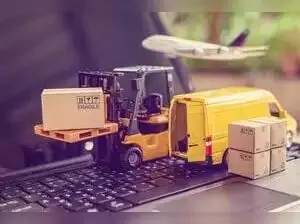
The shocks of recent years, from conflicts and trade stand-offs to pandemic-era bottlenecks, are forcing companies to quietly rebuild how goods move across the world. The biggest change is not about speed anymore. It is about reliability. Businesses are now prioritising supply chains that can absorb disruption, rather than those that simply move faster in stable conditions.
This rethink is unfolding at a time when global logistics itself is expanding rapidly. The sector, valued at nearly $4 trillion in 2024, is expected to grow significantly by the end of the decade. But this growth is no longer just about rising demand. It reflects a deeper structural shift. Manufacturing is spreading across regions, sourcing is becoming more diversified, and transport networks are widening to include multiple routes and hubs. The result is a system that is larger, but also far more complex.
From efficiency to resilience
For years, companies built supply chains around efficiency, minimising costs, reducing inventory and relying on tightly synchronised operations. That model is now being replaced.
Frequent disruptions have exposed the risks of overdependence on single suppliers or regions. In response, companies are redesigning networks with built-in buffers. This includes adding alternative suppliers, increasing inventory in critical segments and creating regional production hubs closer to key markets.
The new goal is simple: avoid being caught off guard. Businesses are increasingly willing to trade a bit of efficiency for greater stability.
Visibility becomes critical
As supply chains stretch across more geographies, visibility has become a central priority. Companies are investing in systems that offer a real-time view of suppliers, shipments, inventory levels and demand patterns.
This is not just about collecting data. It is about acting early. Firms that can detect potential disruptions, whether a delay at a port or a spike in demand, are better positioned to respond before the problem escalates. In today’s environment, the ability to anticipate has become a competitive advantage.
Sustainability moves to the core
Another major shift is the growing role of sustainability in everyday operations. What was once treated as a compliance requirement is now influencing key business decisions.
Companies are choosing more energy-efficient transport options, redesigning delivery routes to cut fuel use and shifting to recyclable materials in packaging and warehousing. These changes are not driven by environmental concerns alone. They also help reduce long-term costs and protect operations from volatility in fuel prices and regulatory changes.
Sustainability, in effect, is becoming a tool for both cost control and risk management.
A new kind of supply chain leader
The transformation is also changing the nature of jobs in the sector. Supply chain roles are no longer limited to procurement or transportation. They now demand strategic thinking, data interpretation and cross-border coordination.
Dr Abhishek Chakraborty, Professor at XLRI Jamshedpur, said that the modern supply chain professional must combine multiple skills. “The next generation leader will not be defined by planning skills alone, but by the ability to operate in environments shaped by disruption and rapid technological change,” Dr Abhishek Chakraborty said, adding that learning agility, analytical thinking and strong communication are becoming essential.
In a system where technology can flag risks, human judgment still plays a crucial role in deciding how to respond.
Supply chains are likely to become even more adaptive in the coming years. Companies are moving towards models that balance global reach with regional safeguards, while building partnerships that go beyond transactional relationships.
There is also a growing recognition that predictability itself can be a competitive edge. Firms that can deliver consistently, even in volatile conditions, stand to gain customer trust and expand into new markets.
In many ways, the redesign of supply chains is a response to a more uncertain world. But it is also a sign of maturity. Businesses are no longer assuming stability. They are planning for disruption.
How goods move today is shaping not just costs and timelines, but long-term business resilience. And in a world where uncertainty has become the norm, that resilience may well be the most valuable asset companies can build.
This rethink is unfolding at a time when global logistics itself is expanding rapidly. The sector, valued at nearly $4 trillion in 2024, is expected to grow significantly by the end of the decade. But this growth is no longer just about rising demand. It reflects a deeper structural shift. Manufacturing is spreading across regions, sourcing is becoming more diversified, and transport networks are widening to include multiple routes and hubs. The result is a system that is larger, but also far more complex.
From efficiency to resilience
For years, companies built supply chains around efficiency, minimising costs, reducing inventory and relying on tightly synchronised operations. That model is now being replaced.
Frequent disruptions have exposed the risks of overdependence on single suppliers or regions. In response, companies are redesigning networks with built-in buffers. This includes adding alternative suppliers, increasing inventory in critical segments and creating regional production hubs closer to key markets.
The new goal is simple: avoid being caught off guard. Businesses are increasingly willing to trade a bit of efficiency for greater stability.
Visibility becomes critical
As supply chains stretch across more geographies, visibility has become a central priority. Companies are investing in systems that offer a real-time view of suppliers, shipments, inventory levels and demand patterns.
This is not just about collecting data. It is about acting early. Firms that can detect potential disruptions, whether a delay at a port or a spike in demand, are better positioned to respond before the problem escalates. In today’s environment, the ability to anticipate has become a competitive advantage.
Sustainability moves to the core
Another major shift is the growing role of sustainability in everyday operations. What was once treated as a compliance requirement is now influencing key business decisions.
Companies are choosing more energy-efficient transport options, redesigning delivery routes to cut fuel use and shifting to recyclable materials in packaging and warehousing. These changes are not driven by environmental concerns alone. They also help reduce long-term costs and protect operations from volatility in fuel prices and regulatory changes.
Sustainability, in effect, is becoming a tool for both cost control and risk management.
A new kind of supply chain leader
The transformation is also changing the nature of jobs in the sector. Supply chain roles are no longer limited to procurement or transportation. They now demand strategic thinking, data interpretation and cross-border coordination.
Dr Abhishek Chakraborty, Professor at XLRI Jamshedpur, said that the modern supply chain professional must combine multiple skills. “The next generation leader will not be defined by planning skills alone, but by the ability to operate in environments shaped by disruption and rapid technological change,” Dr Abhishek Chakraborty said, adding that learning agility, analytical thinking and strong communication are becoming essential.
In a system where technology can flag risks, human judgment still plays a crucial role in deciding how to respond.
Supply chains are likely to become even more adaptive in the coming years. Companies are moving towards models that balance global reach with regional safeguards, while building partnerships that go beyond transactional relationships.
There is also a growing recognition that predictability itself can be a competitive edge. Firms that can deliver consistently, even in volatile conditions, stand to gain customer trust and expand into new markets.
In many ways, the redesign of supply chains is a response to a more uncertain world. But it is also a sign of maturity. Businesses are no longer assuming stability. They are planning for disruption.
How goods move today is shaping not just costs and timelines, but long-term business resilience. And in a world where uncertainty has become the norm, that resilience may well be the most valuable asset companies can build.