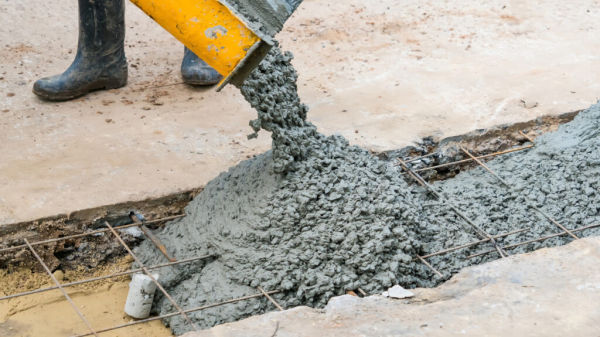
Despite what it sounds like, a concrete calculator is not a mathematical device made of cement. A concrete calculator is actually a digital (or mental) tool for estimating how much concrete a construction or landscaping project will need. Because concrete is typically sold by volume (most often in cubic yards), you should figure out how much you need before you start work on your project. But order too much, and you’ll be overpaying for a ton of excess material spinning around in the cement truck. Don’t order enough, you’ll have to put the project on pause until you can get another delivery. Not the end of the world, by any means, but still a major inconvenience either way.
There are plenty of online concrete calculators you can use to make sure neither scenario becomes your reality on the job. That way, you get a precise estimate based on your project’s specific dimensions without having to spitball it. Just take your basic project dimensions (length, width, and depth), and the calculator converts those figures into cubic volume. No matter if you’re pouring driveways, patios, foundations, or slabs, the calculator makes it so that you always know your total cost and the materials required. Do the simple math, grab your DIY concrete tools, and get to work.
How a concrete calculator works

Concrete calculators use a pretty straightforward mathematical formula: length times width times depth, which gives you volume. For most rectangular areas, just measure these three dimensions, multiply them, and you’re good to go. For circles, you’ll need to grab the diameter and factor that in. For more irregular shapes than that, it’s best to divide the total area into smaller sections and do separate calculations. Add it all up in the end, get the grand total, and start working on your construction and concrete jobs.
Once the measurements get entered into the concrete calculator, it’ll probably tell you the results in cubic feet. From there, you can convert them into cubic yards by dividing by 27. Plenty of concrete calculators might do that step for you, but it still helps to know. Don’t forget to account for real-world variables, as well. For example, adding an extra 5% to 10% to the final estimate could help you cover any potential spillage, uneven surfaces, bad mixtures, or even slight miscalculations.