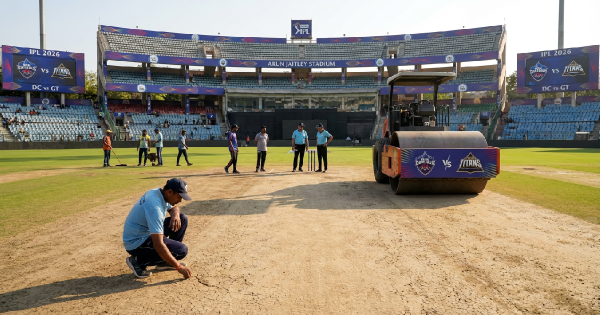
As Delhi Capitals prepare to host Gujarat Titans for their upcoming IPL clash, the focus shifts to the square boundaries and playing surface of the Arun Jaitley Stadium. Traditionally known as a venue that favored the slow-burning craft of finger spinners, the Delhi surface has undergone a transformation, reportedly morphing into one of the league's more reliable destinations for power hitters seeking true bounce.
The upcoming match follows a general trend of high-scoring encounters at the capital’s premier cricket ground. With several successful chases already recorded at the venue in recent seasons, the toss is expected to be a pivotal moment for both captains. Local weather patterns suggest that while the afternoon heat might bake the pitch into a firm surface, the evening humidity will likely introduce a significant tactical hurdle: dew.
Ground Dimensions and Batting Conditions
The primary reason for increased scoring rates in Delhi remains the ground's geometry. Relatively short square boundaries mean that even mistimed aerial shots frequently find their way into the stands, putting immense pressure on bowlers to nail their yorkers and wider lines. The ball typically comes onto the bat with consistent pace and bounce, allowing stroke-makers to find their rhythm early in the innings.
While the old reputation of the "Kotla" was built on low, slow tracks that gripped for spinners, the modern iteration of the pitch is often conducive to pace. Experts have noted a rise in scoring rates during the death overs at this venue. However, the game isn't entirely lost for the bowlers. Any lingering moisture from recent weather or high evening humidity could provide the quicks with a window of opportunity during the powerplay. Early seam movement is viewed as a distinct possibility, making the first six overs a critical battleground.
Strategic shifts are already visible across the league as teams adapt to these conditions. For instance, icons like Anil Kumble have issued warnings to established captains regarding the serious challenges posed by inconsistent form when facing high-pressure environments, a sentiment that resonates as Delhi looks to defend their home turf against a disciplined Gujarat side.
The Dew Factor and Toss Strategy
For the captains of the Capitals and the Titans, the decision at the toss will likely be influenced by the heavy evening dew. History at this venue suggests a slight advantage for the side batting second, although the margin remains competitive. The presence of moisture in the second half of the game often makes gripping the silver-white ball a challenge for even the most experienced bowlers.
As the match progresses under lights, the cooling air often causes moisture to settle on the outfield. This can neutralize the effectiveness of spinners, who struggle to find purchase on a wet ball, and makes it harder for pace bowlers to execute slower variations effectively. Consequently, "bowl first" has become a popular mantra in New Delhi. Teams are finding that chasing totals is often a manageable task when the ball slides through to the bat in the second innings due to the skiddy nature of a damp surface.
This tactical struggle is mirrored in other facets of the tournament, where individual performances are dictated by ground conditions. We are seeing this play out in the race for individual accolades, as Sameer Rizvi and Ravi Bishnoi lead the cap races, capitalizing on venues that suit their specific styles of play.
Pitch Outlook and Selection Headaches
The historical context of the Arun Jaitley Stadium is one of extremes, featuring both massive first-innings totals and rare, unexpected collapses. While the average first-innings score has increased in recent years, anything short of a high-octane start is widely considered below par given the current depth of both batting lineups.
Bowlers who find success here are typically those who don't rely solely on raw pace. Cutters, back-of-the-hand slower balls, and subtle changes in length are reported to be the primary weapons for survival. Without these tools, bowlers can quickly see their economy rates climb as batters exploit the shorter boundaries. Even as lineups are reshuffled due to key absences in other parts of the league, the core philosophy for high-scoring venues like Delhi remains the same: survive the early movement and then capitalize on the true bounce.
Expect a contest where the margin for error for the bowlers is thin. If Gujarat’s disciplined bowling attack can stifle Delhi's openers during the powerplay, they might negate the stadium's natural bias toward the batters. If not, the capital is likely in for another evening of domestic fireworks in front of a packed Delhi crowd.
-
ED attaches Rs 17.45 crore assets in Goa nightclub fire money laundering case

-
Hardik Pandya Held MI's Bowling Unit Responsible For Crushing Loss Against RR

-
BBC presenter breaks down in tears as she announces exit

-
Prince Harry's olive branch to King Charles backfires sensationally

-
Pastor charged with manslaughter after 61-year-old drowns during baptism