
Campbell Wilson’s resignation as Air India’s CEO is a significant development for the country’s aviation industry and paves the way for a leadership change at a pivotal point. Wilson’s five-year term, which was supposed to last until next year, will now only last until a successor is chosen, providing consistency during an uncertain time.
Air India is currently dealing with operational problems, growing expenses, and the potential to record one of its biggest losses ever.
Credits: The Hindu
A Planned Exit, But Earlier Than Expected
Wilson’s resignation, accepted during a recent board meeting, may appear sudden—but insiders suggest it has been in the works for months. Having joined Air India in September 2022 following its privatisation under Tata Group, Wilson had already indicated his intention not to continue beyond his contract.
The search for his successor reportedly began as early as January, signaling that this transition was strategically planned rather than reactive. However, the decision to step down before completing his full term adds an element of urgency to the leadership hunt.
For now, Wilson is expected to remain with the airline until at least September, helping ensure a smooth handover.
The Hunt for a Global Aviation Leader
Air India has already begun engaging with potential candidates, and discussions are said to be in advanced stages. While names remain under wraps, insiders hint that the airline is looking at seasoned leaders—likely CEOs of global full-service carriers.
The ideal candidate, according to industry observers, will need a rare combination of skills: global aviation experience, operational expertise, and familiarity with both full-service and low-cost airline models. This is especially important given Air India’s dual structure, which includes its budget arm, Air India Express.
Adding to the leadership churn, Aloke Singh recently completed his tenure as CEO of Air India Express, further intensifying the need for stable leadership across the group.
Navigating Through Operational Turbulence
This shift in leadership comes at a very bad time. Air India’s operations and financial performance are currently under pressure due to a number of internal and external issues.
Airspace constraints brought on by geopolitical conflicts in West Asia are among the most urgent problems. Due to these limitations, the airline has been obliged to fly longer routes with more fuel stops, which has resulted in a large increase in operating costs, especially on long-haul international trips.
Ongoing aircraft supply issues have made matters worse by interfering with plans for fleet expansion and limiting the airline’s capacity to scale effectively.
The Shadow of Flight AI 171
The terrible crash of Flight AI 171 in June 2025 may have been the biggest blow to Air India’s recent journey. Shortly after taking off from Ahmedabad, the Boeing Dreamliner crashed, killing 241 people.
The incident affected the airline’s operations and reputation in addition to raising grave safety concerns. The final probe report, which is anticipated by June 2026, may have significant ramifications for the airline’s future strategy and leadership choices, even though a preliminary report has already been made public.
According to industry insiders, the release of this final report may coincide with the selection of a new CEO.
Mounting Losses and Financial Pressure
Amid these challenges, Air India is also staring at a potential record loss, with estimates suggesting it could reach as high as ₹20,000 crore in FY2026. Rising fuel costs, operational inefficiencies, and disruption- expenses have all contributed to this financial strain.
For the incoming CEO, the mandate will be clear but daunting: stabilize operations, restore profitability, and rebuild trust among passengers and stakeholders.
A Broader Trend in Indian Aviation
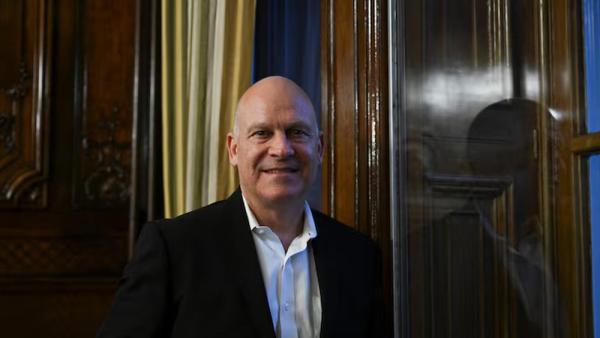
The change in leadership at Air India is not occurring in a vacuum. Recently, there have been several high-profile departures from the Indian aviation industry. For example, early this year, Pieter Elbers, the CEO of IndiGo, the biggest airline in the nation, left, and William Walsh was appointed as his replacement.
As airlines adjust to a quickly changing and more complicated operational environment, these changes point to a larger turnover of leadership throughout the sector.
Credits: Rediff
The Road Ahead
The stakes are quite high as Air India looks for its new CEO. Under the Tata Group, the airline is undergoing a significant makeover with the goal of regaining its standing as a top international airline.
In addition to problems, the incoming CEO will have a rare chance to completely reshape Air India’s destiny. Who will take over the cockpit next, and will they be able to guide the airline through these choppy skies?
-
Remember ladies! Don’t accidentally consume ‘these’ fruits during periods, otherwise a big problem may develop

-
LCA Tejas ready to fly again: Did HAL throw away years and thousands of crores?
-
Interesting love story of superstar, how Allu Arjun got his life partner

-
Earning from WhatsApp now! Awesome feature to be launched soon; Learn how to do the job

-
Type-C Charger Mystery: What Does the C Actually Mean and Why is it Taking Over the World?: