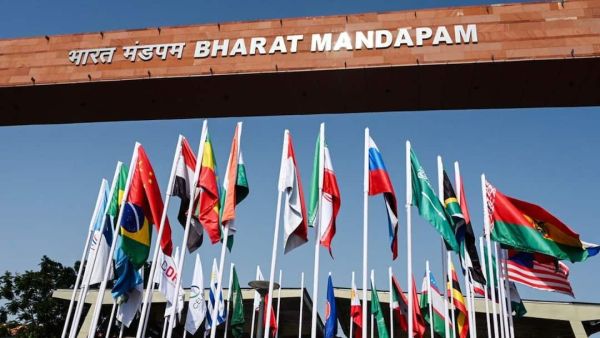
The 18th BRICS Summit will be held at Bharat Mandapam in New Delhi on September 12 and 13, 2026. The summit comes as the grouping completes 20 years and brings together its expanded membership of 11 countries.
Prime Minister Narendra Modi is the BRICS President this year, marking the fourth time India has taken the helm of the grouping.
With BRICS now comprising 11 full members, the Delhi summit is set to focus on the changing global order, economic cooperation, climate and energy security, institutional reforms and the priorities of the Global South.
Which 11 Countries Are Members Of BRICS?
The name BRICS originally stood for Brazil, Russia, India, China and South Africa.
The grouping expanded significantly in 2024 and 2025 with the addition of:
- Egypt
- Ethiopia
- Iran
- Saudi Arabia
- United Arab Emirates (UAE)
Indonesia became a full member in January 2025, taking the total number of BRICS members to 11.
BRICS also has 10 partner countries:
- Belarus
- Bolivia
- Cuba
- Kazakhstan
- Malaysia
- Nigeria
- Thailand
- Uganda
- Uzbekistan
- Vietnam
These countries are not full members but fall within the scope of BRICS.
The 11 BRICS countries represent nearly half of the world's population, about 47%, and approximately 40% of global GDP.
Which Leaders Are Expected At BRICS 2026?
Leaders from the 11 BRICS countries will participate, although most have not yet confirmed their participation.
Russia: President Vladimir Putin will visit India, the Kremlin has confirmed. This will be Putin's second visit to India in less than a year.
According to media reports and sources, there is a strong possibility of the following leaders attending:
- China: President Xi Jinping, who may arrive with about 400 officials
- South Africa: President Cyril Ramaphosa
- Egypt: President Abdel Fattah el-Sisi
- Indonesia: President Prabowo Subianto
- Iran: President Masoud Pezeshkian
- Ethiopia: Prime Minister Abiy Ahmed
- Belarus: President Alexander Lukashenko
- Kazakhstan: President Kassym-Jomart Tokayev
- Malaysia: Prime Minister Anwar Ibrahim
- Thailand: Prime Minister Anutin Charnvirakul
United Nations: Secretary-General Antonio Guterres is expected to arrive.
Which Leaders Are Unlikely To Attend?
Brazil: President Lula will not attend because Brazil is holding general elections in October 2026. Lula is busy campaigning there. Foreign Minister Mauro Vieira will represent Brazil.
UAE: Abu Dhabi Crown Prince Khalid bin Mohammed Al Nahyan is replacing the President.
Saudi Arabia: It is not yet clear at what level the country will participate.
This means approximately 8-9 of the 11 countries are sending their top leaders, according to the information provided.
What Is The BRICS 2026 Agenda?
The theme for 2026 is 'Building for Resilience, Innovation, Cooperation and Sustainability.'
The agenda has five major focus areas.
1. Business And Economy
BRICS will focus on:
- Expanding business in local currencies and reducing dependence on the dollar
- Strengthening cross-border payment processes
- Promoting small and medium enterprises (MSMEs)
2. Expansion Of The New Development Bank
The grouping will discuss:
- Raising the capital of the New Development Bank (NDB)
- Increasing its capacity to lend in local currency
- Opening new avenues for green finance
3. Energy Security And Climate
The agenda includes:
- An agreement on energy security
- Climate resilience
- Building digital public infrastructure
4. Reforming Global Institutions
BRICS will also focus on reforms involving global institutions, including:
- Quota reforms in the IMF
- Promoting emerging economies in the UN Security Council
- Reform of multilateral financial institutions
5. Bilateral Meetings
The bilateral meetings involving Modi-Putin and Modi-Xi are expected to be among the biggest talking points of the summit.
Xi Jinping's visit would be his first to India in 7 years, which is being viewed as a significant sign of improving relations after the Galwan Valley tension.
BRICS vs G7: Which Is More Powerful?
The G7 is a group of the world's seven wealthiest developed countries: the United States, Britain, Canada, Germany, France, Italy and Japan.
It represents the power of the Old World.
BRICS, meanwhile, is a grouping of emerging economies and is described as the power of the new world.
The G7 has the money and the old system. It controls the IMF, World Bank and SWIFT.
BRICS has population, resources and a growing economy. Most importantly, it has the power to speak together.
According to experts, the 2026 summit will test whether the expanded BRICS can translate its growing political clout into a stronger voice on global crises, trade, finance and security.
This means BRICS is no longer just an alternative, but is becoming a real competitor to the G7.
What Is The New Development Bank?
The New Development Bank (NDB) was established at the 2014 Brazilian summit and is also known as the BRICS Bank.
Its mission is to provide unconditional funding to developing countries for infrastructure and sustainable development.
The NDB is now becoming a major alternative to the World Bank, especially for countries that want development without Western conditions.
How Has BRICS Helped The Global South?
The term Global South refers to developing and emerging economies, mostly in Asia, Africa, Latin America and the Middle East.
BRICS has provided three major benefits to the Global South.
One Voice
Previously, the Global South lacked an organised platform. BRICS gave these countries an opportunity to speak together.
Financial Options
Through the NDB, countries got another route apart from the World Bank and IMF.
Demand For Institutional Reforms
BRICS has consistently demanded reforms in the IMF, UN Security Council and other institutions.
India’s ‘Humanity First’ Vision
India has set a vision of 'humanity first' during its presidency in 2026.
India wants to place the priorities of the Global South at the heart of BRICS.
-
Phil Foden joined by Sunderland trio in the Premier League weekend’s worst XI
-
How Maharashtra Professor Left Job And Turned 20 Mushroom Beds Into Rs 4 Lakh/Month Venture
-
Pakistani team coming to play in India, got approval for Asian Champions Trophy
-
IND vs AFG T20: India-Afghanistan will clash again on September 15, know when and where the second and third matches will be held.
-
One more blow to Pakistan cricket: ICCA deducted 11 WTC points, fined 50 percent of match fee Country-Foreign – REVOI