Nepal finds itself in the grips of a severe crisis, grappling with the aftermath of devastating flash floods that struck on August 26. The relentless downpours have wreaked havoc, leading to a rising death toll and presenting numerous challenges for rescue and relief operations. This calamity has served as a harsh reality check for the newly formed government under Prime Minister Balen Shah, who has yet to celebrate a full year in office.
Shah, who was officially sworn in on March 27, 2026, ascended to power following a landslide victory with his Rastriya Swatantra Party (RSP). His rise was marked by unprecedented political upheaval, often referred to as the “Gen-Z revolution.” This movement was characterized by intense public unrest and the dramatic ousting of the previous government.
However, the recent floods, which some have begun to call the Himalayan Tsunami, cast a shadow over Shah’s administration, preventing any celebration of the revolutionary changes that brought him to power.
In the wake of this political turmoil, Prime Minister Shah had adopted a notably independent approach to governance. He emphasizes self-reliance, often neglecting to recognize the support or cooperation offered by neighboring countries, particularly India and China. Instead, he has sought to cultivate an image of solitude in leadership, portraying the government's efforts as completely self-sufficient in the face of widespread challenges.
However, the flood crisis has caught Shah off guard, posing a major challenge for his administration. In the aftermath of this disaster-now being referred to as one of the worst since the 2015 earthquake-Shah is increasingly seeking support from India and China for disaster rescue and relief efforts.
The extent of the catastrophe has been overwhelming, prompting officials to reevaluate their initial stance on foreign aid. Initially, the Shah administration made the bold declaration that it would not be seeking assistance from other countries, emphasizing a desire for self-reliance in handling the crisis.
However, as the international community expressed concern and pressure mounted due to the rising death toll and the enormity of the disaster, the Balen Shah government found itself compelled to reassess this decision. This shift signals the gravity of the situation and highlights the necessity for external aid and specialized rescue teams to help manage the aftermath of the catastrophic flooding.
On the fateful morning of August 26, 2026, a catastrophic event unfolded high in the towering peaks of the Himalayas as a massive glacier on Langtang Lirung - located near the border between Nepal and Tibet - gave way. This monumental glacier collapse unleashed an unprecedented avalanche of ice and rock.
The sheer force of the collapse triggered an explosive surge of water, mud, sediment, and debris that cascaded through the Bhotekoshi, Lende Khola, and Trishuli river systems, devastating the steep and rugged terrain along the China-Nepal border.
In the aftermath, Nepal faced one of its gravest environmental crises, one that not only transformed the physical landscape but also reshaped the nation's foreign policy dealings. By early September 2026, the official death toll had climbed alarmingly to 1,252 souls, while a heartbreaking 4,875 individuals remained unaccounted for.
The appalling power of the surge was such that bodies were discovered as far as 240 kilometers downstream in neighboring India, starkly illustrating the extensive reach of the disaster.
Tragedy also struck at the sites of twelve distinct hydropower projects, where the relentless force of nature created a scene of chaos and despair. At the Upper Trishuli 1 Hydroelectric Project alone, approximately 300 workers found themselves trapped deep within flooded underground power tunnels, complicating rescue efforts that were already fraught with peril.
The total devastation was especially pronounced in northern and central Nepal, with districts like Rasuwa, Nuwakot, Dhading, Gorkha, and Chitwan buried under thick layers of sludge and debris, their roads, bridges, and entire village settlements swallowed whole by the relentless influx.
A critical failure that contributed to the staggering casualty rate was the breakdown of early warning systems. The initial calamitous collapse occurred on the Tibetan side of the border, resulting in a frustrating delay for automated warnings. The local Syabrubesi hydrological station ceased transmitting crucial data almost immediately after the event.
As a result, downstream Nepali communities received a formal emergency alert a harrowing 38 minutes after the glacier had ruptured-an agonizingly insufficient time for them to prepare for the impending surge racing down the mountainside.
EXCLUSIVE | Javelin Deal: India-US Ties Enter New Chapter, Atmanirbharta Takes Backseat
Role Played By India And China
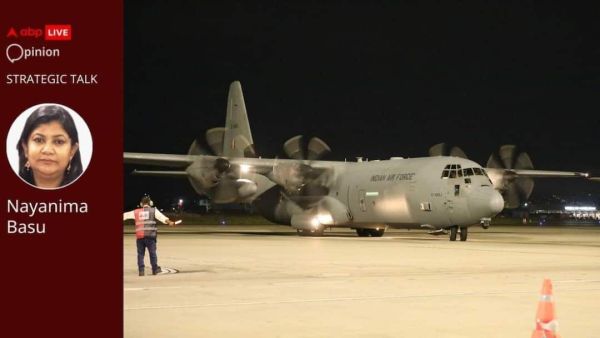
The humanitarian relief efforts initiated by India and China during recent crises exemplify their unique operational strengths and differing geopolitical strategies. Both nations demonstrated a commendable level of responsiveness, mobilizing substantial amounts of emergency supplies, measured in tens of tonnes, to aid affected populations swiftly.
However, the deployment of their personnel on the ground reveals a layer of strategic competition reminiscent of the dynamics observed during the 2015 earthquakes.
India's approach tends to emphasize immediate regional support, often driven by a sense of diplomatic responsibility and historical ties with neighboring countries. The Indian government typically organizes its relief efforts through established channels, ensuring that assistance reaches those in need promptly and efficiently.
Conversely, China's involvement often reflects a broader geopolitical ambition, seeking to expand its influence and assert its role as a global leader in humanitarian efforts. China's proactive stance not only includes direct aid but also involves the construction of infrastructure and long-term development projects that follow initial relief efforts.
This nuanced competition between the two nations highlights how humanitarian assistance, while fundamentally altruistic, can also be intricately linked to national interests and global positioning in the context of their evolving relationship on the world stage.
While Prime Minister Shah has acknowledged the quick delivery of emergency aid from both New Delhi and Beijing in Parliament, expressing sincere gratitude for their support, Kathmandu has ignited early tensions in diplomatic relations with New Delhi and Beijing.
Nepal's Foreign Minister, Shisir Khanal, highlighted the importance of this immediate help but emphasized that the country would now pursue "climate compensation" instead of viewing it as mere "charity."
Kathmandu contends that, given India's and China's status as two of the world's largest greenhouse gas emitters-while Nepal contributes less than 0.03%-both neighboring nations hold a moral and legal obligation to finance the multi-billion-dollar reconstruction of its infrastructure in the Himalayas.
The Shah administration is actively seeking compensation from India, China, and the United States, linking this request to the international Loss and Damage mechanism. This framework is designed to provide financial support to vulnerable developing countries affected by climate change-related destruction. In light of the recent disaster, Nepal has approached the Fund for Responding to Loss and Damage to request assistance.
This issue is particularly delicate for India and China due to Nepal's geographical and economic reliance on both nations. Concurrently, Kathmandu is advocating for increased international recognition of the Himalayas as a region significantly vulnerable to global warming impacts.
To address these concerns, it is essential for India, China, and Nepal to engage in diplomatic dialogue, working collaboratively to enhance the effectiveness of the International Centre for Integrated Mountain Development (ICIMOD), which acts as a neutral platform for member states to share transboundary scientific data, bridge policy gaps, and co-invest in climate-resilient development.
The current crisis can be turned into an opportunity for the ICIMOD countries - Afghanistan, Bangladesh, Bhutan, China, India, Myanmar, Nepal, and Pakistan, to come together chalk-out an effective disaster management plan – in the absence of which such disasters will continue to take place and millions of lives will be lost.
OPINION | India-China 'Early, Substantial Harvest': More Ambiguity, Less Clarity
-
Everton take call on move for former Manchester United record-breaker as free agent

-
Airbus to deliver 2+ aircraft weekly to India over the next 10 years

-
Varanasi Flood ALERT! Ganga Crosses Warning Level | PM Modi Takes Stock | UP News

-
Hema Malini wants new Vrindavan auditorium to be a world-class venue

-
Alappuzha Accident: Stolen Bike Escape Ends In Fatal Crash! (Read Details)