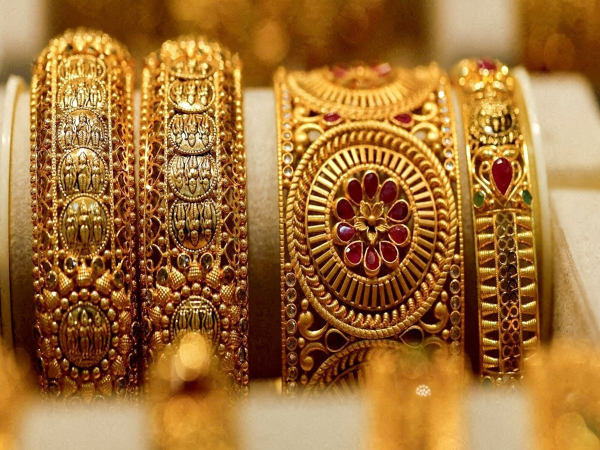
Taxation on Jewellery Sale: Gold and silver jewellery received from parents or relatives during weddings holds not only emotional value but also serves as a significant financial safety net during difficult times. People often assume that wedding gifts are tax-free and, consequently, that the entire proceeds from selling them would also be exempt from tax.
If you share this view, take note: financial experts clarify that this is not entirely accurate. While receiving jewellery as a wedding gift is tax-free, the income generated from selling it attracts capital gains tax. Let us understand, in simple terms, what the tax laws say and how the tax liability is calculated when selling jewellery.
Receiving wedding jewellery is tax-free, but selling it is not!
Under current income tax laws, the recipient does not have to pay any tax on gifts received during a wedding—whether in the form of jewellery, cash, or other assets. This exemption is unlimited; regardless of the gift's value or the donor's identity, not a single rupee of tax is levied on it.
While the jewellery remains tax-free up to the point of the wedding, an income tax liability arises on the profit made the moment you sell it in the market. Therefore, the total sale proceeds are neither entirely tax-free nor fully taxable; tax applies only to the profit earned.
Short-term or long-term tax? Determining the holding period
The tax applicable on the sale depends on the total duration for which the jewellery was held by both you and your parents (the donors). Short-Term Capital Gains (STCG): If the total duration—from the date your father purchased the jewelry until the date you sold it—is 24 months or less, the resulting profit will be added to your regular income and taxed according to your applicable tax slab.
Long-Term Capital Gains (LTCG): If the combined holding period exceeds 24 months, it is classified as long-term, and the profit will be taxed at a flat rate of 12.50%.
How is the cost of acquisition determined?
A key question in calculating the tax is determining the purchase price of the jewelry, given that you received it as a gift. Under tax regulations, the cost of acquisition is considered to be the price your father (or the previous owner) originally paid for the jewelry.
Rule for jewelry acquired before April 1, 2001: If the jewelry was purchased prior to April 1, 2001, you have the option to treat its Fair Market Value as of April 1, 2001, as your cost of acquisition.
Valuation certificate required: To substantiate the market value as of April 1, 2001, you must obtain an official valuation certificate from a registered valuer.
Disclaimer: This content has been sourced and edited from Money Control. While we have made modifications for clarity and presentation, the original content belongs to its respective authors and website. We do not claim ownership of the content.
-
OPINION | Nepal Seeks Compensation From India, China-This Is Time To Talk, Not Squabble

-
Leandro Paredes set to leave Argentina duty! Boca Juniors captain ready to step away after World Cup ban

-
Deepak Hooda Ends 2021 Dispute With Krunal Pandya, Set For Baroda Return After 5 Years

-
S J Poddar Academy Hosts Robotronix 2026; 170+ Students Showcase Robotics & Coding Skills

-
RRB NTPC 2026: Railway Board Approves 5,165 Vacancies For Graduate And Undergraduate Posts; Check Details Here