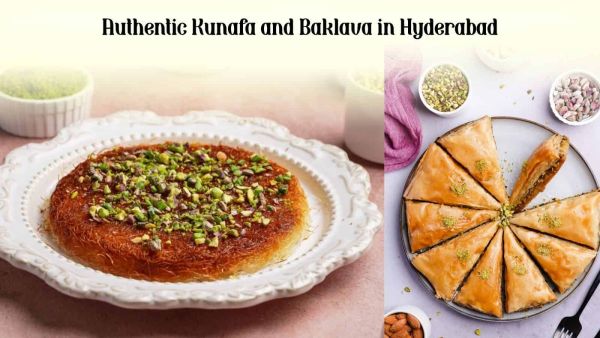
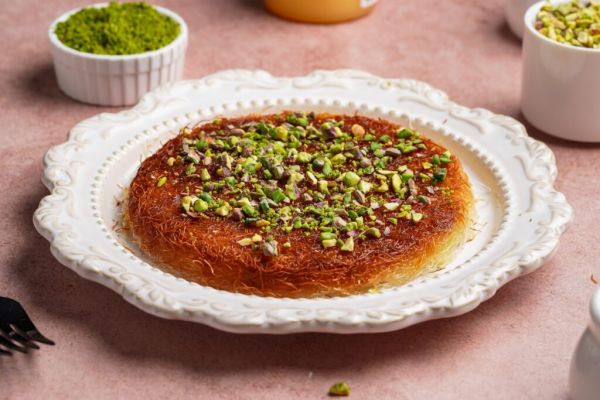
There was a time when saying ‘Kunafa‘ in India could earn you a blank stare. Today, say it and chances are someone will immediately tell you about the best cheese pull they have had, argue over whether pistachio or Nutella is the superior topping, or send you an Instagram reel of a molten, syrup-soaked dessert being sliced open.
Hyderabad alone has seen Kunafa go from a relatively unfamiliar Middle Eastern sweet to something that seems to have found a home everywhere, from Mandi restaurants and neighbourhood dessert shops to cafés, luxury bakeries and viral social-media counters.
But nearly a decade ago, when very few Indians outside Middle Eastern-connected communities were actively looking for authentic Kunafa and Baklava, one Hyderabad entrepreneur was already convinced there was a market waiting for them.
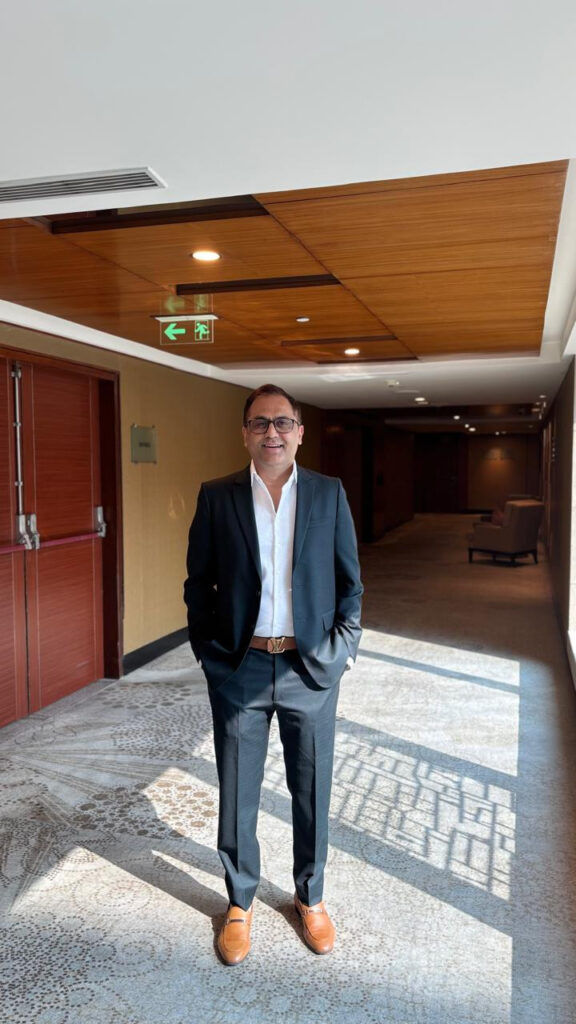
His name is Imtiaz Ali Siddiqui, founder of Gourmet Baklava. And his bet began in 2017.
Before Kunafa became a trend, there was a gap
Imtiaz Ali Siddiqui’s connection with these desserts did not begin with a business plan. It began much earlier, in the Middle East. “I have lived a larger part of my life in the Middle East. I grew up there, so we have been eating Baklava and Kunafa since we were small children,” he tells Siasat.com.
When he returned to India, he found himself surrounded by the desserts Indians had grown up with like laddus, rasgulla, gulab jamun and other traditional sweets. He loved them, he says, but noticed something missing. “I found a huge gap in the Mediterranean dessert sector. Nobody was doing these desserts,” he recalls.
That gap became the opportunity. Instead of simply recreating something he remembered from his years abroad, Siddiqui decided to understand the craft at its source.
“I visited countries like Jordan and Turkey to understand how the art is made. I lived in Turkey for some time, understood how the craft is done, looked at the machines, hired a chef from there and brought him to India,” he says.
One of those chefs went on to become an important part of that journey.
Mujahed Hasan Khader AlSaafeen, a Baklava and Kunafa specialist from Jordan, has been working alongside Siddiqui since the early days of the venture, bringing with him a craft he inherited from generations of Baklava makers.
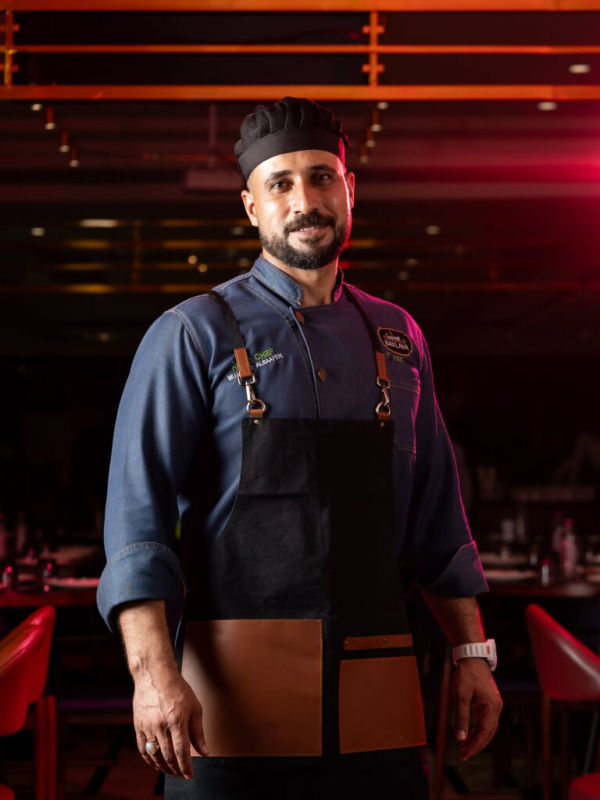
“When I came to India in 2017, I did not know how people here would receive our sweets. India already has its own beautiful tradition of desserts, and I had a lot to learn. So I took my time. I watched, I listened, and I kept making our Baklava the way my family has always made it, in Jordan. That is the only way I know,” AlSaafeen tells us.
“People give you their trust slowly, one box at a time, and that is the right way. Mr. Imtiaz Ali Siddiqui gave me the years to earn it. He never asked me to rush,” he adds.
The year it all began
The beginnings, according to Siddiqui, were modest. “It was a very humble, small factory we started in 2017 with a very small team of probably 15–20 people,” he says.
The timing of the first retail push also mattered. The brand opened its signature store a few months before Diwali, entering a market where dry fruits and traditional Indian sweets already dominated festive gifting. “We had a phenomenal response. I was very happy that this was a part that was missed by people and that they wanted something new in the market,” Siddiqui says.
But there was a problem. People first had to understand what they were eating.
‘Making Baklava is an art’
In 2017, Baklava and Kunafa were not yet the social-media celebrities they are today. For Siddiqui, introducing them meant introducing an entire dessert culture. “It had taken a lot of education all these years. We had to really struggle to make people understand what it is and how it is made,” he says.
According to Siddiqui, the skill involved in producing traditional Baklava is not something that can simply be picked up from a generic recipe. “The chefs who manage to make Baklava originally come from families of chefs who have been in the same industry and the same craft. I can’t teach somebody in two years how to make original Baklava,” he says.
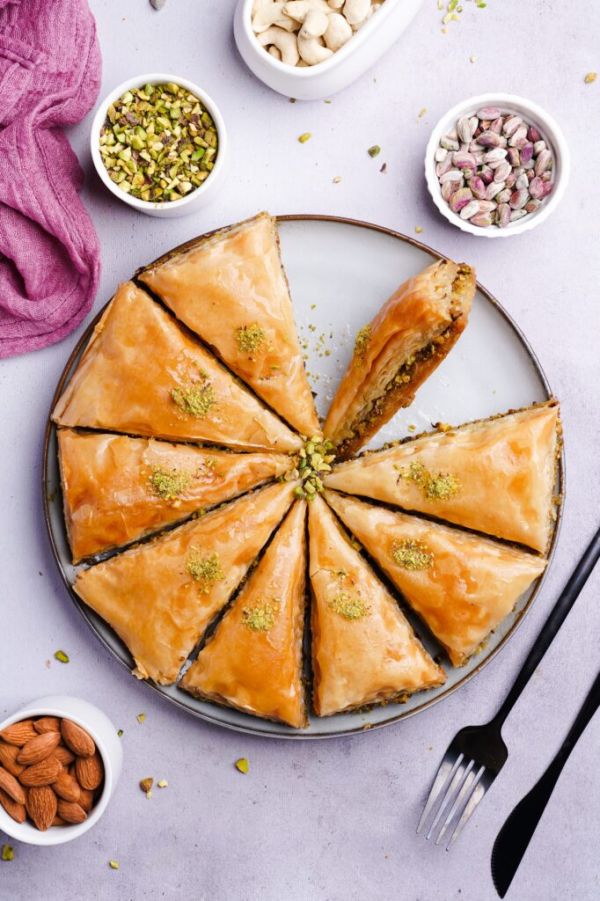
That philosophy shaped how Gourmet Baklava approached the business, from sourcing and machinery to the people making the desserts.
AlSaafeen says there was one thing he would never compromise on. “Honesty. The ingredient. If I do not hand a piece to my own children, it does not go into a box with our name on it,” he says.
“Mr. Imtiaz Ali Siddiqui has never once asked me to do it any cheaper, and that is why it tastes the way it does,” he adds.
The brand says it uses specialised equipment from Turkey and Jordan and operates manufacturing facilities in Hyderabad and Mumbai.
The Hyderabad roots of Kunafa and the man who put it on India’s dessert map
Kunafa may be everywhere today, but its story in India goes back further than the current dessert boom. Information available online points to its presence within communities with long-standing cultural and culinary links to the Arab world, including Hyderabad’s Barkas and its Chaush community, whose roots trace back to Hadhramaut in Yemen.
What changed in 2017 was the scale and accessibility. Siddiqui sought to take the dessert beyond these communities and make authentic Kunafa and Baklava available to a wider Indian audience, building a business around specialised chefs, equipment, premium ingredients and in-house production.
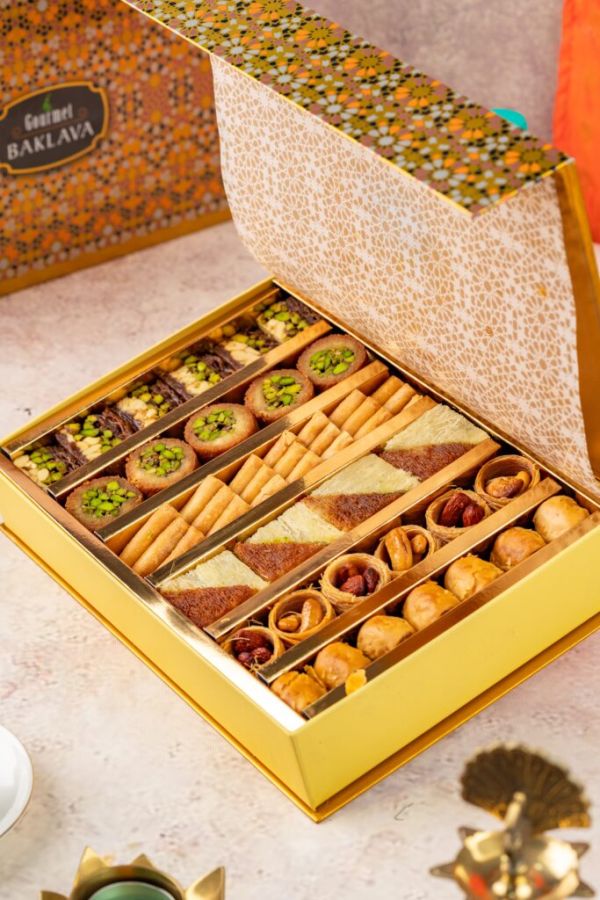
From something unfamiliar to a national dessert obsession
Siddiqui remembers a time when customers had to be convinced to even try the product. Today, Baklava and Kunafa are sold in forms that would have seemed almost unimaginable when he started, from chocolate-filled versions to Indianised mithai-style creations and social-media-friendly variations.
He has mixed feelings about that evolution. “Now people are aware of Baklava, but I would still not call that Baklava. It’s an Indianised version,” he says.
Yet he does not see the explosion in popularity entirely negatively. “The popularity has made me feel very nice that we could bring in a dessert that has got so much popularity in the Indian diaspora,” he says. He believes the rise of competing versions has only strengthened his original positioning.
For AlSaafeen, India’s love for sweets also made the transition easier. “India loves its sweets the way we do back home. In Jordan, a tray of Kunafa goes in the middle of the table, and the family gathers around it. Here it is the same. Nothing is eaten alone; a box is opened and the room fills up,” he says.
“That warmth made me feel at home very quickly. It also reminded me that sweets are not about sugar. They are about the people sitting around them.”
What actually makes a Kunafa authentic?
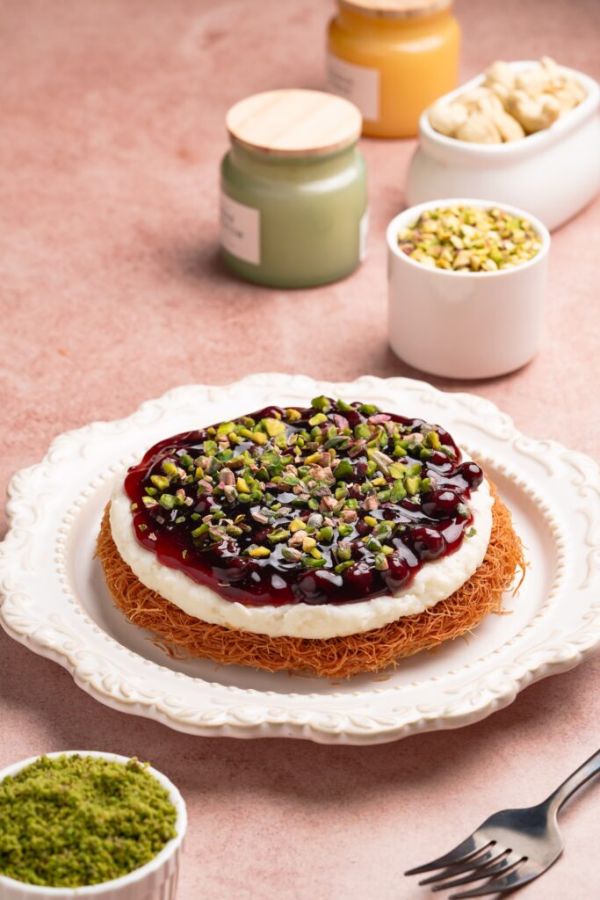
For Imtiaz Ali Siddiqui, authenticity begins with the dough. “Authenticity is in the dough, the way the dough is made. There is a recipe that goes into making the Kunafa dough,” he explains.
Then comes the cheese. “The second authenticity is the cheese combinations. It is not just one cheese we use. It’s a combination of cheeses that goes into it.”
At Gourmet Baklava, he says, the Kunafa dough and cheese are made in-house. “There is a process of doing that. There is equipment to do this. There is a technique of doing this, which we still possess.”
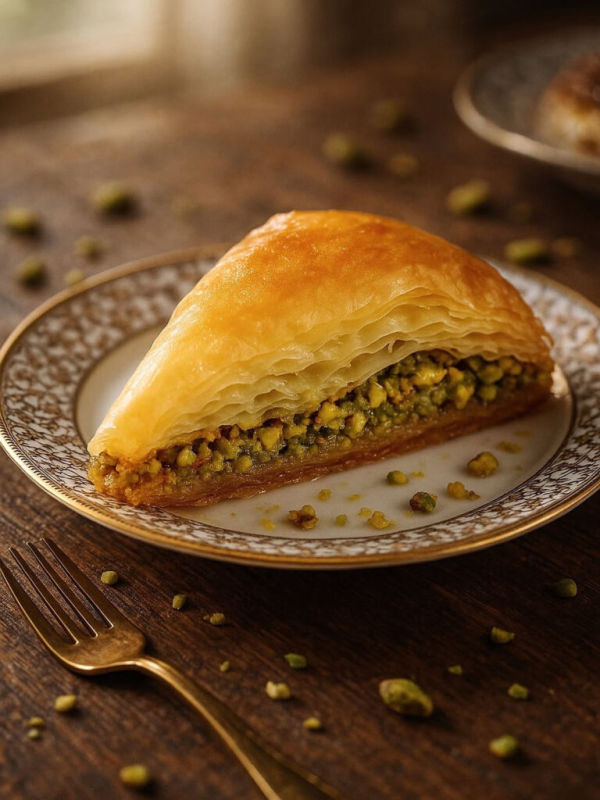
His head chef is from Jordan, while the wider culinary team includes chefs from Turkey, Jordan and Lebanon. For Siddiqui, those details are what separate the product from the growing number of versions now available. “That is what makes our Kunafa very authentic and very different from what is available in the market,” he says.
And then came the Kunafa Stick
Nearly a decade after entering the Indian market, Siddiqui is now experimenting with how Indians eat it. In August 2026, Gourmet Baklava and NOMME introduced Jordan’s viral the Kunafa Stick in Hyderabad (India’s first), a deep-fried, grab-and-go format that turns the traditionally plate-and-spoon dessert into something closer to an ice cream bar.
The Hyderabad connection
There is something particularly fitting about this story beginning in Hyderabad. The city has never been a stranger to culinary cross-pollination. Its history has brought together Deccani, Persian, Turkish, Arab and Indian influences, while neighbourhoods such as Barkas continue to preserve strong connections with the Arab world.
That may partly explain why a dessert from thousands of kilometres away could eventually become so comfortable here. But there was a difference between having access to a dessert within a particular community and building an organised business that could manufacture it consistently, package it, sell it, gift it, distribute it and take it beyond one neighbourhood or one city.
That is where Siddiqui’s venture made its mark.
Gourmet Baklava today lists outlets in Hyderabad, including Banjara Hills and Sarath City Capital Mall, along with airport presence in Hyderabad and Mumbai, and says it plans to expand further across India.
From Baklava to a bigger Mediterranean dream
The dessert business was only one part of Siddiqui’s larger culinary ambitions.
His ventures have expanded into Turkish, Mediterranean and Levantine food, eventually leading to newer concepts such as NOMME Kitchen & Coffee Theatre in Hyderabad.
And even within Gourmet Baklava, the focus remains on innovation without completely letting go of tradition.
“We’re trying to do some innovations. We have been doing milk cakes, typical Turkish milk cakes, and we’re trying to come up with a nice saffron milk cake, which is liked by the Indian palate,” Siddiqui says.
A decade of Kunafa in India
Today, Kunafa comes in countless forms across India, traditional, Indianised and wildly experimental. For Siddiqui and AlSaafeen, however, the journey remains rooted in the craft that brought the dessert to their business in the first place.
AlSaafeen reflects on how far that journey has come. “I never imagined a country so far from mine would take our sweets into its festivals and its celebrations,” he says. “That happened because Mr. Imtiaz Ali Siddiqui believed in it long before there was any reason to, and I thank Almighty every morning I tie the apron.”
Nearly a decade after Gourmet Baklava began, Kunafa has become part of India’s rapidly evolving dessert culture. What started as an unfamiliar Middle Eastern sweet has found a place in India’s cafes, bakeries, restaurants and social-media feeds, while the craft behind the original continues to find new audiences.
-
Seven reasons Real Madrid have looked a cut above under Mourinho this season

-
Ding Yuxi gifts fan $4,850 gold necklace as ‘dowry’ after proposal at his concert

-
You can get these amazing benefits by drinking barley soup daily in the rainy season, it can be helpful in everything from digestion to weight management.
-
Your Love Horoscope Is Here For Tuesday, September 1, 2026:

-
LPG Price Hike: Commercial Cylinders Cost More Again, Airfares May Feel the Heat