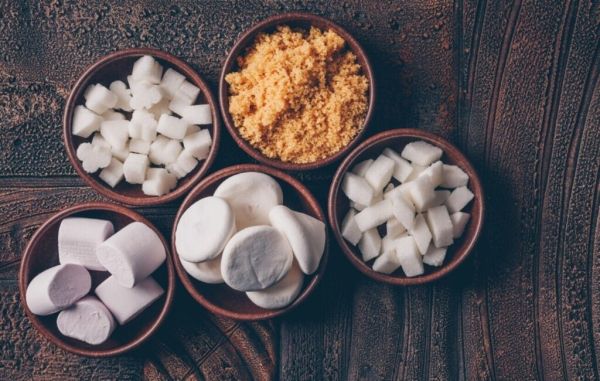
Sugar Prices Rise to ₹70/kg: 5 Affordable Alternatives to White Sugar
Sugar prices have been rising in parts of India, prompting many households to look for cheaper ways to add sweetness to food and drinks. But replacing white sugar doesn’t necessarily mean buying expensive “sugar-free” products. Dietitian Payal Dutt suggests several simple alternatives that may already be available in your kitchen.
However, there’s an important point: “natural” doesn’t automatically mean sugar-free or low-calorie. Honey, dates and jaggery still contribute sugars and calories, so quantity matters.
1. Ripe Banana
A ripe banana can provide natural sweetness along with fibre, potassium, vitamin B6 and antioxidants.
Mash it and add it to:
- Oatmeal
- Smoothies
- Pancakes
- Homemade baked goods
It’s particularly useful when you want both sweetness and moisture in a recipe.
2. Apple Puree
Apple puree is another inexpensive way to reduce the amount of added sugar in homemade foods.
Apples provide fibre and antioxidants along with their natural sugars. Puree a cooked or fresh apple and use it in oats, smoothies or homemade desserts.
It can also add moisture to baked foods.
3. Dates or Date Paste
Dates have a naturally caramel-like sweetness and contain fibre, potassium, magnesium, vitamin B6 and antioxidants.
Soak dates, remove the pits and blend them into a paste. You can use the paste in smoothies, desserts or homemade energy bites.
But don’t overdo it: dates are still relatively high in natural sugar and calories.
4. Jaggery
Jaggery is one of the most readily available alternatives in Indian kitchens.
It contains small amounts of minerals such as iron, calcium, magnesium and potassium, but it is still primarily sugar.
That means replacing one spoonful of white sugar with one spoonful of jaggery doesn’t suddenly make the food low in sugar.
The benefit is more about choosing a less refined traditional sweetener and potentially getting small amounts of micronutrients—not consuming unlimited quantities.
5. Honey
Honey can be used in beverages, yoghurt, oatmeal and homemade desserts.
It contains mainly glucose and fructose, along with small amounts of other compounds, including antioxidants. But honey is still a source of sugar and calories.
So it should be used in moderation, rather than treated as a completely healthy substitute that can be consumed freely.
What About Stevia and Monk Fruit?
If your primary goal is to dramatically reduce calories from sweeteners, stevia and monk fruit are different from fruit, honey or jaggery. Their sweet taste comes from compounds that can provide very few or no calories.
However, Dietitian Payal Dutt notes that they can be more expensive and less readily available than everyday options such as bananas, apples, dates and jaggery.
The Best Approach Isn’t Simply Swapping Sugar
The dietitian’s key message is worth highlighting: the goal shouldn’t be to replace white sugar with an unlimited amount of another sweetener.
Instead, gradually reduce how much sweetness you need overall.
For an affordable everyday approach, ripe banana, apple puree, dates or a small amount of jaggery can work well depending on the recipe.
The Bottom Line
If sugar is becoming more expensive, you don’t necessarily need costly “sugar-free” products. Banana, apple puree, dates, jaggery and honey can all provide sweetness in different ways.
But remember: jaggery, dates and honey are not sugar-free foods. If you have diabetes or are trying to control blood glucose, portion size and your overall carbohydrate intake remain important.
Disclaimer: This article is for general informational purposes and is not a substitute for personalised medical or dietary advice.
-
Make natural face pack with hibiscus and aloe vera

-
Philippine couple married in hip-deep floodwaters

-
ISPR song 'Do Dil, Ek Jaan' wins attention in Turkey

-
TECNO Spark Go 3 Pro with 5,200 mAh battery and IP69 rating starts selling from tomorrow, starting at ₹ 15,999
-
4 Common Problems With Bluetooth Speakers