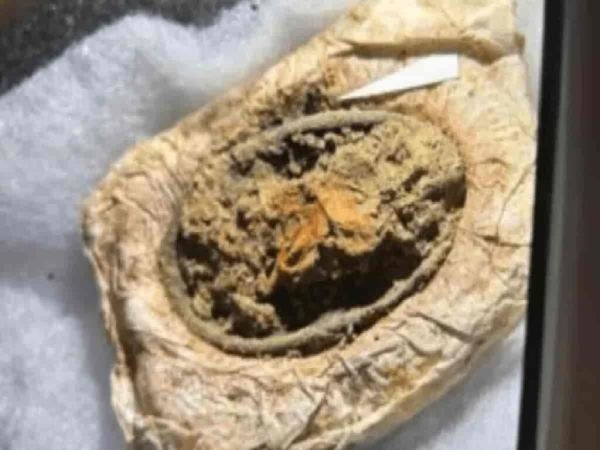
Secrets buried in the pages of history often come out at times that surprise even science and archaeologists. One such amazing and exciting case has come to light in the history of Europe to the Viking Age, known for its bravery, sea expeditions and unique culture. Archaeologists in Denmark's western Jutland region have found rare and exquisite remains of clothing in the grave of an 8th-century Viking woman, which are still preserved in their original condition even after the passage of nearly 1,300 years. Generally, the law of nature is that with the passage of centuries, natural fibres, clothes and organic matter inside the ground completely decompose and get mixed into the soil, but in this particular case, science and nature together created a miracle which has opened the doors of age-old secrets. Let us know in this detailed report how these clothes remained safe even after 1300 years and what unheard aspects of Viking civilization are coming to light through scientific analysis. The magical chemical combination of Jutland's acidic soil and metal salts was the biggest curiosity for scientists and archaeologists as to how the soil of Western Jutland, Denmark, which is known for its extremely acidic nature and which completely destroys clothes and bones in a few decades, preserved the clothes kept in this grave. The answer to this archaeological puzzle was found in the metal jewelry that the woman was wearing at the time of her death. According to the researchers, there were two scoop brooches on the woman's torso, which held her clothes tightly together. With the passage of time, when these metal brooches started rusting naturally, metal salts seeped from them and dissolved in the surrounding soil. These special chemical salts created such a unique and safe microclimate (chemical environment) inside the grave, in which microorganisms like bacteria and fungus could not flourish. This was the reason that the metals which had preserved the woman's clothes while she was alive, kept those clothes safe in the pages of history even 13 centuries after her death. After this amazing discovery, textile experts and historians are closely studying the fashion, textile manufacturing and lifestyle of the Viking Age. Fine fibers of cloth have been found securely stuck on both the upper and lower layers of the brooch. Through this, the researchers are deeply analyzing both the layers of the woman's clothing, i.e. the outer coat-like garment and the inner layer which is in direct contact with the skin. Renowned textile expert Liz Rader Knudsen is examining these fibers minutely to find out what the weaving pattern of the clothes was at that time, what was the quality of the thread used and what techniques were used to make the clothes. Along with this, under the 'Textile Colors of the Viking Age' project, senior researchers like Ula Mannering and Charlotte Rimstad are doing spectral analysis of these fibres. This is expected to clarify what type of natural dyes were used to color these 8th century costumes. History tells us that in Viking society, dyed and beautiful textiles were worn only by women of the upper class and wealthy families, while ordinary people used undyed natural wool. This scientific investigation will also reveal the social, economic and family status of the woman. Isotope analysis of teeth will reveal the untouched secrets of childhood and health. Not only clothes were found from this grave, but the teeth of the skeleton of a young woman were also found in very good and safe condition, which is no less than a treasure from the point of view of archaeology. The Anthropology Unit of the University of Denmark is doing isotope analysis on the enamel of these teeth. The chemical elements deposited inside the teeth are capable of telling what type of food a person had adopted during his lifetime, what his health was like and which geographical area was his initial place of childhood residence. During the Viking Age, people made long sea voyages and migrated from one place to another, so this isotope test will also be able to know whether this woman was originally from Jutland or whether she had migrated here from some other remote area. Radiocarbon dating and an attempt to solve the archaeological puzzle Another very interesting aspect of this entire research process is that a brooch that held up the woman's clothing has been found to have clear repair marks. This shows that the brooch was very old and was in use long before it was buried in the tomb, which had been repaired in time. Now researchers are using radiocarbon (C14) dating techniques to scientifically confirm whether the dress and brooch are from the same contemporary period, or whether the woman was wearing a new woven dress from that period along with old and traditional jewelry inherited from her grandmother's time. This study, which is being carried out with the financial and technical support of the Agnes Geiger Foundation, will provide solid scientific evidence to the speculations and assumptions made about Viking costumes among historians for decades. Conclusion: A unique initiative to understand the future through the window of history. This 8th century Viking woman's grave found in Jutland, Denmark and the 1300-year-old clothes preserved in it are not just an old discovery, but it takes us very close to the technical skills, aesthetics and lifestyle of ancient human civilization. On one hand everything was destined to be destroyed naturally, on the other hand the combined wisdom of chemistry and archeology has saved a precious chapter of history. In the coming days, when the final results of this research will be revealed to the world, they will not only give a new dimension to the history of textile science and fashion of the Viking Age, but will also completely clear up many unsolved mysteries of our ancient history.
-
Manchester United Offered Opportunity To Sign La Liga Striker Alexander Sorloth: Should Michael Carrick Make A Move?

-
‘We have so much potential!’ - Nico Gonzalez celebrates dream Newcastle debut after win over Spurs

-
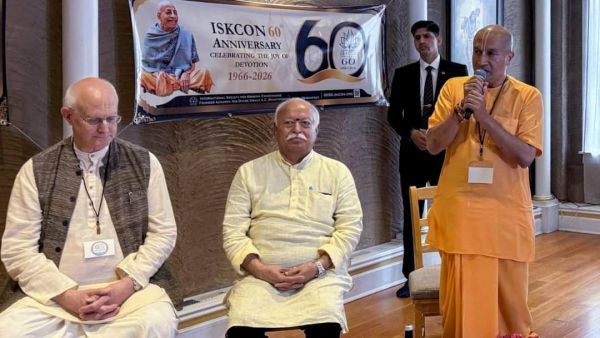
If Hindus Want No Muslims In Bharat, They Are Not Hindus: RSS Chief Mohan Bhagwat In US
-
‘Unity In Diversity Is In Bharat’s DNA': RSS Chief Mohan Bhagwat At New York Event

-
2 key passes, 67% aerial duels won: Manchester United’s next Baleba keeps up strong start to the season