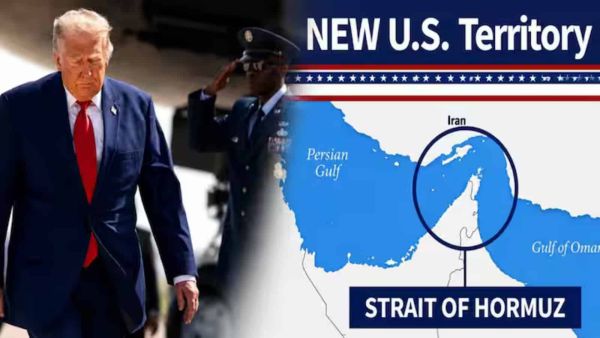
On Saturday, August 22, 175 days into the US-Iran war, US President Donald Trump described the Strait of Hormuz as “American territory” and warned Iran against acquiring a nuclear weapon, as tensions over the strategic waterway remained high.
Speaking at a rally in Myrtle Beach, South Carolina, Trump said Tehran wanted to reach an agreement with Washington but questioned whether the US would accept one.
“They want to make a deal so badly, we don’t even know if we want [a deal] because I view the Strait of Hormuz as an American territory right now, it’s an American territory,” Trump said.

He also warned that Iran would not be allowed to develop a nuclear weapon.
“We cannot let them have a nuclear weapon; we cannot let Iran have a nuclear weapon, or you will see some very bad things,” Trump said.
“We went down, and we stopped them; they will never have a nuclear weapon,” he added.
Before travelling to Myrtle Beach, Trump told reporters at Joint Base Andrews that the US had “total control” of the Strait and the wider region involved in the blockade.
“We’re just going to sort of see what happens, and we have total control, as you know, of the border; we have total control — if you look at the blockade, we have total control of that entire region having to do with the Strait of Hormuz,” he said.
Shipping remains far below pre-war levels
Commercial traffic through the Strait remains about 90 per cent below pre-war levels amid security concerns and attacks on vessels in regional waters, according to the UK Maritime Trade Operations (UKMTO).
The US Central Command (CENTCOM) said its forces had redirected 67 commercial vessels, disabled three and boarded two as of August 20 while enforcing the blockade against Iran.
The UK Maritime Trade Association, cited by CNN, reported that 103 vessels entered the waterway and 89 departed during the previous week, with traffic up 27 per cent.
The US Energy Secretary said the US military had helped facilitate the movement of more than 15 million barrels of oil through the Strait on Tuesday. Including pipeline shipments, nearly 20 million barrels had left the region.
Trump said oil prices would fall after the US operation against Iran and claimed Tehran had lost significant naval, air and military capabilities.
Nuclear negotiations remain stalled
Iranian President Masoud Pezeshkian said Tehran had negotiated the June memorandum of understanding with Washington from a position of strength and would defend the rights of the Iranian people in nuclear talks.
The memorandum was intended to end hostilities and restore shipping through the Strait, but the arrangement later stalled over disagreements about its implementation and navigation through the waterway.
Iran and Oman have continued discussions on maritime access, but no breakthrough has been reported.
The International Maritime Organization (IMO) said it had recorded 68 incidents and 19 seafarer deaths in the Strait of Hormuz as of Friday since Iran’s blockade began on February 28.
The conflict began on February 28 with a US-Israeli attack on Iran, followed by Iranian strikes against targets in Israel and US military bases in the region.
-
Are Teen Driving Schools Worth It? What It Takes to Keep Newly Licensed Young Drivers Safer on the Road

-
How This $18.7 Million Corvette Grand Sport Reached a Record Sale at Monterey

-
Huge cost of being a football fan in 2026/27 shows UK supporters are still being taken for a ride

-
Jashn-e-Deccan 2026 honours students, community service in Oman

-
NIA Court rejects bail plea of Pulwama attack accused Insha Jan