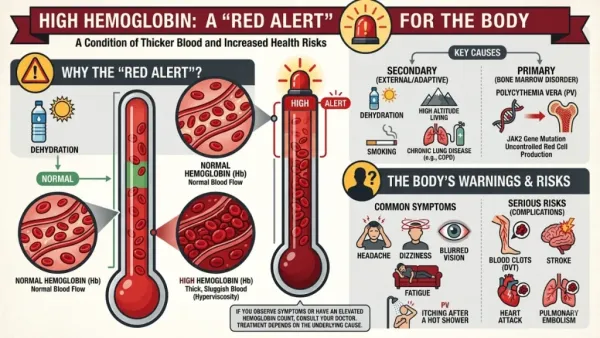
Increased level of hemoglobin in the blood is a direct indication of excessive formation of red blood cells (RBCs) or deficiency of plasma in the body. According to doctors, it is not an independent disease in itself, but a warning of some serious health problem developing within the body. If not taken care of in time, it can cause life-threatening conditions like blood clot, stroke and heart attack.
‘Red alert’ for high hemoglobin body: Risk of stroke and blood clot, know its causes and symptoms
What is hemoglobin and what should be the normal range?
Hemoglobin is an iron-rich protein, which is present in every cell of the body. Its main function is to take oxygen from the lungs and deliver it to all the organs, muscles and tissues of the body.
Its normal range as per health standards is as follows:
- Men: 13.8 to 17.2 g/dl
- Women: 12.1 to 15.1 g/dl
- Children: 11 to 16 g/dl
If the level goes above 17.2 g/dl in men and 16 g/dl in women or children, it is considered medically dangerous.
Main reasons for high hemoglobin
The primary and rare cause of increased hemoglobin is blood cancer called Polycythemia Vera. Apart from this there are many secondary reasons also:
- Chronic lung diseases: severe asthma or sleep apnea.
- Environment and lifestyle: Chronic smoking, exposure to carbon monoxide or highly polluted air at work.
- Geographical location: Living in hilly or high altitude areas, where due to lack of oxygen the body starts producing more hemoglobin.
- Other physical conditions: severe dehydration, kidney disease or tumors, and congenital heart disease (cyanotic heart disease).
Recognize these early symptoms
When hemoglobin level increases in the body, some clear signs start appearing:
- Headache, dizziness or feeling lightheaded.
- Blurred vision.
- Constant fatigue and weakness even without doing heavy work.
- Having trouble breathing.
- Abnormally reddening of the skin of hands and feet.
- Excessive bleeding during periods in women.
serious dangers to the body
Thick blood can form clots in blood vessels, which can cause the following serious problems:
- Deep Vein Thrombosis (DVT) and Blood Clotting
- brain stroke and heart attack
- Hypertension (high blood pressure)
- Stoppage of blood supply to major organs of the body
- enlargement of spleen
rescue and relief measures
Lifestyle improvement is very important to control high hemoglobin:
- Quit smoking immediately and keep yourself fully hydrated.
- Avoid sitting continuously in one place, remain physically active.
- Do not take iron supplements without doctor’s advice.
- Keep obesity, diabetes and blood pressure under control.
- Before going to hilly areas, get your breath tested and consult a doctor.
When to see a doctor immediately?
If you are complaining of frequent dizziness or headache, persistent fatigue without any reason, shortness of breath or hemoglobin is continuously increasing in lab tests, then consult a specialist doctor without any delay.
-
Arsenal star reportedly 'offering himself to Barcelona daily' as Mikel Arteta faces late squad reshuffle

-
Are Teen Driving Schools Worth It? What It Takes to Keep Newly Licensed Young Drivers Safer on the Road

-
How This $18.7 Million Corvette Grand Sport Reached a Record Sale at Monterey

-
Huge cost of being a football fan in 2026/27 shows UK supporters are still being taken for a ride

-
Jashn-e-Deccan 2026 honours students, community service in Oman