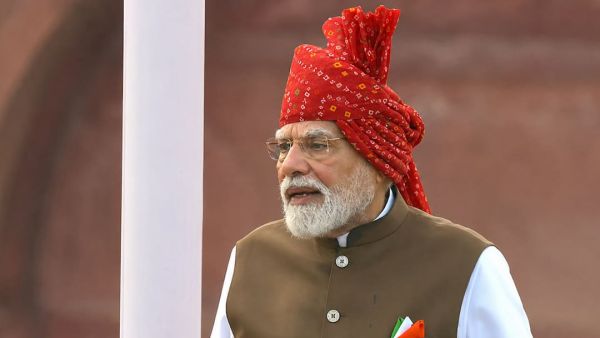
PM Modi independence day speech 2026: Prime Minister Narendra Modi, addressing the nation from the Red Fort on India's 80th Independence Day, outlined an ambitious roadmap centred on self-reliance, technological capability, energy security and the goal of making India a developed nation by 2047. From semiconductor manufacturing and nuclear power to governance reforms and infrastructure expansion, Modi used his address to highlight what he described as India's progress over the past 12 years while setting out priorities for the decades ahead.
PM Modi Pushes 'Atmanirbhar Bharat' And Swadeshi
A major focus of the Prime Minister's address was reducing India's dependence on other countries. Calling self-reliance essential, Modi urged citizens to support domestic production through initiatives such as Make in India, Swadeshi and Vocal for Local.
He said, "Becoming an 'Atmanirbhar Bharat' is crucial. That is why, over the past few years, our conviction has been that India should no longer live in dependence on other nations; we must become self-reliant."
He added, "We must enhance our own capacities and safeguard our interests ourselves. With this resolve, we are moving forward firmly towards an 'Atmanirbhar Bharat.' Every Indian is connecting with initiatives like 'Make in India,' 'Swadeshi', and 'Local for Local,'" he said.
#WATCH | Delhi: For the first time, the National Song Vande Mataram is rendered during Independence Day celebrations at Red Fort.
— ANI (@ANI) August 15, 2026
Prime Minister Shri Narendra Modi leads the 80th Independence Day Celebrations from the Red Fort. pic.twitter.com/miSIlH6Dki
Semiconductor Manufacturing Gets Major Push
Modi also highlighted semiconductors as a critical component of the modern economy, pointing to their importance across electronics, healthcare and transport. "In today's digital world and technological landscape, we understand the immense importance of chips. Whether it is electronic goods, medical equipment, or transportation systems, chips are indispensable; without them, the world would come to a standstill," he said.
The Prime Minister said India had begun moving towards greater self-sufficiency in chip manufacturing.
He said: "India has moved towards self-reliance in this sector; three major semiconductor plants have already been established, and I have been informed that production from these facilities has already begun for export. In the coming 7-8 years, five to eight additional semiconductor plants are set to commence operations very soon."
Nuclear Power At Heart Of Energy Security Plan
Energy independence was another key component of Modi's vision. The Prime Minister said India needed to expand its nuclear power capacity substantially to meet its future energy requirements.
"Energy security is the demand of the time. We are moving forward with the aim of 100 gigawatts of nuclear power by 2047. We aim to start five new nuclear reactors in this decade," he said.
The target places nuclear energy at the centre of India's long-term strategy for strengthening energy security.
Modi Lists Surge In Manufacturing And Digital Economy
The Prime Minister cited a series of growth figures while outlining changes over the last 12 years. He said, "Defence production has increased nearly fourfold, while output from Khadi and village industries has grown almost fivefold. Electronics manufacturing has expanded nearly sevenfold. The production of modern railway coaches has risen 21-fold, and mobile phone production has surged 33-fold."
He continued, "The number of internet users has nearly quadrupled, patent grants have increased fourfold, and digital transactions have grown a hundredfold."
The figures, according to Modi, reflect the expansion of India's manufacturing, innovation and digital capabilities.
Piped Gas, Water And Housing Expansion Highlighted
Modi also pointed to the expansion of basic infrastructure and household services across the country. He said, "12 years ago, piped gasline was available in only 70 cities. In the last 12 years, this number has grown to 700 cities. Today, 1.75 crore households are connected to piped gas lines in the country."
He further said, "We have provided tap-water connections at an average annual rate 15 times faster than before. Gas connections have been provided at six times the previous annual speed. We have constructed toilets for the poor at four times the annual pace and provided housing for the underprivileged at three times the previous rate."
Government Targets Outdated Laws And Compliance Burden
The Prime Minister also highlighted changes to India's regulatory framework, saying reforms had focused on removing outdated requirements and laws.
"The country has also undergone a massive transformation in governance; thousands of compliance requirements have been eliminated, and hundreds of archaic laws have been repealed. One cannot march into the 21st century relying on laws from the last century," he added.
Modi Marks First-Ever Vande Mataram Rendition At Red Fort
The Independence Day ceremony also featured a historic moment, with Vande Mataram being rendered at the Red Fort during the August 15 celebrations for the first time since Independence.
Calling attention to the occasion, Modi said, "For everyone present at this ceremony today, this is also a historic moment. For the first time since independence, 'Vande Mataram' is resounding at the Red Fort on August 15th."
PM Expresses Solidarity With Flood And Landslide Victims
Modi also addressed the impact of recent natural disasters in parts of India, expressing sympathy for families affected by floods and landslides.
"Recently, parts of the country have faced the havoc of floods and landslides. Many families have been affected, and we deeply empathize with their suffering. I assure the affected families that we, and the entire nation, stand with them."
Developed India By 2047 Remains Central Goal
Looking ahead, Modi reiterated the objective of transforming India into a developed nation by the centenary of Independence.
"It is the vision that by the time we mark 100 years of independence—by 2047—we will have transformed India into a developed nation. We must achieve this goal through the collective effort and industrious spirit of our 1.4 billion citizens," PM Modi said.
The Prime Minister called for greater ambition in pursuing that objective. "Small dreams will no longer suffice. We must dream big, because big dreams expand our thinking, broadening the horizons of our thoughts."
Modi Credits Citizens Across India
Concluding his broader assessment of India's progress, Modi acknowledged contributions from people across social and economic groups and regions.
He said: "Over the past 12 years, countless citizens—whether Dalits, the downtrodden, the marginalized, or tribals; whether rural or urban dwellers; the poor or the middle class; youth or the elderly; women or men; from the North, South, East, or West—have all strived in every possible way, with unwavering resolve and dedication, to propel the nation to new heights. I respectfully acknowledge these efforts."
His address brought together the government's focus on self-reliance, domestic manufacturing, energy security, infrastructure and technological development with the longer-term objective of building a developed India by 2047.
-
IND-SL 1st Test: India Win Toss And Choose To Bat First

-
Pet First | 7 Indoor Plants That Can Harm Dogs And Cats

-
What Is 'Shakti Ki Saptdhara'? PM Modi's 7-Point Roadmap For Viksit Bharat 2047
-
Esports World Cup 2026: Arjun Erigaisi And Nihal Sarin Finish In Top 8 As India’s Chess Campaign Ends In Quarterfinals

-
World Padel League Season 4 Day 3: Aussie Mavericks Jaguars Continue Strong Run, Khan Tigers Go Down 19-9