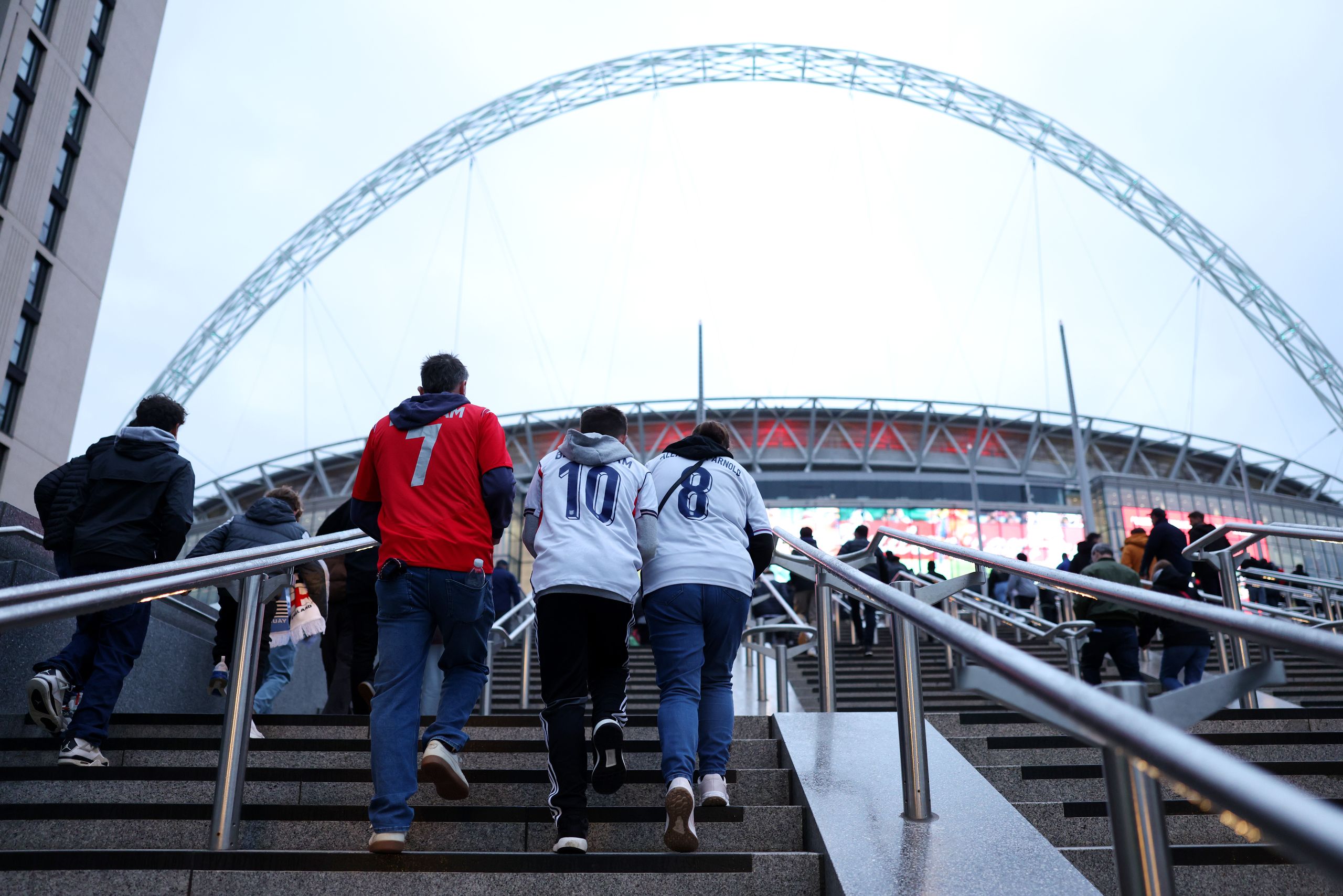
The Community Shield’s move back to Cardiff underlines that English football does not have to revolve around Wembley.
For the first time in 20 years, the Community Shield will be staged outside England.
Arsenal and Manchester City will meet in the traditional season curtain-raiser at Cardiff’s Principality Stadium on 16 August because of a break from recent custom. Since Wembley reopened in 2007, the Community Shield has been played there almost every year, with the showpiece moved only twice before because of fixture clashes linked to the 2012 Olympics and the Women’s Euro final in 2022.
This time, though, it is music rather than football that has forced the clash between the Premier League champions and the FA Cup holders away from its usual London base. A five-night run of The Weeknd’s ‘After Hours Til Dawn’ stadium tour means fans from both the north and south will head to the Welsh capital instead of Wembley, and that feels as much a hidden blessing as it does a novelty.
From 2001 to 2007, Cardiff effectively served as the home of English football, hosting 44 major occasions ranging from the FA Cup final to the EFL play-offs while Wembley’s Twin Towers were removed and replaced. The arrangement was, in part, a quid pro quo after Wales’s rugby union side played a Test match against New Zealand at Wembley in 1997 while Cardiff Arms Park was being redeveloped into the venue many came to know, and love, as the Millennium Stadium.
St Mary Street became a new version of Olympic Way, only better. A stadium placed right in the centre of a major city, with every amenity a travelling supporter could want within easy reach, delivered the best of both worlds. It also helped that the ground produced unforgettable moments, including Steven Gerrard’s thunderbolt in the 2006 FA Cup final between Liverpool and West Ham, and Andy Campbell’s extra-time chip that secured home-city glory for Cardiff City in the old Second Division Play-Off final in 2003. Even a brief return to those familiar comforts serves to expose the continuing disconnect between club supporters and the national stadium.
A trip to Wembley ought to represent the high point of any team’s season. In reality, a visit to the supposed ‘Home of Football’ is often a joyless exercise. Supporters are met with limited options both inside the area beneath The Arch and around it, quite apart from the difficulty of reaching the place in the first instance. Big fixtures regularly coincide with some sort of planned disruption, whether engineering works or strike action, on the West Coast Mainline and the M6 motorway, making the journey draining for those travelling by train or road alike. Beyond the transport chaos, the pull of heading to the capital has steadily weakened. The Football Association’s determination to stage both FA Cup semi-finals there has turned what was once a pilgrimage into a costly burden, with supporters having to pay for two return trips within six weeks.
It is hardly surprising, then, that City supporters were unable to fill their allocation for April’s semi-final victory over Southampton — their 23rd Wembley appearance in 10 seasons. Followers of Enzo Maresca’s team are well used to competitive matches being played in unusual venues. Their side played in the 2012 Shield at Villa Park and then faced Liverpool 10 years later at Leicester’s King Power Stadium. In 2008, they also travelled to Barnsley for a ‘home’ match after their UEFA Cup qualifier against EB Streymur was staged at Oakwell because the Etihad Stadium pitch was being relaid following a Bon Jovi concert. Opposing fans mocked the large number of empty seats in their end against Southampton, but even extraordinary success does not shield anyone from a cost-of-living crisis.
Wembley trips were grudgingly accepted by supporters of every club as the price of covering The FA’s building costs from the stadium’s £789m redevelopment. But for the past 18 months, the venue has effectively been generating pure profit for the governing body, which cleared its debts in the final quarter of 2024. Any justification for continuing to make the game’s lifeblood subsidise it has long since disappeared, and a proper discussion is now needed over why it remains the automatic choice for non-finals when much of its attraction has faded. Before 1974, the Community Shield was not held there at all; it was played at no fewer than 10 club grounds representing a who’s who of English football heritage. In 1966, an all-Merseyside clash between Liverpool and Everton gave supporters a rare sight of the newly won World Cup, paraded around Goodison Park before kick-off by Roger Hunt and Ray Wilson, two of England’s heroes who were preparing to oppose one another that afternoon.
Using club grounds again for the season opener remains entirely realistic, with Old Trafford, St James’ Park, Elland Road and Villa Park all due either to undergo major redevelopment or to be replaced by future-ready successors that would make them suitable alternatives. Tottenham Hotspur Stadium and Everton’s Hill Dickinson Stadium also stand out as credible options, with Euro 2028 and a likely Women’s World Cup in 2035 already part of their future plans. The same applies to the venue hosting Sunday’s match, the first stadium to stage a Champions League final ‘indoors’ after its roof was shut for the 2017 showpiece. And there is no reason to stop there.
FA Cup semi-finals could also realistically be taken away from Wembley’s former white elephant once more, just as they were as recently as 2006, while taking England around the country again could strengthen the national team’s bond with supporters who follow them from outside the M25. Nottingham Forest’s City Ground most recently welcomed the Three Lions for an end-of-season friendly against Senegal last summer, making Thomas Tuchel’s side accessible to more than just those living within Oyster card territory.
At a moment when Andy Burnham is trying to ‘rewire’ the wider UK’s relationship with its London-centric government, the new Prime Minister would surely support sparing football supporters the inconvenience of repeated journeys south of Watford Junction. A committed Everton fan, who recently urged his beloved club to sign a right-back, would know that commute better than most after numerous such trips over the past two decades.
Removing the needless hassle of travelling to a stadium whose commercial ambitions now exceed the purpose for which it was built would benefit everyone involved. Major football occasions can exist perfectly well beyond Wembley, as this weekend in Cardiff demonstrates. The time has come for The FA to adapt to a changing landscape and embrace the principle of devolution.
-
Body Muscles: Include these foods in your diet to strengthen your muscles!

-
Simple methods to make tricolor dishes on Independence Day

-
Rodri transfer: Maresca says ‘anything can happen’ before window closes

-
Abishek Porel Remanded to 14-Day Judicial Custody After Bail Plea Rejected

-
Cricketer Abishek Porel's problem increase! Court rejects bail in rape case; 14 days judicial custody order