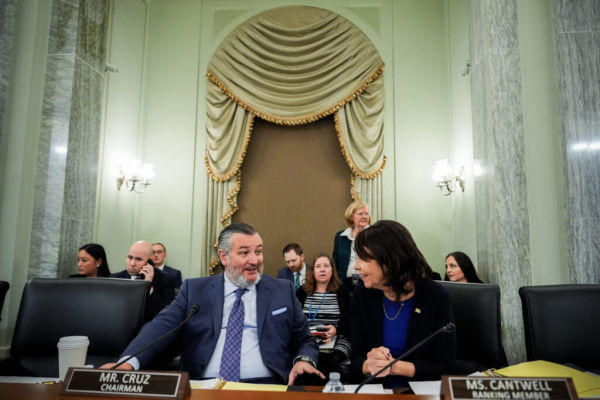
Senators Negotiate With SEC and Big Ten Over College Sports Bill/ TezzBuzz/ WASHINGTON/ J. Mansour/ Senators continued negotiations with the Southeastern and Big Ten conferences over revisions to legislation regulating college athletics. A proposed retention pool exceeding $20 million could effectively double the amount schools may provide players under the current revenue-sharing system. Questions involving third-party payments, antitrust protection, state laws and the $2.8 billion House settlement remain unresolved.
Quick Look
- Sens. Ted Cruz and Maria Cantwell sponsor the bill.
- The legislation is called the Protect College Sports Act.
- Sponsors want a Senate vote before Aug. 7.
- The Senate will then leave Washington for its summer recess.
- Negotiations involve the Southeastern Conference and Big Ten.
- A proposed retention pool would exceed $20 million per school.
- The current revenue-sharing limit is $21.3 million.
- The proposal could effectively double direct player compensation.
- Conferences want clarification about third-party player payments.
- The legislation must account for the $2.8 billion House settlement.
- Antitrust protection remains a major conference priority.
- Preemption of state laws also remains unresolved.
- Proposed rules would allow conferences to expand to 19 teams.
- Lawmakers are considering flexibility for Olympic and women’s sports.
- The bill would restrict private equity funding for a super league.
Deep Look
Senators seek agreement on college sports bill
WASHINGTON — Senate negotiators continued working Wednesday with leaders of the Southeastern and Big Ten conferences to resolve disputes over legislation intended to create a national regulatory system for college sports.
Sponsors of the Protect College Sports Act hope to bring the measure to a vote before senators leave Washington for their summer break.
Cruz and Democratic Sen. Maria Cantwell of Washington are attempting to build enough support to hold a vote before Aug. 7, the Senate’s final scheduled meeting day before the recess.
Legislative calendar creates urgency
Time is becoming a significant obstacle for the bill’s supporters.
Senators are not scheduled to return until the second half of September.
The chamber will then be out of session throughout October, leaving a narrow window for legislation before the November midterm elections.
Campaigning is likely to make congressional action more difficult as Election Day approaches.
Failure to reach an agreement before the August recess could therefore push the college sports debate into late September or beyond the midterms.
Proposed retention pool exceeds $20 million
Two negotiating documents outlined concessions lawmakers have offered to conferences and schools.
The most significant proposal involves creating a player retention pool worth more than $20 million.
Schools could use the additional money to persuade athletes to remain rather than transfer to competing programs.
The pool would exist alongside the current revenue-sharing arrangement, which allows schools to distribute as much as $21.3 million to athletes during this academic year.
Together, the two sources could effectively double the amount available for direct player compensation.
Revenue-sharing system faces major change
The proposed increase would represent a substantial expansion of the financial system governing college athletes.
Schools have only recently begun sharing revenue directly with players under rules established through the House settlement.
A retention pool could help programs compete with outside collectives and other schools offering athletes larger financial opportunities.
It could also increase the financial divide between wealthy athletic departments and smaller institutions that cannot afford to maximize both revenue-sharing and retention payments.
The details of how schools could allocate the additional money remain central to the negotiations.
Conferences question third-party payments
The Southeastern and Big Ten conferences are seeking clarification about how an expanded revenue-sharing system would affect payments from third parties.
Those arrangements generally involve outside organizations, boosters or companies compensating athletes for use of their names, images and likenesses.
Third-party payments are widely blamed for rapidly increasing the cost of constructing and retaining college sports rosters.
Conference leaders want to know whether the proposed retention pool would replace, limit or exist alongside those outside payments.
Without clear restrictions, schools could face a new $20 million-plus expense without reducing costs associated with external compensation.
House settlement creates legal questions
Lawmakers must also determine whether the retention pool is consistent with the House settlement.
The $2.8 billion legal agreement established the current framework for sharing athletic department revenue with college players.
It also provided compensation for athletes who were previously prevented from earning money from their names, images and likenesses.
Jeffrey Kessler, an attorney representing the plaintiffs in the House litigation, said he would need to review the bill’s specific language before determining whether the proposed pool would affect the settlement.
A conflict with the agreement could expose the new system to additional litigation.
Antitrust protections remain unresolved
The negotiating documents did not include proposed changes concerning antitrust protections.
The NCAA and nearly every major athletic conference have requested some form of federal protection from antitrust lawsuits.
They argue that college sports organizations need authority to establish uniform rules governing player compensation, transfers and eligibility without facing repeated legal challenges.
Athletes and their advocates warn that broad exemptions could reduce players’ ability to challenge unfair restrictions.
The scope of any antitrust protection remains one of the most divisive issues surrounding federal college sports legislation.
Conferences want federal rules to override states
The documents also omitted revisions concerning the preemption of state laws.
College athlete compensation rules currently differ among states, creating inconsistent standards for schools and conferences operating nationally.
The NCAA and conferences want federal legislation to supersede state laws and establish one nationwide system.
Supporters argue that a uniform standard would reduce confusion and provide competitive balance.
Critics worry that federal preemption could eliminate stronger protections or compensation rights already enacted by individual states.
SEC and Big Ten proposed 10 changes
Earlier in July, the Southeastern and Big Ten conferences released a document proposing 10 “Common Sense Improvements” to the Protect College Sports Act.
Antitrust protection and federal preemption accounted for the first two proposals and three of the 10 total recommendations.
Their prominent placement demonstrated the importance conference officials assign to those issues.
The absence of new language addressing them suggests that lawmakers and conference leaders still have substantial differences to resolve.
Those disagreements could prevent the bill from reaching the Senate floor before the recess.
Olympic and women’s sports requirements discussed
Negotiators have made progress on other provisions.
The discussions include increasing flexibility in requirements governing the number of Olympic and women’s sports programs that certain schools must maintain.
Athletic departments argue that mandatory program levels may be difficult to sustain as schools redirect significant revenue toward direct player compensation.
Advocates for Olympic and women’s sports fear that flexibility could lead institutions to eliminate less profitable teams.
Lawmakers must balance schools’ financial concerns against efforts to preserve athletic opportunities beyond football and men’s basketball.
Conferences could expand to 19 teams
The revised language would also loosen restrictions on conference expansion.
Leagues could grow to as many as 19 members under the current negotiating proposal.
Conference realignment has transformed college athletics as major programs pursue larger media contracts and more stable financial positions.
Expansion can increase travel demands, disrupt traditional rivalries and create logistical burdens for athletes.
The proposed limit is intended to allow some continued growth while preventing unlimited consolidation.
Bill targets private equity super league
The legislation includes language designed to prevent private equity firms from paying schools to establish a national super league.
Proposals for a reorganized competition involving the wealthiest football programs have attracted interest as college sports revenues increase.
Lawmakers and conference leaders are concerned that outside investors could gain excessive control over schools, schedules and media rights.
The conferences may request additional revisions to ensure that the language does not unintentionally prevent acceptable investments or commercial partnerships.
The final definition of prohibited private equity involvement remains under negotiation.
Vote depends on quick compromise
Cruz and Cantwell must resolve complex financial, legal and competitive questions while securing enough bipartisan support for a Senate vote.
The retention pool offers schools a new mechanism for keeping players, but it could create conflicts with the House settlement and increase roster spending.
Antitrust protections and state-law preemption remain major unresolved demands from the NCAA and leading conferences.
With the Aug. 7 deadline approaching, negotiators have limited time to convert broad concessions into legislative language acceptable to schools, athletes and senators.
More on Sports
-
Snake Alert: These household smells can attract snakes. Learn what can increase the risk.

-
Snake Alert: These household smells can attract snakes. Learn what can increase the risk.

-
A big change is coming in the lives of these people today, don’t make this mistake even by mistake.

-
New Samsung Galaxy Z Series sets record! Over 2.71 lakh pre-orders in 72 hours… Know in detail

-
These Google apps are secretly draining your phone’s battery. Check the list today and change these 3 settings.