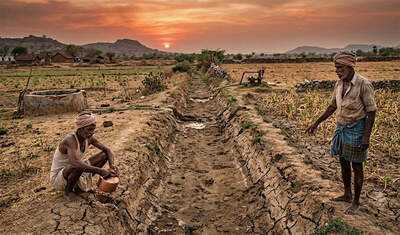
The Kaveri water dispute has once again emerged as a significant challenge for the country's political landscape and federal structure. Karnataka is refusing to release water to Tamil Nadu, citing water scarcity and a weak monsoon, while Tamil Nadu is actively pursuing both legal and political avenues to assert its rightful share. In the midst of this, the Kaveri Water Regulation Committee (CWRC) has urged both states to collaboratively develop a permanent and scientific 'distress-sharing formula' to prevent conflicts during crises.
CWRC's Response to Tamil Nadu's Complaints
Vineet Gupta, the chairman of the CWRC, dismissed Tamil Nadu's complaint that the Kaveri Water Management Authority (CWMA) and CWRC were making decisions based on temporary arrangements rather than a permanent scientific formula. He pointed out that both bodies had established a distress-sharing mechanism during the water crisis of 2023-24. Gupta questioned why, if both states had a better and more sustainable solution, they had not presented it to the committee.
Water Release Directive Issued
After a thorough scientific analysis of the current situation, the CWRC directed Karnataka to release 3,500 cusecs of water to Tamil Nadu daily from July 29 for the next 15 days. This figure was determined not just on estimates but also considering rainfall patterns, actual water flow in Karnataka's four major reservoirs, and data from the past 30 years, along with inputs from the meteorological department.
Challenges in Water Release
However, the committee clarified that to ensure 3,500 cusecs of water reaches the Billigundlu gauge and discharge station, Karnataka would need to release approximately 6,000 to 6,500 cusecs from its reservoirs. The primary reason for this is that the intermediate catchment area from Krishna Raja Sagara and Kabini dams to Billigundlu is nearly completely dry this year. Typically, this region contributes an average of 80 TMC of additional water in normal years, but this July, it has provided almost no contribution.
Severe Water Shortage Statistics
The statistics reflect the seriousness of the situation. According to the committee, the net water flow in Karnataka's reservoirs is about 60% lower than the long-term average, while the flow at Billigundlu has decreased by nearly 90%. For several days, only 150 to 200 cusecs of water has been reaching there. By July 27, only 0.6 TMC of water was recorded at Billigundlu, whereas the tribunal's order mandated that 27.2 TMC should have been delivered by that time. Between June 1 and July 27, only 3.6 TMC of water reached, resulting in a cumulative deficit of approximately 33 TMC. However, after assessing the current conditions, the CWRC acknowledged an effective loss of 9.8 TMC and instructed that about 4.5 TMC of water should be made available in the next 15 days.
Karnataka's Decision to Challenge the Order
In response to this directive, the Karnataka government has opted to challenge it. Chief Minister D.K. Shivakumar announced that the state would formally appeal against the CWRC's order at the 54th emergency meeting of the CWMA. He stated that this decision was made after extensive discussions with the state's Advocate General, legal experts, and senior officials. Shivakumar argued that it is impractical to release water when the state is experiencing insufficient rainfall and a significant water shortage in reservoirs. He claimed that Tamil Nadu's demands have been rejected twice before, and Karnataka will firmly advocate for its rights this time.
Political Tensions Rise
The political tension surrounding the dispute is also escalating. Tamil Nadu Chief Minister C. Joseph Vijay is scheduled to meet with Chief Minister D.K. Shivakumar in Bengaluru on August 3. The Tamil Nadu government asserts that if Karnataka has received approximately 40% of normal rainfall and water flow, it should proportionately release at least 40% of Tamil Nadu's designated share. The meeting will also address the Mekedatu project. However, opposition parties in Tamil Nadu, including DMK, AIADMK, and PMK, have opposed this bilateral dialogue, arguing that existing clear orders from the Supreme Court and the Kaveri Tribunal should not be undermined by negotiations, as this could weaken Tamil Nadu's legal standing. The opposition has also questioned the utility of this meeting, citing the failed talks between former Chief Ministers J. Jayalalithaa and Jagadish Shettar in 2012.
Karnataka Invites Tamil Nadu CM for Aerial Tour
On the other hand, Karnataka has invited Tamil Nadu Chief Minister Vijay to take an aerial tour of the Kaveri basin to witness the actual situation firsthand. Chief Minister Shivakumar even mentioned that the state government would arrange a helicopter to ensure Tamil Nadu experiences the severity of the current water crisis.
Looking Ahead
All eyes are now on the emergency meeting of the CWMA and the proposed meeting between the two chief ministers on August 3. If a collaborative scientific formula is not developed amidst the legal battles and political confrontations, this long-standing Kaveri dispute could once again lead to new constitutional and political conflicts involving the courts, the central government, and both states.
-
The Traitors 2: Mallika Sherawat, Rhea Chakraborty join the game

-
MKTX Stock Headed For Biggest Single-Day Gain In Nearly 18 Years – What’s Driving Today’s Super Rally?

-
Why Friendship Band Is Tied: Why is friendship band tied on Friendship Day? Know the interesting story and unheard facts behind it. Friendship Day Why Friendship Band Is Tied Interesting History Unknown Facts

-
Taipei Open: Prannoy out in second round, 4 Indians including Unnati Hooda in quarterfinals. Taipei Open 2026 HS Prannoy Out In Second Round Four Indians Advance
-
Is President Gianni Infantino Selling FIFA? Or Trying to Transform the Future of Football?