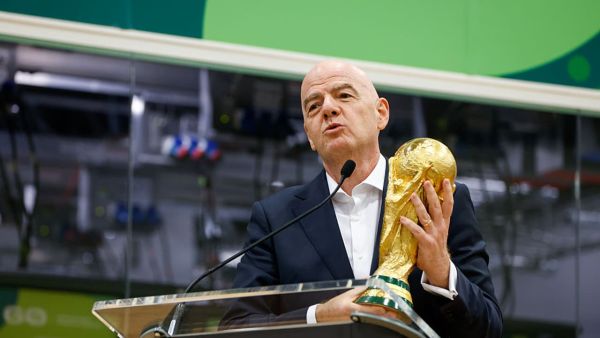
FIFA’s Forward Enterprise (FFE) proposal aims to create a new commercial entity and sell a minority stake to investors for around $20 billion. While FIFA says the funds will support global football development, the plan has sparked debate over commercialization, investor influence, and the future of the World Cup.
The battle over FIFA Forward Enterprise is about far more than money. It is about who should shape the future of the world’s most popular sport.
Who owns the FIFA World Cup?
Legally, the answer is straightforward. FIFA does. But emotionally, the World Cup belongs to everyone. It belongs to the Brazilian child dreaming of becoming the next Pelé, the Argentine family celebrating in the streets of Buenos Aires, the African nation chasing its first title, and the millions of supporters who wake up in the middle of the night simply to watch ninety minutes of football. That shared sense of ownership is what makes Gianni Infantino’s latest proposal so significant. It is not merely another governance reform. It is a debate about whether the commercial future of football should also become part of the financial world.
At the center of the discussion is FIFA Forward Enterprise (FFE), a proposal that would consolidate FIFA’s commercial assets, including media rights, sponsorships, ticketing, hospitality, licensing, and other revenue-generating businesses, into a separate commercial entity.
Valued at approximately $20 billion, the new enterprise would sell a minority stake to outside investors while FIFA retains majority ownership and governance control. The capital raised, according to FIFA, would be used to dramatically expand football development funding around the world.
FIFA’s Financial Push: Opportunity or Commercial Expansion?
On paper, it is an attractive proposition. Hundreds of millions of dollars could flow into countries where football still struggles with inadequate facilities, underfunded youth academies, and limited opportunities for women’s football. For associations across Africa, Asia, Oceania, and the Caribbean, the proposal represents something they have sought for decades: meaningful investment rather than symbolic promises.
Infantino also understands FIFA’s political landscape better than most. Every member association, whether Germany or Grenada, Brazil or Bhutan, has one vote. In that system, the support of smaller nations can outweigh the objections of football’s traditional powers. For many developing federations, the opportunity to secure significantly larger development funding is understandably difficult to ignore.
Yet every attractive proposal deserves an equally careful examination.
Perhaps the most intriguing aspect of FFE is not the structure itself, but the people standing behind it. JPMorgan, one of the world’s largest investment banks, is advising FIFA on the transaction. Reports have also linked Thrive Capital, the American venture capital firm founded by Joshua Kushner, as a potential investor. Kushner is the brother of Jared Kushner, the son-in-law of U.S. President Donald Trump. Whether or not Thrive ultimately participates, the involvement of Wall Street’s most influential financial institutions signals that global investors increasingly see the World Cup not only as a sporting spectacle, but as one of the world’s most valuable commercial assets.
There is nothing inherently wrong with private investment. Every successful business seeks capital to grow. But FIFA occupies a unique place in global society. The World Cup is not simply another entertainment product. Alongside the Olympic Games, it is one of the few events that genuinely captures the attention of billions of people across every continent, culture, and language. That distinction changes the conversation.
Private Money Enters Football’s Biggest Debate
Private investors do not commit billions of dollars because they love football. They invest because they expect returns. Those returns may come through stronger media rights, expanded sponsorships, new commercial opportunities, or the long-term appreciation of their investment. None of those objectives are inherently problematic. Yet they inevitably create tension between commercial priorities and sporting values. If maximizing revenue becomes the dominant objective, who safeguards football’s traditions? Who speaks for supporters if ticket prices continue to rise? Who resists expanding already crowded competition calendars simply because more matches generate more income?
Infantino insists FIFA will remain firmly in control. Legally, that may well be true. But influence is not measured only by voting rights. Investors who commit billions of dollars rarely remain passive observers. Financial interests inevitably shape conversations, priorities, and expectations, even without formal control.
It is precisely this concern that has prompted strong resistance from UEFA, along with reservations expressed by other continental confederations, including the Asian Football Confederation (AFC) and Concacaf, both of which have questioned the consultation process. Their underlying argument is remarkably simple: football is not merely an asset that FIFA can package and partially monetize.
Can Private Investment Bridge Football’s Global Gap?
There is merit to that argument. While FIFA legally owns the commercial rights to the World Cup, it did not create its emotional value. That value has been built over generations by players, clubs, coaches, volunteers, broadcasters, national teams, and above all, supporters. The World Cup’s greatest asset has never been its television contracts. It has always been its ability to unite billions of people around a shared human experience.
Yet the critics cannot ignore another uncomfortable truth. Football’s wealth has become increasingly concentrated. Europe’s elite clubs generate revenues that exceed the entire budgets of many national associations. Large parts of the footballing world remain underdeveloped despite the sport’s enormous global prosperity. If football truly belongs to everyone, should more of its wealth not reach those who need it most?
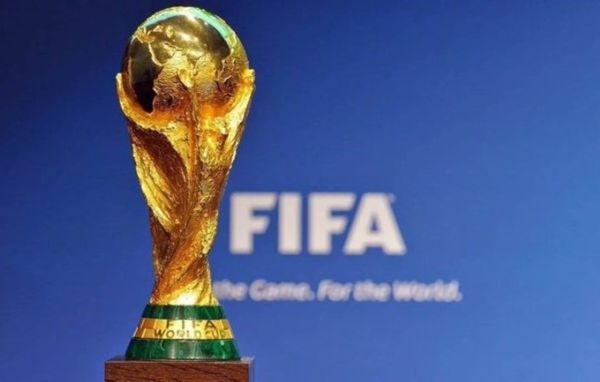
That is where this debate becomes genuinely complex. Almost everyone agrees that developing nations deserve substantially greater investment. The disagreement lies in how that investment should be funded. Is bringing private capital into FIFA’s commercial future the right solution? Or should FIFA simply redistribute more of its existing revenues before asking outside investors to participate?
The Future of Football’s Most Valuable Tradition
Those questions deserve far more discussion than they have received.
History is unlikely to judge FIFA Forward Enterprise solely by the billions it raises. It will judge it by whether it strengthens football without compromising the values that made the game so valuable in the first place. If the proposal succeeds, it could become the most important financial reform in football’s modern history, giving emerging football nations resources they have long been denied. If it fails, it may be remembered as the moment the world’s greatest sporting event took its first irreversible step toward becoming another global financial asset.
Football has always been more than a business. It is memory, identity, heartbreak, joy, and hope. Every four years, the World Cup reminds us that despite our political divisions and cultural differences, one game can still bring much of humanity together.
The real question, therefore, is not whether the World Cup is worth billions of dollars.
It unquestionably is.
The question is whether something that belongs, in spirit, to the entire world should ever be viewed primarily through the eyes of investors. That may ultimately become Gianni Infantino’s defining legacy.
-
Barclays Women’s Super League fixtures: big-spending London City handed tough opening test
-
Fans ‘Fix’ Yash’s Crowd Scene In ‘Ramayana’ Trailer, Questions VFX Despite Rs 4,000 Cr Budget

-
'My Favourite Partner': Virat Kohli Extends Heartfelt Wishes For 'Great Career' After Ajinkya Rahane Announces Retirement
-
Mumbai's Anjuman-I-Islam Girl Student Wins Global 3rd Prize In Robotics & AI At 2026 UNESCO Youth Competition
-
Bombay High Court Dismisses Pleas Challenging Re-NEET UG 2026 Results, Upholds NTA Evaluation