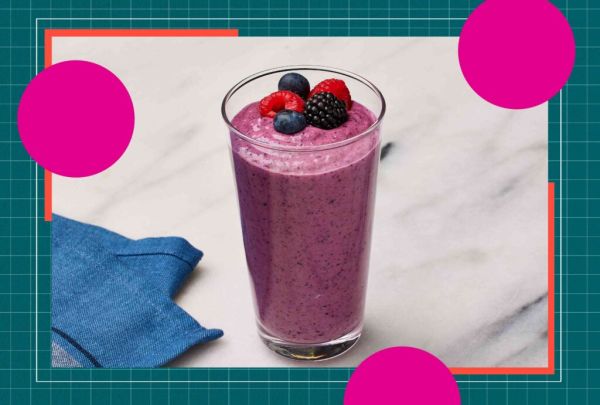
Swap the powders for these nutrient-dense whole foods.
Reviewed by Dietitian Jessica Ball, M.S., RD
Key Points
- Yogurt, hemp hearts, tofu and cottage cheese are natural, protein-rich smoothie add-ins.
- Aim for at least 15 grams of protein per smoothie to create a satisfying, high-protein snack.
- Whole foods like tofu and cottage cheese offer complete proteins and added health benefits.
Smoothies are a fantastic way to get a powerful punch of nutrients. But, despite being packed with antioxidant-rich fruits and vegetables, many smoothies lack one key macronutrient that can help you stay full for longer: protein. Sprinkling in protein powder is one way to give your recipe a satisfying boost; however, if you want to go a more natural route—whether out of preference or in light of recent allegations of toxic metals being found in certain plant-based varieties—registered dietitians say you have options. “Using protein powders is a convenient way to add protein to a smoothie, but it’s not necessary,” says Melissa Groves Azzaro, RDN, LD. “You can get up to 25 to 30 grams of protein in a smoothie using food alone.”
From dairy to plant-based options, there’s no shortage of ways to increase the protein content in your go-to smoothie. As a benchmark, aim to add at least 15 grams of protein in your smoothie to enjoy a high-protein meal or snack. Ahead, Azzaro and Sydney Greene, M.S., RDN provide their top high-protein smoothie ingredient recommendations that aren’t protein powder.
1. Plain Strained (Greek-Style) Yogurt
Serving: 7 ounces, lowfat strained (Greek-style) yogurt
Protein: 20 grams
Not only does adding strained (Greek-style) yogurt up the protein content, it also naturally thickens your smoothie. “I love Greek yogurt as a protein source for smoothies because it’s a complete protein,” Greene says. When a food is considered a complete protein, that means it contains all nine essential amino acids, which are the building blocks to protein. “In addition to its nutrient profile, strained (Greek-style) yogurt adds a creaminess to smoothies, and the probiotics found in it support gut health,” Greene says.
Consider choosing a plain strained (Greek-style) yogurt instead of a flavored option to enjoy the natural flavor of the yogurt, and let the fruit provide natural sweetness to your smoothie instead of artificial or added sugar. Azzaro says the tangy taste of plain strained (Greek-style) yogurt can help balance the flavor of your smoothie, offering a counterpoint to sweet fruits like bananas and berries.
2. Tofu
Serving: One-half cup firm tofu with calcium sulfate
Protein: 22 grams
“Tofu might seem like an odd addition to a smoothie, but its mild taste and soft texture make it easy to blend into your favorite recipes,” Greene says. It’s true: You likely won’t notice it’s even in your smoothie, apart from the fact that it thickens the liquid, thanks to its custard-like texture. “Tofu takes on the flavor of anything you pair it with,” Azzaro says.
Much like yogurt, tofu is a complete protein. “This plant-based protein is also a great source of calcium,” Greene adds, when calcium is added. Calcium, combined with the phytoestrogens naturally found in soy (which tofu is made of), makes this protein-rich smoothie ingredient especially beneficial for women who are entering menopause as well as those who are postmenopausal, Azzaro says. That’s because during perimenopause, which can last anywhere from 4 to 10 years before menopause, estrogen levels can go up and down before bottoming out. Estrogen is essential for maintaining bone structure and, interestingly, phytoestrogens mimic the beneficial effects estrogen has in the body.
“Tofu would be great in a smoothie with cinnamon, vanilla and peanut butter,” Greene adds.
3. Hemp Hearts
Serving: One-quarter cup hemp hearts
Protein: 10 grams
Hemp hearts are the inner part of hemp seeds, Greene says—and they’re a complete protein. “In addition to being protein-packed, they’re also rich in omega-3 fatty acids,” she says. These fatty acids, found in certain seeds and fatty fish like salmon, have been shown to protect your cognition and heart health as you age.
Greene recommends being mindful of what you pair with hemp hearts in your smoothies. “Compared to tofu, Greek yogurt and protein powder, hemp hearts are higher in fat content and calories so you may want to avoid adding in any additional fat sources like nut butters or flaxseeds,” she says.
4. Cottage Cheese
Serving: One half cup lowfat, 2% cottage cheese
Protein: 12 grams
Cottage cheese isn’t just for dips and pasta dishes, the soft cheese can also take any smoothie from thin and watery to thick and creamy. “Cottage cheese has been trending for a while, and for good reason—it’s high in protein and calcium, but naturally lower in sugar than yogurt,” Azzaro says.
Since cottage cheese is higher in sodium, be mindful of how it fits into the rest of your day—and how that sodium may impact the flavor of your smoothie. One of Azzaro’s favorites is to make a cherry cheesecake smoothie with ¾ cup cottage cheese and ½ cup frozen cherries, blended with your liquid of choice.
Our Expert Take
Adding protein to your smoothie doesn’t have to be challenging. Protein powders are undoubtedly a quick fix, but adding in whole foods can also be an easy way to meet your nutrition goals. The recommended daily allowance for protein is 0.8 grams protein per kilogram of body weight, but as Groves points out, this is just a general recommendation. “This amount is necessary to prevent protein deficiency, but most experts agree it’s too low for most people—especially active people, or those looking to lose weight and maintain or grow muscle,” she says. How much protein your body needs daily will vary based on your age, sex, activity levels and goals. “Individuals who are very active or looking to gain muscle should consume anywhere from 1.2 to 2.0 grams of protein per kilogram,” says Greene.
Registered dietitians say there are plenty of protein-rich ingredients you can add to your smoothie, but some of their favorites include strained (Greek-style) yogurt, tofu, hemp hearts and cottage cheese. Be mindful of the serving size of the ingredients you use, so have a better idea of how much protein you’re consuming per serving. Remember, a high-protein meal should ideally include at least 15 grams of protein per serving, so keep that in mind as you pair ingredients together.
-
The magic of showing long and lean! Wide-leg or baggy, which jeans to play?

-
The relationship is poisoned, but you can’t leave your partner! The psychologist told the reason behind

-
Save money and time! E-scooter with 212 km range is storming the Indian market

-
₹4200 crore Lucknow-Kanpur Expressway sank in first rain, major flaw revealed after 12 days of inauguration

-
IND vs ZIM: India won by 35 runs, 3-0 series clean sweep; Vaibhav Suryavanshi dominates