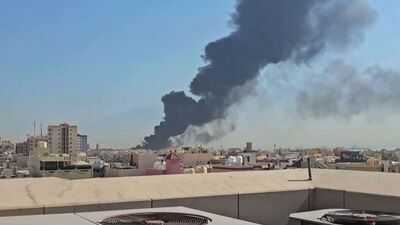

The conflict between the United States and Iran entered a more dangerous phase as both sides accused each other of targeting critical civilian infrastructure, raising fears of a wider regional humanitarian and energy crisis. Over the weekend, Kuwait reported severe damage to its power, water desalination and oil facilities following Iranian missile and drone attacks, while Iran alleged that U.S. strikes had hit a desalination plant on its southern coast, disrupting drinking water supplies for thousands of residents.
The latest escalation marks a significant shift in the conflict, which had largely focused on military installations after the collapse of the interim ceasefire agreement. The targeting of essential infrastructure including power stations, desalination plants, bridges and energy facilities has heightened concerns over civilian safety, regional stability and the security of global energy supplies. With temperatures exceeding 110 degrees Fahrenheit (43 degrees Celsius) across much of the Gulf region, disruptions to electricity and water services threaten to create serious humanitarian consequences.
The renewed hostilities also come at a time when tensions over the Strait of Hormuz have once again intensified. The strategic waterway, through which nearly one-fifth of the world’s oil trade passes, has become the focal point of the ongoing confrontation between Washington and Tehran, increasing fears of prolonged disruptions to international shipping and global energy markets.
Kuwait Reports Severe Damage to Critical InfrastructureKuwaiti authorities confirmed that several vital infrastructure facilities sustained significant damage following Iranian missile and drone attacks.
According to the country’s Defence Ministry, multiple oil, electricity and desalination facilities were struck, resulting in extensive material losses and injuries to several personnel.
Brigadier General Saud Al-Otaibi described the destruction as severe, while government agencies initiated emergency assessments to restore affected services.
The attacks represent one of the most significant assaults on Kuwait’s civilian infrastructure in recent years.
Officials have increased security around strategic installations as the regional conflict continues to intensify.
Power Rationing Ordered Across KuwaitFollowing the attacks, Kuwait’s Ministry of Electricity, Water and Renewable Energy urged residents to conserve electricity during peak consumption hours.
Authorities warned that damage to power generation and desalination facilities could place additional strain on the country’s energy network during one of the hottest periods of the year.
Summer temperatures across Kuwait routinely exceed 45 degrees Celsius, making uninterrupted electricity supply essential for public health and daily life.
Officials appealed to households and businesses to reduce non-essential electricity consumption until repair work is completed.
Emergency teams have been deployed to restore damaged infrastructure as quickly as possible.
Iran Says U.S. Strike Disrupted Drinking Water SupplyIran accused the United States of targeting a desalination plant located in Bonji village along the country’s southern coastline.
According to Iranian officials, the strike disrupted drinking water supplies to nearly 10,000 residents across approximately 20 villages in western Jask County.
Iranian authorities described the incident as a serious humanitarian concern, stating that multiple communities had temporarily lost access to safe drinking water.
The Iranian Embassy also condemned the attack, alleging that civilian infrastructure had been deliberately targeted.
The United States has not publicly confirmed striking the desalination facility.
Civilian Infrastructure Becomes New FrontlineThe latest developments indicate an expansion of the conflict beyond conventional military targets.
During the initial phase of hostilities, both sides primarily focused on military bases, missile sites and defence infrastructure.
However, recent attacks involving electricity grids, desalination plants, bridges and oil facilities suggest that essential civilian infrastructure is increasingly becoming part of the battlefield.
Security analysts warn that such developments significantly increase humanitarian risks while complicating future diplomatic efforts aimed at reducing tensions.
The destruction of public utilities could have long-term consequences for civilian populations throughout the region.
Kuwait Accuses Iran of Targeting Civilian FacilitiesKuwait’s Ministry of Foreign Affairs strongly condemned the attacks, accusing Iran of deliberately targeting vital civilian infrastructure.
Government officials described the strikes as evidence of an aggressive strategy directed against non-military facilities essential for civilian life.
The Kuwait Petroleum Corporation confirmed that one of its strategic operational sites sustained significant damage, causing injuries and considerable financial losses.
Authorities continue to assess the full extent of the destruction while emergency services remain on high alert.
Security around oil installations has also been strengthened amid concerns about further attacks.
U.S.-Iran Ceasefire Effectively CollapsesThe renewed exchange of attacks follows the collapse of the temporary ceasefire agreement reached only weeks earlier.
The understanding had sought to reduce hostilities, safeguard maritime navigation and ensure uninterrupted commercial shipping through the Strait of Hormuz.
However, escalating military operations over the past week have effectively rendered the agreement inoperative.
Iranian Deputy Foreign Minister Kazem Gharibabadi announced that Tehran was suspending its commitments under the previous understanding, stating that national defence had become the country’s immediate priority.
The announcement further reduced hopes for an early diplomatic resolution.
Strait of Hormuz Dispute IntensifiesAt the centre of the current confrontation lies the strategically vital Strait of Hormuz.
Iran has insisted that commercial vessels should navigate closer to its coastline while paying transit charges for passage.
The United States has opposed that position, advocating unrestricted navigation through international waters without Iranian control.
Following the collapse of the ceasefire, Iran declared the strait closed while the United States strengthened its naval presence in the region.
The resulting disruption has once again affected international shipping movements and increased concerns regarding global energy supplies.
U.S. Continues Military OperationsThe United States Central Command (CENTCOM) confirmed that it had completed its seventh consecutive night of military operations targeting Iranian military infrastructure.
American officials stated that the strikes focused on military assets and operational facilities.
No official confirmation was provided regarding allegations that civilian infrastructure had been targeted.
Meanwhile, additional attacks reportedly damaged bridges connecting the strategic southern port of Bandar Abbas with inland regions, further affecting transportation and logistics.
The continued operations demonstrate Washington’s determination to maintain military pressure on Tehran.
Regional Air Defences ActivatedAs missile exchanges intensified, several Gulf countries activated their air defence systems.
Kuwait announced that its armed forces intercepted multiple Iranian missiles and drones before they reached intended targets.
Commercial aviation was temporarily affected after Kuwait suspended portions of its airspace and national carrier Kuwait Airways rescheduled several flights.
Neighbouring Bahrain also reported intercepting incoming projectiles.
Regional governments remain on heightened alert amid concerns that the conflict could spread further across the Gulf.
Jordan Reports InterceptionsJordanian defence forces likewise intercepted missiles and drones that Iranian authorities claimed were directed toward an American military base located within Jordan.
Iran’s Islamic Revolutionary Guard Corps asserted that the operation had resulted in significant damage to American military assets.
Independent verification of those claims has not been available.
The incident nevertheless illustrates the increasingly regional nature of the conflict as neighbouring countries become directly affected by military operations.
Iran Reports Additional Infrastructure DamageIranian authorities also reported additional strikes on several strategic locations.
Among the reported targets were Qeshm Island, critical transport infrastructure and the important commercial port of Chabahar.
Officials stated that a control tower at Chabahar Port sustained damage during recent attacks.
The port holds particular strategic importance because India operates a terminal there under bilateral agreements.
India’s Ministry of External Affairs confirmed that although an attack had occurred in the vicinity, the Indian-operated terminal itself remained undamaged.
Rising Humanitarian ConcernsIranian officials have stated that dozens of civilians have been killed while hundreds have reportedly been injured since the latest phase of fighting began.
Authorities also reported damage to power infrastructure in several southern provinces, prompting appeals for electricity conservation during extreme summer temperatures.
The combination of disrupted water supplies, electricity shortages and ongoing military operations has heightened concerns regarding humanitarian conditions.
International observers have warned that prolonged attacks on essential infrastructure could significantly worsen civilian suffering.
Global Energy Markets Under PressureThe continued attacks on oil facilities, shipping routes and energy infrastructure have renewed concerns regarding global energy security.
The Gulf region remains one of the world’s most important suppliers of crude oil and liquefied natural gas.
Any prolonged disruption to production or maritime transportation through the Strait of Hormuz could increase global energy prices and affect international supply chains.
Financial markets are closely monitoring developments as investors assess potential risks to oil exports and regional stability.
Diplomatic Prospects Continue to DiminishWith both Washington and Tehran intensifying military operations, prospects for immediate diplomatic engagement appear increasingly uncertain.
Political analysts believe attacks on civilian infrastructure significantly complicate future negotiations by deepening mistrust between the two sides.
Regional governments continue urging restraint while monitoring the possibility of wider conflict involving additional Middle Eastern states.
The coming days are expected to remain critical as military operations continue and international diplomatic efforts attempt to prevent further escalation.
Conflict Enters More Dangerous PhaseThe latest strikes on water desalination plants, electricity networks, oil facilities and transport infrastructure indicate that the U.S.-Iran confrontation has entered a more dangerous stage.
Beyond immediate military objectives, the conflict is now directly affecting civilian populations through disruptions to essential public services, increasing humanitarian risks and threatening regional economic stability.
As hostilities continue around the Strait of Hormuz and across the Gulf, governments, international organisations and global markets will closely watch whether diplomatic channels can still prevent a broader regional conflict with far-reaching geopolitical and economic consequences.
The post Iran-Kuwait Conflict Escalates as Water, Power and Oil Infrastructure Come Under Attack | Cliq Latest appeared first on CliQ INDIA.
-
Google Pixel 11 Series Spotted In New Frost, Pistachio Colours Ahead Of Launch

-
How To Clean Mold Out Of Your Garage (And Make Sure It Doesn’t Come Back)

-
Nonprofit Current AI is racing to build the World Wide Web of AI, free for all

-
James Webb Space Telescope Uncovers Hidden Giant Planet in Beta Pictoris System

-
Tempers flare as Spain silence Argentina at World Cup final