Confucius appears in Problem 1. A board holds 2,026 integers, each greater than 1, and the philosopher keeps picking two of them and replacing the pair with their greatest common divisor and a second value built from their least common multiple.
He repeats this for as long as he can. Contestants had to prove the process always ends with exactly one number left above 1, and that the number is the same no matter which pairs he chose along the way.
Liu Bang and Xiang Yu share Problem 3. The two warlords fought a civil war for control of China after the Qin dynasty collapsed, and the winner founded the Han.
Here they have a stick of length 1 and want to split it. Each marks up to n points on it, the stick is cut at every mark, and the two take turns claiming pieces with Liu Bang going first.
Contestants had to work out, for every n, the largest total length Liu Bang can guarantee himself whatever his rival does.
Only Problem 2, a plane geometry question about a triangle and the circumcenter of an inscribed configuration, carries no historical figure. The second paper followed on July 16.
The setting matches the material. The Chinese Mathematical Society and the Shanghai Municipal Education Commission are running the 67th edition at Shanghai High School, the first time the competition has been held on a secondary school campus.
It is China’s second turn as host, after Beijing in 1990.
The IMO is the oldest of the international science olympiads and bills itself as the world championship of mathematics for high school students. It has been held every year since 1959 apart from 1980, growing from the seven Warsaw Pact countries that entered the first edition in Romania to 119 this year.
|
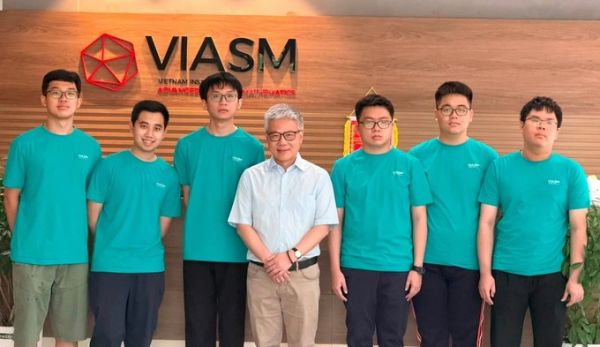
Professor Ngo Bao Chau (C) meets Vietnam’s six IMO 2026 contestants before their departure for China. Photo courtesy of the Vietnam Institute for Advanced Study in Mathematics |
Governments treat a medal as a credential. Vietnam exempts its team members from the national high school exit exam and admits them to university directly.
The IMO said in June that 685 contestants from 119 countries would travel to Shanghai, both the largest field of competitors and the largest number of participating countries in the event’s history.
Bermuda, Ethiopia, Kuwait and Lebanon sent observers to study what it takes to enter a national team.
Each contest day gives contestants 4.5 hours for three problems worth up to 7 points each, for a maximum of 42 across the two papers. Students sit the exam in their own language, with the version registered in advance and approved by the organizers.
Rankings come from the combined two-day score. Under IMO rules medals go to at most half the field, split roughly one gold to two silver to three bronze.
Anyone who misses a medal but scores full marks on a single problem receives an honorable mention. OpenAI is offering ChatGPT Pro subscriptions to this year’s gold medalists and to the winner of the Maryam Mirzakhani award.
Vietnam’s six students are Pham Dang Nguyen and Ha Manh Hung from Hanoi-Amsterdam High School for the Gifted, Nguyen Hoang Phuong from Phan Boi Chau High School for the Gifted in Nghe An Province, Tran Dai Thanh Danh from the High School for the Gifted, Vietnam National University Ho Chi Minh City, Nguyen Dinh Tung from the High School for Gifted Students in Natural Sciences, Vietnam National University Hanoi, and Nguyen Le Nhat Nam from Hanoi National University of Education High School for the Gifted.
Tung is the only member who has done this before, having taken silver in Australia last year. Nguyen topped the national selection round with a perfect 42 out of 42, and Nam was the highest scorer at this year’s national mathematics contest.
Ngo Bao Chau, the first Vietnamese mathematician to win a Fields Medal, met the six at the Vietnam Institute for Advanced Study in Mathematics in Hanoi the day before they flew out.
Vietnam entered its first team in 1974, becoming the first country from Southeast Asia to compete.
Last year in Sunshine Coast, Australia, the Vietnamese team scored 188 points for two gold, three silver and one bronze, finishing 9th of 110 teams behind China, the U.S., South Korea, Poland and Japan, which tied for fourth, Israel, India and Singapore.
All six students came home with a medal, a jump of more than 20 places on 2024.
-
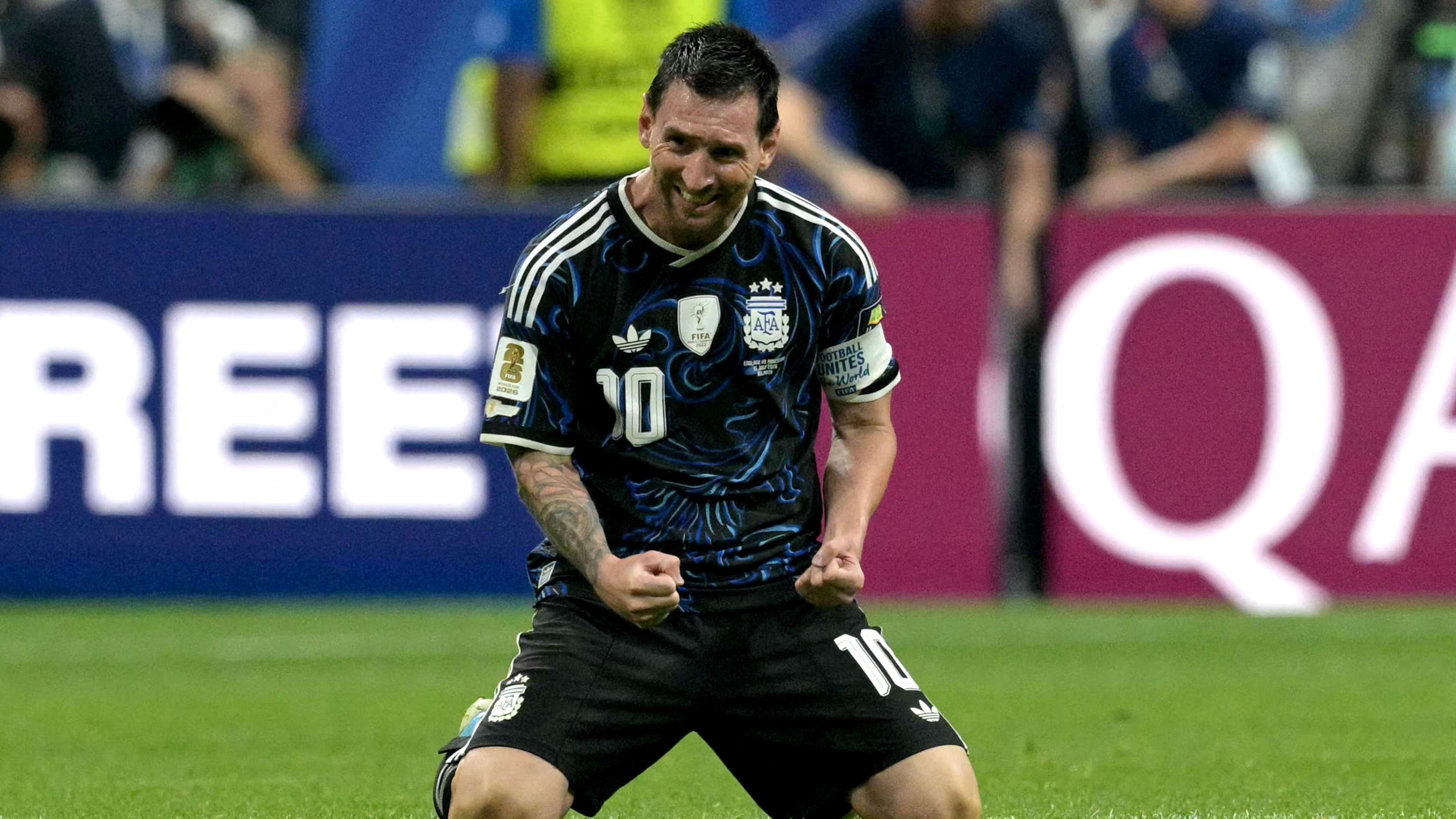
‘Diego is smiling from the heavens’ – Lionel Messi dedicates Argentina’s World Cup semi-final win to Maradona, calling it ‘a gift’ for the legend
-
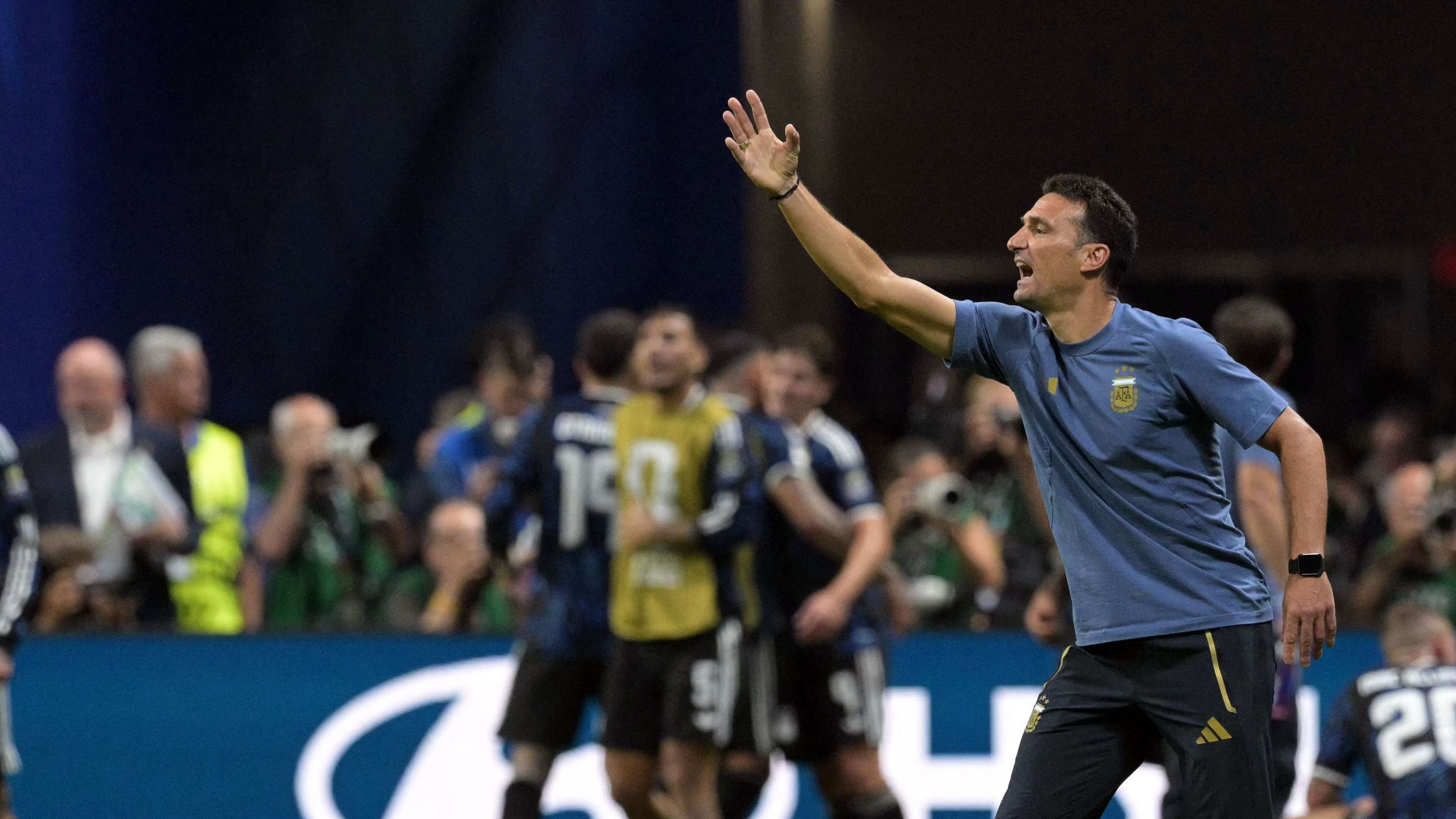
Lionel Scaloni hails Argentina’s ‘childlike fearlessness’ and ‘sheer determination’ after epic 2-1 comeback win over England to reach 2026 World Cup final
-
Manchester United enquire about Carlos Augusto and evaluate Oliver Scarles

-
Tandoori Roti in a Pressure Cooker: You can make Tandoori Roti at home without a tandoor, in a pressure cooker. Learn the easy way.
-
B2B Garment Manufacturing Platform Groyyo Raises ₹90 Cr To Expand Supplier Network