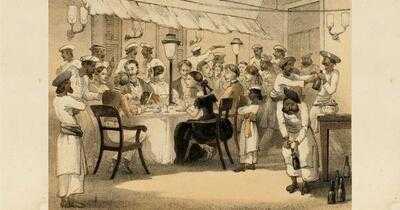
In the 18th century, the colonial kitchens of Madras became an unlikely meeting ground for two groups from different social worlds.
Imperialism brought Europeans to Madras, many of them civil and military officials of the East India Company, soldiers, traders, sailors, lower-level bureaucrats and planters.
In India, some of these Europeans were categorised as “beef-eating” untouchables, like those at the lower end of India’s caste order. This inadvertently fostered close contact between Europeans, the agents of imperialism, and lower-caste domestic workers, the victims of the caste system.
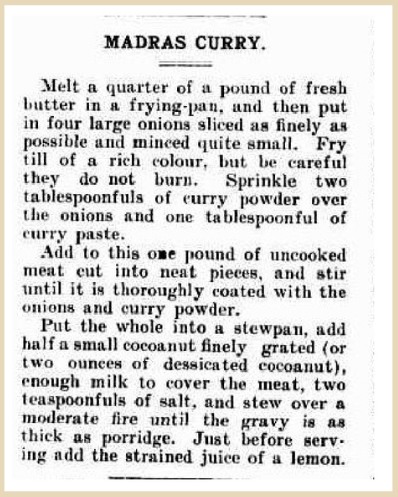
The “Madras curry” took shape in the exchange of culinary knowledge in this colonial paradox. Initially, Europeans tried imported tinned food. But as this proved impractical, they gradually adopted a hybrid food culture that combined European and local taste.
Colonial recipe notes provide a long list of ingredients, including various spices, coconut, curry leaves and mango. Other commonly recommended ingredients included turmeric, coriander, cumin, poppy seeds, dried ginger, black pepper and dried chillies. To these, memsahibs were instructed to add their desired meat. During the later period, they used curry powder or paste.
The transnational journey of Madras Curry reveals several intertwined histories, especially the complex interaction between colonialism and caste.
 The European and the ‘outcastes’
Before the opening of the Suez Canal in 1869, many...
Read more
-
US: Reporters subpoenaed over Air Force One stories

-
Qatar's Father Emir Sheikh Hamad bin Khalifa Al Thani dies at 74

-
England Edge Norway 2-1 in Extra Time to Reach FIFA World Cup Semi-finals

-
Delhi Police Capture Three Shooters Linked to Lawrence Bishnoi Gang

-
EC adds section to voter enrolment form asking if applicants' parents were part of last SIR: Report