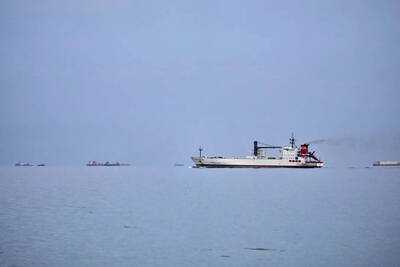
A file image of ships wait offshore in the Strait of Hormuz off Khor Fakkan. (Photo: PTI)
Dubai, July 12: Early on Sunday, the United States initiated military strikes against Iran following an alleged attack by Tehran on a vessel in the Strait of Hormuz, which resulted in a container ship being set ablaze and its crew forced to evacuate.
In response, Iran reportedly launched attacks targeting Bahrain, Kuwait, Qatar, and the United Arab Emirates.
The US Central Command (CENTCOM) indicated that approximately 140 targets were struck, a significant increase compared to previous operations.
These targets included missile and drone launch sites, ammunition storage facilities, communication hubs, and other military assets.
CENTCOM stated that the purpose of the strikes was to "weaken Iran's capacity to freely attack civilian mariners and commercial vessels navigating the strait."
US Defence Secretary Pete Hegseth commented on social media, stating, "Iran made a poor choice. Now they pay."
Reports from Iranian state media indicated that US strikes occurred across several southern provinces, including Bushehr, Hormozgan, Khuzestan, and Sistan and Baluchestan, although immediate details regarding casualties or damage were not disclosed.
Mohammad Bagher Qalibaf, the Speaker of Iran's Parliament and a key negotiator, responded via social media, asserting, "The era of one-sided deals is OVER. We told you - keep your word or pay the price. Reality is knocking."
In the incident involving the Strait of Hormuz, a Cyprus-flagged container ship suffered "significant engine room damage" after being hit, with one civilian crew member reported missing, according to CENTCOM.
Iran's paramilitary Revolutionary Guard claimed that several vessels ignored their warnings and instructions to adjust their course and follow the approved route, stating that one vessel was "struck by a warning shot and brought to a stop."
Iran also declared that the Strait of Hormuz would remain closed "until further notice" and cautioned that it could target "additional enemy bases in the region" if further attacks were made against it.
The Strait of Hormuz has become a critical point of contention in ongoing negotiations between Iran and the United States aimed at achieving a permanent resolution to the conflict that began on February 28.
This latest escalation followed a meeting on Saturday between the foreign ministers of Iran and Oman to address the situation in the Strait of Hormuz, occurring after days of Iranian assaults on shipping and US retaliatory strikes that jeopardized an interim agreement intended to resolve the conflict.
According to a spokesperson for the Iranian Health Ministry, Hossein Kermanpour, the two rounds of US strikes last week resulted in at least 17 fatalities and 115 injuries.
-
US: Reporters subpoenaed over Air Force One stories
-
Qatar's Father Emir Sheikh Hamad bin Khalifa Al Thani dies at 74

-
England Edge Norway 2-1 in Extra Time to Reach FIFA World Cup Semi-finals

-
Delhi Police Capture Three Shooters Linked to Lawrence Bishnoi Gang

-
EC adds section to voter enrolment form asking if applicants' parents were part of last SIR: Report