Certain digital habits formed while applying for online loans or credit cards can severely impact your CIBIL score. Learn how to avoid mistakes such as the indiscriminate use of fintech apps, exceeding credit limits, and auto-debit failures.
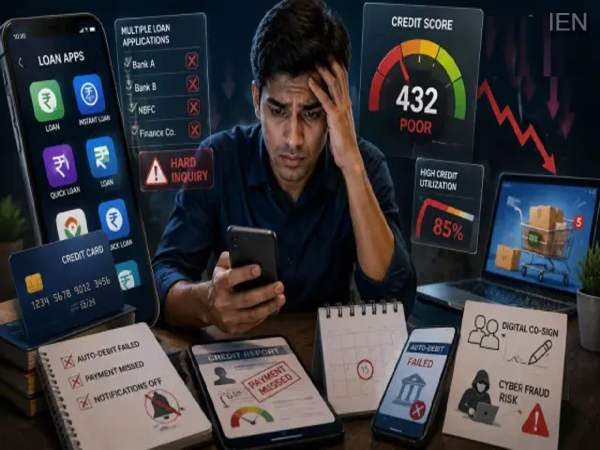
In today’s internet age, applying for a loan or credit card has become incredibly easy. Often, people apply for loans across multiple mobile apps and banking portals simultaneously—sometimes out of mere curiosity or to compare offers. But did you know that this single digital habit can devastate your CIBIL score? Whenever you enter your credentials on a platform to check loan eligibility, banks record a “hard inquiry” in the background. This signals to credit bureaus that you are facing a financial crunch and are desperate for a loan, causing your credit score to drop sharply.
The online web of multiple loan apps and credit cards
The popularity of fintech and “Buy Now, Pay Later” (BNPL) apps has surged among smartphone users. People often download and register for various short-term loan apps without giving it much thought. According to experts, every activity on these apps acts like a “hidden hard pull” on your credit history. Furthermore, applying for multiple instant credit cards online across various bank websites simultaneously can also cause serious damage to your CIBIL profile.
The risks of e-commerce shopping and exceeding digital credit limits
People often make indiscriminate use of their credit cards or digital credit limits during online shopping sales. According to credit rating agency guidelines, spending more than 30 percent of your total sanctioned digital credit limit negatively impacts your financial standing. Maxing out your credit limit on e-commerce sites signals to credit bureaus that you are heavily reliant on debt, which ultimately lowers your score.
Auto-debit failures and the negligence of disabling notifications
To simplify digital banking, people often set up auto-debit facilities via e-Mandates or the National Automated Clearing House (NACH). However, failing to maintain a sufficient balance in your bank account—leading to an auto-debit failure—is treated as a direct default. Additionally, many users disable notifications from banking apps, causing them to miss due dates or lose track of dynamic billing cycles, which results in inadvertent missed payments. Even if you are disputing an online bill, do not make the mistake of withholding payment, as credit bureaus will still classify it as a late payment.
Risks of digital co-signing and cyber oversight
Nowadays, people often digitally co-sign loan applications for friends or relatives via online portals. By doing so, you become legally liable for the debt; if the primary borrower defaults on payments, your CIBIL score suffers as a result. Furthermore, neglecting to periodically check your credit report online via the official TransUnion CIBIL dashboard can prove costly, as it prevents you from detecting banking errors or instances of cyber fraud committed in your name.
-
Taylor Swift’s reported fallout with Blake Lively may have affected bond with actress’ children

-
Try crispy pakodas made of poi and taro leaves in the rainy season, you will get health benefits along with taste…

-
3 Chinese Zodiac Signs Attract Wealth & Success All Week From July 13 – 19, 2026

-
What’s The Minimum Distance Boaters Need To Keep From An American Navy Ship In US Waters?

-
Instagram Users Raise Privacy Concerns Over Meta’s AI Image Tool: Step-by-Step Guide to Opt Out