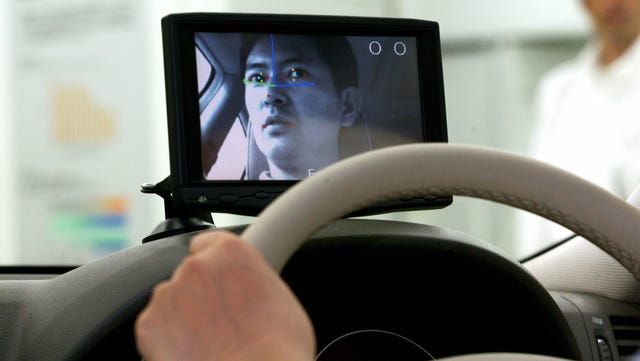
Starting this Thursday, the European Commission has officially expanded its General Safety Regulations to introduce a comprehensive set of new safety mandates for all newly registered vehicles. The updated requirements include advanced emergency braking systems capable of detecting pedestrians and cyclists, enhanced forward visibility standards, and advanced driver distraction warning systems designed to ensure drivers remain attentive. The new regulations also mandate performance testing on worn tyres and extend pedestrian protection zones through the use of specially designed safety glass.
In its announcement, the European Commission stated, "European roads are among the safest in the world, but the number of deaths and injuries from road accidents remains unacceptably high. Thanks to the EU’s General Safety Regulation, many safety systems have already been mandatory for all newly registered cars and vans since 2024. Beginning 7 July 2026, these vehicles will now be required to meet even more advanced safety standards."
Advanced Driver Distraction Warning systems have been compulsory for new vehicle types—meaning all newly homologated models—across the European Union since 2024. The upcoming update in July 2026 will expand this requirement to cover all newly registered vehicles. In effect, every new car and passenger vehicle sold within the EU will now need to include a camera-based driver monitoring system. However, critics have voiced concerns that these systems could pose data privacy risks, even though EU regulations stipulate that the data must be processed within a closed-loop system that does not transmit personal information externally.
Historically, European regulators have enforced stricter tyre safety standards than those seen in North America. In several EU regions, drivers are already legally required to use winter tyres during certain months. Under the new rules, motorists will also be accountable for compliance with tyre wear standards. While the EU has not yet provided detailed criteria for these new tyre wear assessments, it is expected that they will focus on tread depth and braking distance. A study conducted by Discount Tire found that worn tyres can increase stopping distances by as much as 45 percent on wet surfaces.
The European Commission emphasised that automakers have been given sufficient lead time to integrate these "technically demanding features" due to the multi-phase implementation schedule. The Commission reaffirmed its long-term objective under its Vision Zero programme, which aims to reduce road transport fatalities to nearly zero by 2050. "These new mandatory measures will support the EU in achieving this goal," the Commission stated. "Additionally, they will enhance protection for pedestrians and cyclists, reduce accidents caused by driver distraction, and promote broader adoption of advanced driver-assistance technologies."
-
Lahore, love and loss: Why a Partition-theme film sparked memories of my parents' difficult romance

-
Honasa Consumer Projects 30% YoY Growth In Q1 FY27

-
Karur gears up for CM Vijay's first official visit

-
Video: A young man dressed as Virat Kohli entered a mall; what happened next was unimaginable video goes viral

-
Major change by Google: Android backups will now also count towards the 15GB free storage limit; find out how this affects your account..