8 July 2026
The ongoing World Cup continues to test the moral compass of world football after FIFA, in its characteristic fashion, decided to appoint an entirely Argentine officiating team for France’s quarter-final clash with Morocco.
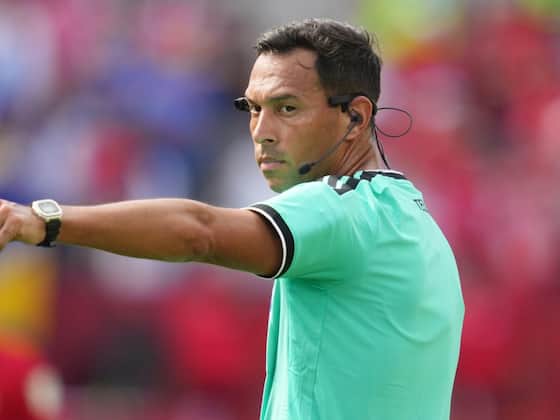
Facundo Tello will head a team of referees from Argentina for the quarter-final — a decision that has left many asking, ‘why this choice?’
With only eight nations remaining in the tournament, critics argue that FIFA could have easily selected a referee from any of the other 187 countries around the globe. While not all of them may have been available, surely there were more neutral options to consider.
Tello has officiated two matches during this World Cup, both in the group stage. Interestingly, he also refereed Morocco in a quarter-final back in the 2022 World Cup, a match in which he sent off Walid Cheddira.
Similarly, questions have been raised about the other quarter-final, as Spain versus Belgium is set to be refereed by an English official.
As is often the case with FIFA, the central question remains — why open the door to such scrutiny when it could so easily be avoided?
There is no outright criticism of the referees themselves, but once again, FIFA’s decision-making has exposed the organisation to accusations of bias and favouritism.
Egypt’s frustration earlier in the tournament stemmed from a disallowed second goal, ruled out for a foul that occurred long before the ball reached the net.
“There have been many issues to question both on and off the field,” Egypt’s coach Hossam Hassan remarked.
“There are negative aspects everywhere. This is about credibility — or rather, the lack of it — in how things have unfolded.”
He added, “Perhaps they wanted to ensure the reigning world champions stayed in the competition. Perhaps they wanted Messi to remain in contention.”
That sentiment resonates beyond one match. Lionel Messi avoided a clear sending-off in Argentina’s opening game, and his team’s disciplinary record appears unusually lenient given the number of fouls they have committed.
Argentina have averaged 11.8 fouls per game but have received only three yellow cards throughout the tournament. In comparison, England have seven yellows for 10.8 fouls, Spain three for 11, France four for 9.8, Norway two for 9.6, and Morocco six for 12.2. Only Belgium show a similar ratio, with four yellows for 12 fouls.
This controversy follows FIFA President Gianni Infantino’s decision to stretch FIFA’s rules to accommodate Folarin Balogun’s participation, reportedly to appease former U.S. President Donald Trump. Unfortunately for the 25-year-old player, his name may now become synonymous with controversy, despite his conduct being far more composed than many older figures in the sport.
All this adds to the growing perception that something feels tainted about this World Cup.
Corruption within FIFA is hardly new, but this tournament evokes comparisons to the Sepp Blatter era — a time when, at least, the organisation’s questionable dealings were less blatant and generally left the on-field action untouched.
Now, Infantino and his associates appear willing to push boundaries as far as they can, as long as it brings more financial benefit to the organisation that still claims to be ‘non-profit.’
-
For children: Five friends stage a play about former Indian men's cricket team captain, MS Dhoni

-
Ayushman Card Scheme: Can the Ayushman Card limit be increased again in a year? Find out once

-
Shinde Sena corporator booked for allegedly assaulting hospital staff in Kalyan-Dombivali

-
From Ludo to Endless Reels: How Smartphone Addiction Is Quietly Affecting India's Elderly

-
Inside Erling Haaland's Diet: The Daily Routine Fueling Football's Goal Machine