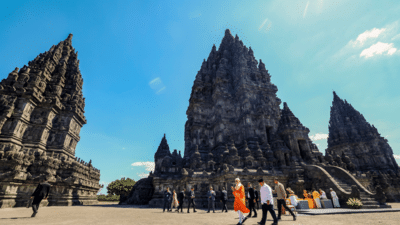
New Delhi: The towering Shiva temple in Indonesia isn’t just Southeast Asia’s largest Hindu shrine; it is a living reminder that Indian civilisation once travelled across oceans, leaving behind an architectural marvel that continues to inspire the world.
When Prime Minister Narendra Modi stepped into the majestic Prambanan Temple complex in Indonesia’s Yogyakarta alongside Indonesian President Prabowo Subianto, it was far more than a ceremonial visit. Against the backdrop of soaring stone spires dedicated to Lord Shiva, the visit symbolised over a millennium of shared civilisational ties between India and Indonesia; ties that have survived changing empires, natural disasters and the passage of time. Modi offered prayers at the ancient temple and inspected ongoing conservation efforts, even as both countries announced plans to deepen cooperation in preserving one of the world’s greatest Hindu monuments.
Prambanan Temple: T emple unlike any other in the world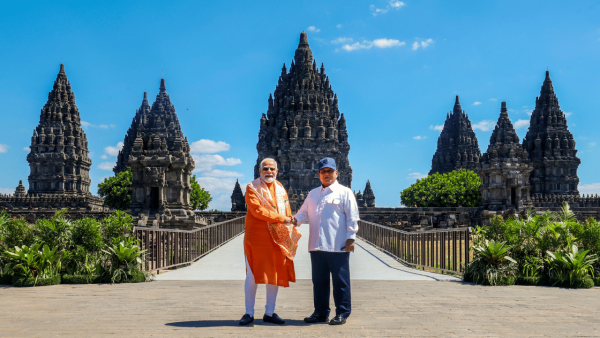
Although often described as a “1,000-year-old” temple, Prambanan is actually believed to have been constructed in the mid-9th century CE, around 850 CE, during the reign of the Hindu Sanjaya dynasty of the Mataram Kingdom. This makes the monument nearly 1,200 years old, making it one of Southeast Asia’s oldest and most significant surviving Hindu temple complexes.
Located near Yogyakarta in Central Java, Prambanan is the largest Hindu temple complex in Indonesia and among the grandest anywhere in the world outside India. Since 1991, it has been recognised as a UNESCO World Heritage Site for its extraordinary architecture and cultural significance.
Prambanan Temple is a UNESCO World Heritage Site and dedicated to Lord Shiva, Lord Vishnu and Lord BrahmaUnlike many temple complexes that honour a single deity, Prambanan is dedicated to the Trimurti – the Hindu trinity comprising Lord Brahma, Lord Vishnu, and Lord Shiva.
Its central structure, the Shiva Mahadeva Temple, rises approximately 47 metres (154 feet) into the sky, making it the tallest and most imposing shrine in the complex. Within the sanctum resides a majestic statue of Shiva, while the surrounding temples are devoted to Brahma and Vishnu, symbolising the cosmic balance of creation, preservation and destruction.
The architectural design represents Mount Meru, the sacred mountain in Hindu cosmology believed to be the abode of the gods.
Once home to nearly 240 temples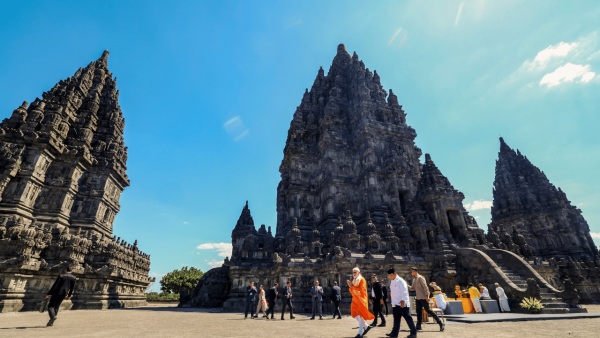
Today, visitors are greeted by towering restored shrines, but Prambanan was originally far larger.
Historians estimate that the complex once consisted of around 240 temples, arranged in concentric squares around the central sanctuaries. While many smaller shrines collapsed over centuries due to earthquakes, volcanic activity and abandonment, painstaking restoration has revived much of the monument’s former grandeur.
Stone walls that narrate the RamayanaPerhaps Prambanan’s most fascinating feature is its storytelling.
The temple’s walls are adorned with elaborate stone reliefs depicting scenes from the Ramayana, carved with remarkable artistic precision. These reliefs continue to inspire the internationally acclaimed Ramayana Ballet, an open-air cultural performance staged against the illuminated backdrop of the temple complex – a unique blend of religion, literature and performing arts that attracts visitors from around the world.
India and Indonesia to jointly restore Prambanan TempleModi’s visit also carried a strong conservation message.
India and Indonesia have agreed to collaborate on the restoration and conservation of the UNESCO-listed monument, reinforcing cultural diplomacy alongside strategic ties. The initiative builds upon India’s broader efforts to support the preservation of shared civilisational heritage across Southeast Asia. During the visit, the two leaders reviewed restoration plans and highlighted the importance of safeguarding ancient monuments for future generations.
As Prime Minister Modi offered prayers beneath Prambanan’s soaring stone towers, the moment resonated well beyond diplomacy. It highlighted a civilisational relationship spanning more than a thousand years – one where culture, faith and history continue to bridge two modern nations.
-
Jordan Henderson Shares Hospital Update Following Unusual Injury During England’s World Cup Campaign

-
Hyderabad: Extramarital affair couple drinks poison on train

-
Police arrest habitual phone, bike thief in Rajendranagar
-
Canada invites Telangana CM to visit for trade, investment ties

-
Rahul Gandhi Alleges UGC-NET Paper Leak, Claims Sociology Exam Was Sold