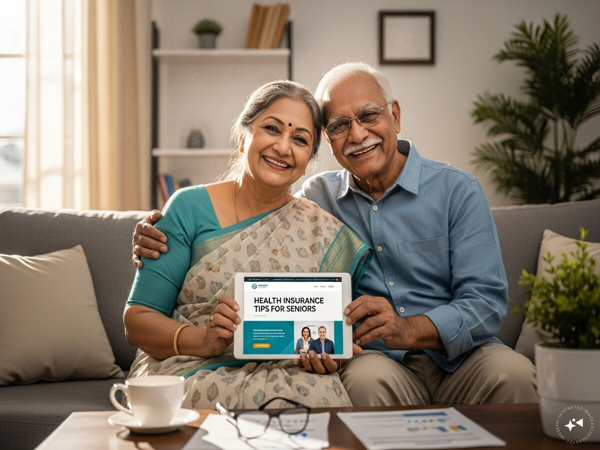
Income Tax Benefit: People generally believe that the tax exemption under Section 80D of the Income Tax Act applies only to health insurance premiums. However, this is not the case. Even if a senior citizen does not hold a health insurance policy, they can still avail of tax-saving benefits.
According to income tax rules, resident senior citizens who do not have health insurance can claim a deduction for medical expenses of up to ₹50,000 incurred on their treatment during a financial year. Notably, if children pay the medical bills of their elderly, uninsured parents, they too can claim this exemption in their tax returns.
Let us understand this rule in simple terms with the help of Amarnath Saxena, Chief Technical Officer (Commercial) at Bajaj General Insurance, and Sudhir Kaushik, Co-founder and CEO of TaxSpanner.
What are the key rules?
The individual for whom the medical expense claim is being made must be a resident of India and aged 60 years or older. This deduction applies to actual medical expenses, subject to a maximum limit of ₹50,000. This limit remains the same for both those above 60 and those above 80 years of age.
This exemption is available only if there is no active health insurance policy in the senior citizen's name. If a policy exists, the exemption applies only to the premium paid, not to hospitalization expenses.
Consider an example: If a 68-year-old senior citizen has no insurance and incurs medical expenses of ₹42,000 during the year, they can claim the entire ₹42,000. However, if the expenses amount to ₹70,000, the tax exemption will still be capped at a maximum of ₹50,000.
Who can claim the expenses, and what is the condition?
If senior citizens pay their medical bills themselves, they can claim the deduction in their Income Tax Return (ITR). If children make these payments for their parents, they can claim a deduction up to a limit of ₹50,000.
It is important to note that both the parent and the child cannot claim the same medical bill. The deduction is available only to the person who actually made the payment. However, if different portions of the bill were paid by each party using separate banking channels, they can split the claim according to the share paid by each.
It is worth noting that while these provisions fall under the Income-tax Act, 1961, Section 126 has now replaced Section 80D under the Income-tax Act, 2025.
**Restriction on Cash Payments**
According to tax experts, no tax deduction is available for payments made in cash towards medical treatment, medicines, or hospital expenses. To be eligible for the claim, all payments must be made via banking channels such as cheques, drafts, net banking, UPI, or cards. Cash payments are valid only for preventive health check-ups, up to a maximum limit of ₹5,000.
**Keep These Documents Handy for a Valid Claim**
Although you do not need to upload documents while filing your ITR, the Income Tax Department may request proof during scrutiny or verification. Therefore, keep the following documents safe:
Medical bills, hospital invoices, and doctor's consultation receipts.
Bills for medicines and diagnostic test reports.
Digital proof of payment via banking channels (e.g., bank statements).
Proof of the parent-child relationship and age proof of the parents when claiming for them.
If there is no health insurance policy, keep a self-declaration record stating the same.
Disclaimer: This content has been sourced and edited from Money Control. While we have made modifications for clarity and presentation, the original content belongs to its respective authors and website. We do not claim ownership of the content
-
'Disappointed, but proud': UAE fans react to Egypt's hard-fought clash with Argentina

-
World Cup: Jailbreak for Argentina on way to quarters, heartbreak for Egypt

-
Word of the day: Perfunctory

-
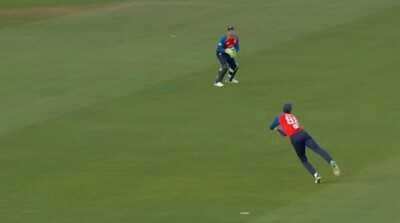
Tom Banton takes stunning catch to dismiss Harshit Rana as Jos Tongue gets 4-fer
-
Jofra Archer, Josh Tongue floor India in 3rd T20I: Stats