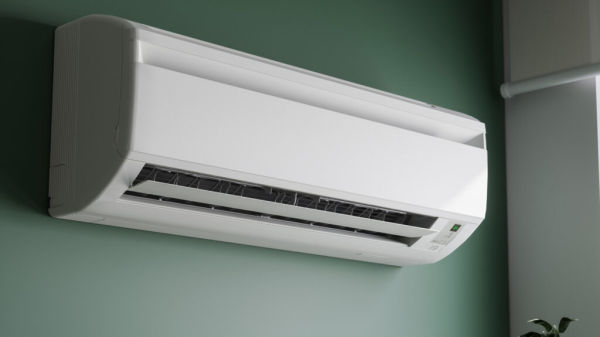
Summer heat is scorching across the United States and people are likely adjusting their air conditioners from the ideal temperature in an effort to cool down. Though it seems like a quick and easy fix, there’s a complex process happening inside an AC unit, which is where the 3-minute rule comes in. This rule involves the AC’s components and how they function during normal operation.
The “3-minute rule” describes compressor control behavior built into HVAC systems. This control determines the restart timing after the AC unit shuts down, which is typically around 3 to 5 minutes. These systems manage the compressor’s operation through timed cycles which are linked to thermostat demand. This includes set limits on how quickly the compressor can turn on and off, instead of tracking a fixed number of cycles.
The reason for the 3-minute gap is to keep the system from starting up too quickly after it shuts down. Without it, an AC unit would cycle on and off too frequently and put mechanical strain on the system and decrease the unit’s operational efficiency. Air conditioners already share some common problems, and a unit that cycles too much could result in a house feeling cool but humid at the same time. At the very least, it could cause inconsistent temperatures from one room to the next.
Inside AC compressors and alternative solutions
The compressor is the main part of the air conditioning system and it’s responsible for circulating refrigerant through the unit. This is done through a process in which the low-pressure refrigerant gas is compressed into a high-pressure state, which allows for heat to be released through the condenser coil. When that happens, the refrigerant cycles back indoors, which allows cool air to be circulated back into the home as heat is pulled out. Because of the work it does, the compressor’s effectiveness impacts how efficiently the unit performs.
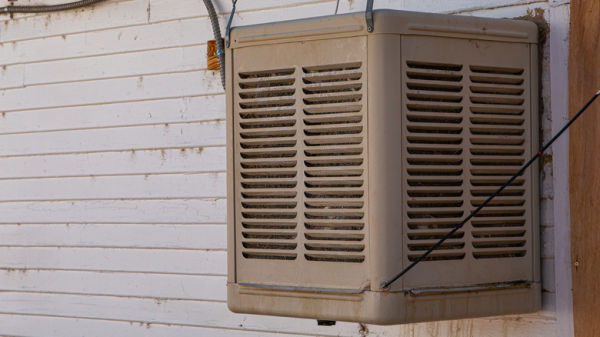
In contrast, evaporative coolers, also known as swamp coolers, use water evaporation instead of refrigerant-based compression. These systems work through a process in which water-soaked pads cool outdoor air passing over them, and that air is then pulled into the home. Unlike AC compressors that rely on a timed restart schedule, evaporative coolers bring in fresh air continuously. These units are typically more energy efficient, though they do need a constant water supply to be effective. They also tend to work best in dry climates.
Absorption heat pumps/coolers also do not use compressors in order to provide cool air, though this technology is typically installed in large residential or commercial environments. These systems utilize a cycle in which a heat source like natural gas drives an ammonia-water process to move heat. A low-power pump then circulates the solution and restarts the cycle. This allows the space to cool as heat is transferred out.