28 June 2026
As the World Cup 2026 moves into its knockout phase, the mood across the tournament has shifted dramatically. Coaches of many top squads have intensified training sessions, aware that the stakes have now soared. The unique tension and excitement of knockout football – especially on the World Cup stage – have finally arrived.
The Netherlands team perhaps captured the feeling best ahead of one of the most anticipated round-of-32 clashes, their encounter with Morocco.
“It’s game on,” declared Dutch defender Jan Paul van Hecke. “Now, the big games come.”
The Netherlands face Morocco in what promises to be the most compelling fixture of the round. This is not just an expanded knockout phase in the biggest World Cup ever, but almost a super-charged version of the competition – the tournament distilled to its purest form.
The competition has reached a scale reminiscent of the 32-team format that many football purists view as nearly perfect. The difference now is that there are no second chances, no safety nets. Every match is sudden death – the very essence of football drama.
The group stage concluded with chaos and excitement, typified by Austria and Algeria’s frantic finale. The level of quality has risen since the expansion, producing a knockout draw packed with thrilling fixtures. Brazil versus Japan feels like a quarter-final, while Netherlands versus Morocco could easily be a semi-final. Few mismatches exist; most games are finely balanced.
Although it’s unfortunate that some genuine contenders will exit early – the equivalent of the old first round – that only heightens the sense of jeopardy that makes this stage so enthralling.
And while many are calling this the start of “the real World Cup”, it owes much of its energy to a vibrant group phase. Despite criticism of the new tiebreaker system – which muted the drama except in groups involving Ecuador, Austria, DR Congo, and Iran – the intensity has carried forward. Iran’s admirable performances ended in heartbreak as they narrowly missed out on qualification, but their spirit epitomised the competition’s passion.
This tournament has been powered by its stars. Not since the 1950s have so many elite players performed at their peak right from the start. For the first time in World Cup history, five players have scored at least four goals in the group stage: Kylian Mbappe, Erling Haaland, Vinicius Junior, and Ousmane Dembele with four each, while Lionel Messi leads with six – the tally that has historically defined the Golden Boot benchmark.
Eight of the past 28 Golden Boot winners have hit that total, and Messi could yet chase Just Fontaine’s record of 13 goals from 1958. With plenty of football still to come, the prospect remains real.
The sheer volume of matches has at times been overwhelming, yet it has also helped drown out off-field controversies. The competition for goal of the tournament is already fierce, from Wilson Isidor’s strike for Haiti against Morocco to Gio Reyna’s stunning goal for the USA against Paraguay.
Meanwhile, the hosts have found themselves in the spotlight for reasons beyond football. FIFA president Gianni Infantino may be slightly embarrassed that US President Donald Trump has yet to attend a match, though the latter’s public reception at an NBA Finals game perhaps spared FIFA further distractions. Trump’s absence has kept the focus squarely on football – though tournament organisers must not ignore ongoing issues.
Fans, such as the passionate Scottish supporters, have been neglected despite contributing so much to the atmosphere. Ticket prices have been excessive, and logistics unnecessarily complicated. American stadiums, designed for car travel, have offered little thought for the hundreds of thousands of visitors relying on public transport.
The treatment of Iran has been particularly troubling. Striker Mehdi Taremi strongly criticised Infantino and FIFA, labelling the tournament’s management a “disaster”. He revealed that Infantino visited Iran’s dressing room after their opening game but failed to return, describing the conduct as “unfair” and damaging to sporting integrity. Iran’s exit, sealed by the dramatic 3-3 draw between Algeria and Austria, underlined football’s unrelenting narrative power.
So far, the World Cup has delivered an average of 2.99 goals per match – the highest since 1958. The only tournament close to that in the modern era was USA 1994, which averaged 2.71. The lively conditions have inspired open, attacking football, while diverse tactical systems have added intrigue. Distinct national styles are re-emerging as Pep Guardiola’s positional play faces resistance at the international level. Ironically, Marcelo Bielsa, Guardiola’s great influence, struggled to implement his own philosophy with an inconsistent Uruguay side.
No single tactical pattern has dominated, apart from trends like lofted passes into channels and the creative use of false nines. The result has been a tournament defined by flashes of brilliance rather than sustained tactical control – a stage where individual skill shines brightest.
Beneath the top tier, the talent distribution has been impressive. While few teams are truly exceptional, many are very strong. This balance reflects the influence of global diasporas and the development systems of Europe’s wealthiest leagues, which have spread talent worldwide.
African nations have benefited most, with nine of their ten qualifiers advancing to the last 32 – a historic milestone. By contrast, Asia has struggled, with only Japan and Australia progressing from nine entrants. In North America, the three host nations lead the way, while Curacao suffered the heaviest defeat.
Nevertheless, the expected blowouts have been rare. Cape Verde’s remarkable run stands out as one of the tournament’s great stories. Despite concerns about the 48-team expansion, the format has proven far more successful than doubters predicted.
As the tournament moves into the decisive rounds, there’s been no lull, no phoney war. This is the moment the World Cup truly becomes what it was meant to be – the real contest begins now.
-
Manchester United forward Chido Obi-Martin may depart this summer as transfer discussions commence
-
SLBC to be completed before next Assembly elections: CM Revanth
-
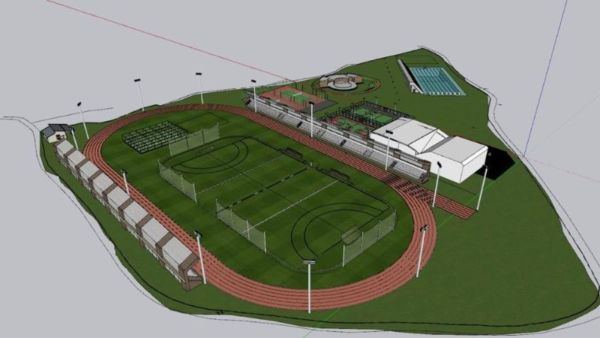
Karnataka: Kodagu to get Rs 45 cr residential sports complex
-
Iranian Supreme Leader calls for US, Israel war crimes probe
-
Two cops join religious processions; only one gets notice