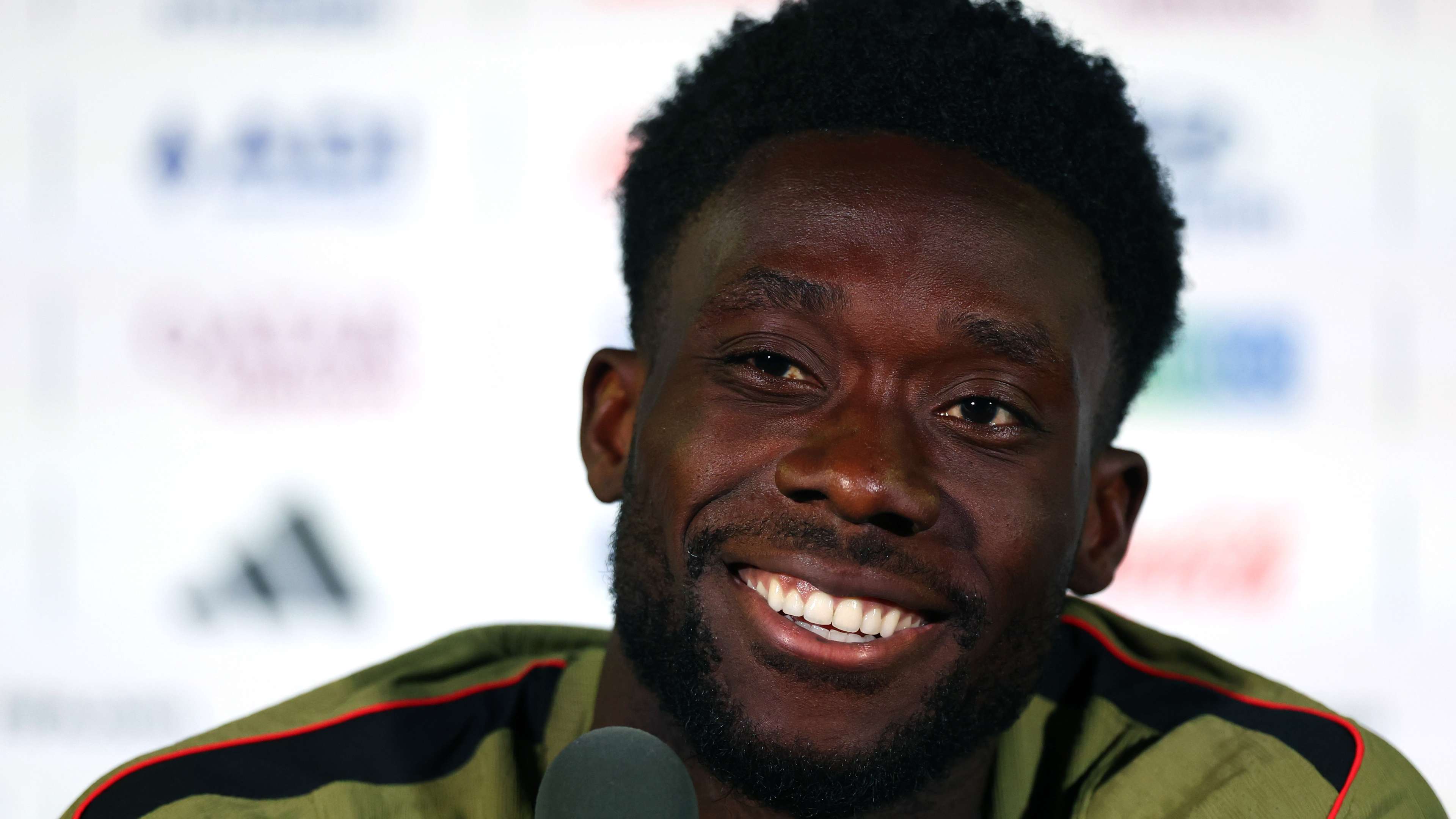
Canada find themselves in uncharted territory, with Alphonso Davies’ uncertain role casting a long shadow as coach Jesse Marsch carefully orchestrates his return amid knockout-stage pressure and mounting questions.
In the 1997 film Austin Powers: International Man of Mystery, a flamboyant British spy awakes from decades of cryogenic slumber to a bewildering new world. It has not been decades for Canada’s own man of mystery, but the intrigue around Davies feels almost as thick. In fact, the most puzzling figure in Canadian football lately may not be Davies himself, but the man constantly at his side — Matthias Blankenburg.
Davies is technically available as Canada prepare for their first-ever knockout fixture at a men’s World Cup, yet his role remains opaque. In his pre-match media appearance, he brushed off questions about starting, and although he is part of the matchday setup, there is still no guarantee he will even come off the bench.
Canada arguably have enough quality to overcome South Africa without him. Still, the inclusion of their most explosive player would be a massive boost, and Davies could become crucial if Canada progress to face either the Netherlands or Morocco in the round of 16.
“All I want to do is play football — that’s my passion,” Davies said. “It means a lot. I remember being a 17-year-old kid speaking at the FIFA Congress in Russia about bringing the World Cup here, and seeing that dream realised is something truly special.”
The man beside Davies
As Canada’s squad step onto the training pitch, a towering German trainer accompanies them — a figure few know much about. Wearing a snug Canada Soccer shirt stretched over a muscular frame and black boots among a sea of pink ones, Blankenburg cuts a distinctive presence.
On his personal website, Blankenburg identifies himself as an “expert who works at the highest level”, though with little elaboration. His past clients include Bayern Munich stars David Alaba, Jerome Boateng, Malik Tillman and Franck Ribery — and now Davies — though he is not an official member of Bayern’s staff.
For Davies, once an easygoing and energetic leader within the Canadian camp, Blankenburg has become a vigilant companion.
The trainer appears to work independently, and Canada have offered minimal detail about his official role in camp. He joined the setup following consultations between Davies, Canada Soccer and Bayern Munich to map out an optimal recovery plan, and he is expected to remain involved with Davies for the foreseeable future.
“When Alphonso mentioned he wanted to bring a personal trainer to help with his rehab, I fully supported it,” coach Jesse Marsch explained. “At his level, it’s vital to have someone who truly understands the demands of his body, and he’s been a tremendous help.”
Marsch added, “With top-level athletes, you have to treat them like Ferraris — you must maintain them meticulously and ensure all benchmarks are met before letting them fully unleash themselves.”
The decoy plan
In recent weeks, as Marsch and Davies have faced the media, Blankenburg has often lingered within earshot before peeling away to work privately with Davies. His constant proximity has reinforced how central he is to Davies’ recovery programme.
The true state of Davies’ fitness remains unclear, partly due to FIFA’s restricted media access during training. That has left fans hunting for hints, trying to predict how much Canada’s biggest star can contribute to this World Cup campaign.
During the final two group matches, the strategy surrounding Canada’s first-ever men’s World Cup goalscorer became increasingly confusing — and divisive. Marsch had declared Davies fit to play against Qatar and assured that he would feature against Switzerland. Yet Davies did not appear in either match. Marsch later revealed that his earlier statements were part of a deliberate “decoy” tactic.
Davies had even requested to play against Switzerland, but Marsch vetoed the idea, citing that the player had not reached the required physical benchmarks. Canada stuck firmly to the plan.
“It’s been straightforward because we’ve had a plan,” Marsch said on Thursday, effectively admitting that his public comments did not mirror the internal strategy. “The only variation was how I communicated it to you all.”
Available, but how available?
Over two weeks in Vancouver, Davies spoke to the media for barely 45 seconds following the Qatar match. After the Switzerland game, he dodged interviews altogether, pretending to take a phone call as he hurried past reporters.
However, in Los Angeles on Saturday, he finally offered his clearest perspective yet on his recovery process and his role within the team as he nears what could be his tournament debut.
“This is the biggest competition in the world. When you’re playing at home as a host nation, criticism is inevitable, but personally, I try not to focus on it,” Davies said. “Playing knockout football — we all know how vital it is. We can’t afford mistakes, and if they happen, we have to fix them right away.”
The Davies situation remains difficult to decipher from the outside. Internally, Canada understand his physical condition, but publicly, the picture is incomplete. In front of cameras, he has taken on a leadership role, sharing light-hearted moments with younger teammates.
Meanwhile, Marsch’s management of Davies’ return has become one of the pivotal storylines of Canada’s World Cup campaign. For now, Davies waits on the sidelines for his number to appear on the substitution board — and when it does, Blankenburg will be close by.
Back to Los Angeles...
Canada’s first-ever World Cup knockout match could hardly have been set in a more symbolic location.
Ideally, the team would have preferred to win Group B and continue playing home fixtures through the Round of 32 and possibly the Round of 16. Nonetheless, Los Angeles — a city with a sizeable Canadian community — serves as a fitting alternative.
The city also holds deep meaning for Canadian football. Back in 2000, Canada lifted their only major men’s trophy, the CONCACAF Gold Cup, after defeating Colombia in the final at the nearby Rose Bowl. It was also in Los Angeles in March 2025 that Davies last played for the national side, tearing his ACL — an incident that led Bayern Munich to threaten legal action against Canada Soccer, although they never followed through.
Davies has not played for Canada since that injury.
“Coming back to this stadium, I get to finish something I started a year ago,” Davies reflected. “It’s a beautiful ground, great atmosphere — it ended abruptly last time, but that’s football.”
Playing in the U.S. also allows Canada to step away from the intense home spotlight — a relief for a team still adjusting to the pressure of performing before packed home crowds. Between the 2022 World Cup and this summer, Canada played only 13 home matches and had never faced such scrutiny before.
There will still be plenty of Canadian fans in Los Angeles — over 4,000 have coordinated through Canada Soccer, with more expected — but it will not be a full sea of red. That might actually benefit a squad seeking composure as they chase the biggest win in Canadian men’s football history.
And if they do triumph, Davies intends to be part of it.
He remains Canada’s greatest question mark and their most gifted player at this World Cup. Whether he starts, comes on as a substitute, or simply waits for his chance, Blankenburg will be nearby — a constant reminder of how meticulously Canada are managing their superstar’s comeback.
-
IND vs IRE 2nd T20I: Rain Threat Over India's Must-Win Clash? Check Weather Forecast
-
Iran Claims Sole Control Of Strait Of Hormuz For Next 30 Days
-
Tragic Death of Five-Year-Old Sparks Investigation in Assam

-
Essential Advisory for Indian Pilgrims Planning Kailash Mansarovar Trip

-
Woman lawyer arrested for allegedly running prostitution racket from Thane hotel