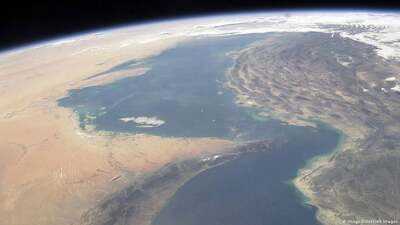
Oil prices rose sharply on Thursday after a fresh attack on a cargo vessel in the Strait of Hormuz prompted the United Nations' maritime agency to suspend plans to evacuate ships stranded in the strategically vital waterway, reigniting concerns over the security of global energy supplies.
Brent crude, the international benchmark, climbed as much as 4 per cent during trading before settling at around $74.89 a barrel by 02:00 GMT. The reboundfollows a sharp decline last week after the United States and Iran signed a memorandum of understanding aimed at ending hostilities. Despite that earlier pullback, Brent prices remain roughly 3 per cent higher than levels seen before the conflict began.
Al Jazeera reported that the renewed tensions also weighed heavily on Asian equity markets. Japan's Nikkei 225 and South Korea's Kospi each dropped more than 3 per cent in early trade on Friday, while Hong Kong's Hang Seng Index and Taiwan's Taiex also recorded notable losses.
The market reaction came after the International Maritime Organization suspended a planned operation to evacuate vessels stranded around the Strait of Hormuz following an attack on a commercial cargo ship.
According to the United Kingdom Maritime Trade Operations (UKMTO), the vessel was struck by an unidentified projectile on its starboard side while transiting waters near the Omani coast. Several international media organisations, citing unnamed US officials, reported that Iran was believed to be responsible for the strike, although Tehran has not publicly acknowledged any involvement.
Strait of Hormuz traffic falls by two-thirds as uncertainty grips shipping lanesThe latest incident has disrupted hopes that shipping through the strait was beginning to normalise. Vessel movements had shown signs of recovery in recent days, with around 70 ships passing through the waterway on Wednesday — the highest daily traffic recorded since early March and more than double the previous day's figure, according to ship-tracking data.
Following the attack, Iran's Persian Gulf Strait Authority warned that vessels choosing routes outside its designated shipping framework would not be guaranteed safe passage. The authority said shipowners, operators and captains would bear responsibility for any consequences arising from the use of unauthorised routes.
The Strait of Hormuz remains one of the world's most strategically important maritime chokepoints, carrying roughly one-fifth of global crude oil and liquefied natural gas shipments under normal conditions. Any disruption to navigation through the corridor has immediate implications for energy markets and international trade.
Analysts said the latest attack underscores the fragile security environment despite the recent diplomatic breakthrough between Washington and Tehran. June Goh, a senior oil market analyst at Sparta in Singapore, said the safe movement of oil tankers remains critical to restoring normal crude exports.
She noted that large volumes of crude remain stored in onshore facilities and that uninterrupted access through the Strait of Hormuz is essential for producers to resume normal supply levels, making the security of the shipping lane a key concern for global energy markets.
-
Even in the age of AI, these degrees won't become obsolete; robots will never be able to do these 5 things..

-
This bank has hiked FD interest rates; earn up to 8.5% interest on deposits—find out who stands to benefit.

-
NEET Answer Key 2026: NTA has released the Re-NEET answer key; objections can be raised until June 28—here’s how to download it..

-
LPG Gas Passbook: No need to make repeated trips to the gas agency; here is how to get your digital passbook—learn the process.
-
What to do if you didn't get admission into Computer Science Engineering? These options will turn you into a coding guru..