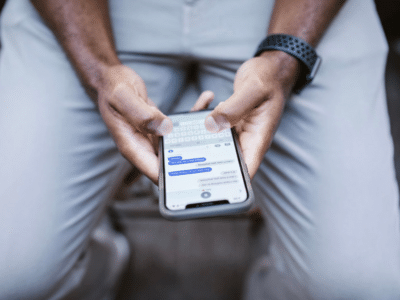
Most people have done it at least once: a conversation ends, the final message has already been sent, and yet they reopen the chat a few minutes later. Sometimes they read the last few messages again, and sometimes they simply look at the thread before closing it. From the outside, it can seem like they are waiting impatiently for a response. Human conversations are not only about exchanging information. They are also about creating a shared sense of completion. When that feeling is missing, people may continue checking the conversation not because they need a reply, but because the interaction does not yet feel fully finished.
 Conversations rarely end as neatly as people think
Psychologists and communication researchers have long observed that ending a conversation is often more complicated than beginning one. People need to coordinate when and how the interaction will end, and both participants do not always arrive at that point at the same time.
Ending an interaction involves a process of coordination rather than a single moment. This helps explain why a final message can sometimes feel incomplete. The sender may not be looking for additional information. They may simply be checking whether the interaction feels settled from both sides.
In that sense, reopening the conversation can be less about communication and more about confirmation.
Closure has an important social function
Conversation researchers have found that people often use small signals before ending an interaction. Phrases such as “okay,” “well,” or “talk later” give both people a chance to recognize that the conversation is coming to a close.
Research published on suggests that these closing moves help create a shared understanding that the interaction has reached a natural end. Without that shared understanding, people may continue feeling that something remains unresolved.
Text messaging complicates this process because many of the signals used in face-to-face conversations are missing. As a result, a conversation can technically end while still feeling psychologically unfinished.
Timing carries social meaning
People do not only pay attention to what is said. They also pay attention to when it is said. Response timing influences how conversations are interpreted, even when nobody consciously thinks about it.
A paper titled “” found that faster responses were associated with stronger feelings of connection between people. This does not mean every delayed response damages a relationship, but it does suggest that responsiveness carries emotional meaning.
When a conversation ends abruptly or feels slightly out of rhythm, people may reopen the thread because they are still processing whether the interaction felt socially complete. The concern is often relational rather than informational.
Messaging often functions as relationship maintenance
Modern messaging serves purposes that go far beyond exchanging practical information. Conversations help maintain closeness, signal attention, and reinforce relationships.
Research examining texting and relationship satisfaction, published in , found that perceptions of responsiveness and communication quality play important roles in how people experience close relationships. This helps explain why even minor interactions can sometimes feel emotionally significant.
A person reopening a conversation may therefore be checking something subtle. They are not necessarily wondering whether another message will arrive. They may be evaluating whether the exchange still feels warm, balanced, and complete.
 Why digital conversations can feel harder to finish
Face-to-face conversations come with natural ending cues such as body language, movement, and physical separation. Messaging lacks many of those signals.
Because the ending is less obvious, people are sometimes left with uncertainty about whether the interaction has truly concluded. That uncertainty can encourage them to revisit the conversation even after it appears finished.
People who keep reopening a conversation after sending the last message are not always waiting for a reply. Psychology suggests they may be checking whether the interaction feels socially complete. Conversations rely on shared closure, timing, and mutual understanding, all of which can be harder to achieve in digital communication. What looks like impatience is often a search for completion. The person is not necessarily trying to continue the conversation; rather, they may simply be making sure it feels finished.
-
Delicious Jamun Recipes: Smoothies and Ice Creams

-
“Now even Congress people have expectations from me…” This statement of PM Modi created a stir in the Parliament.
-
How Vietnamese are preparing for old age earlier

-
Shraddha Kapoor stuns fans in first teaser for Eetha

-
Infinix launches limited edition phone with Snapdragon 7s Gen 4 and 6500mAh battery, check details